
Last updated September 21, 2026
Full 25-point door and opener safety check with every visit - springs, cables, rollers, tracks, and your LiftMaster or Chamberlain opener included
You get a price before we start. It does not change when the truck arrives.
 Before
 After
After Before
 After
After Before
 After
AfterGarage Door Permits, Codes & Inspections in CA: What You Need to Know
A garage door replaced without a required permit in California doesn’t generate a fine the day the work is done. It generates a required disclosure and potential renegotiation when you sell the house, which is when the cost of skipping $150 in permit fees becomes apparent. In Pleasanton, we’ve seen this scenario repeatedly: a homeowner calls us for what they think is a simple opener upgrade, only to learn the previous owner installed a new Clopay door without pulling a permit, and now the title company is flagging unpermitted structural work. This guide maps exactly which garage door actions trigger California permit requirements, what Pleasanton’s Building Division checks, and how to protect your property’s clean title.
Quick Answer
Garage door motor replacement on an existing door typically does not require a permit in California, but new door installation on an existing opening usually does, and any structural modification to the opening itself always does. Most California cities, including Pleasanton, require inspection of permitted garage door work to verify wind load compliance, emergency release function, and UL 325 entrapment protection on automatic openers. Unpermitted work must be disclosed at resale and can be forced into an expensive “as-built” permit process.
Table of Contents
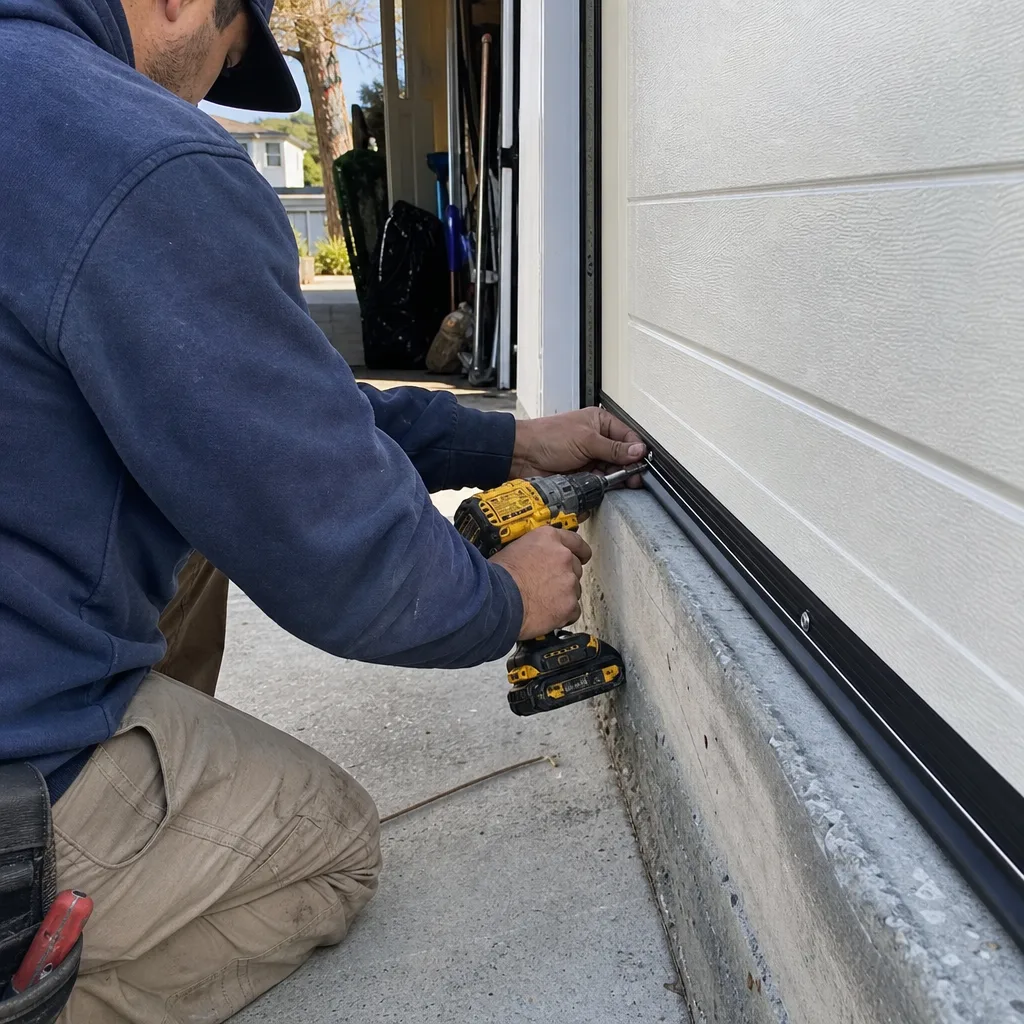
- When Is a Garage Door Permit Required in California?
- Permit Types: New Installation vs. Replacement vs. Structural Change
- The Pleasanton Building Division Process: Steps, Timelines, and Costs
- What a Garage Door Inspection Actually Checks
- HOA Architectural Review vs. City Building Permit
- UL 325 Compliance: What It Means for Your Opener
- Unpermitted Work, Title Reports, and the As-Built Permit Process
- Permit and Inspection Cost Breakdown in Pleasanton and Alameda County
 Before
 After
AfterWhen Is a Garage Door Permit Required in California?
California Building Code (CBC) Section 105.1 requires permits for “construction, alteration, movement, enlargement, replacement, repair, equipment, use and occupancy, location, removal and demolition” of any building or structure. The key word for garage doors is replacement, but interpretation varies by city and by what exactly is being replaced.
Here’s how Pleasanton and most Alameda County jurisdictions apply the code in practice:
- Motor-only replacement: No permit required if the opener is swapped on an existing, permitted door without altering mounting points or electrical supply. This is considered appliance replacement, not structural work.
- Like-for-like door replacement: Gray area. Some jurisdictions treat same-size, same-type replacement as maintenance; others require permits because the door affects wind load, fire separation, and emergency egress. Pleasanton typically requires a permit for any new door installation, even on an existing opening.
- New door on new or modified opening: Permit always required. This is structural work affecting the building envelope.
- Structural opening modification: Permit always required. Widening, height changes, header alterations, or conversion from single to double door all trigger full plan review.
- Fire-rated door in attached garage: Permit required, with additional inspection for fire separation compliance per CBC 706.
The distinction that matters for resale: California Civil Code Section 1102 requires disclosure of “any room additions, structural modifications, or other alterations made without required permits.” A garage door is a structural component of the building envelope. An unpermitted installation, even if competently done, becomes a mandatory disclosure item.
We’ve serviced homes in Pleasanton’s Vintage Hills and Ruby Hill neighborhoods where sellers faced $5,000-$15,000 in renegotiation because a $2,500 door installation lacked a $180 permit. The buyer’s lender or title company flagged it, not the city. Spotting these issues early is critical-our Garage Door Warning Signs: A Pleasanton Homeowner’s Reference Guide covers what to watch for before problems escalate.
Permit Types: New Installation vs. Replacement vs. Structural Change
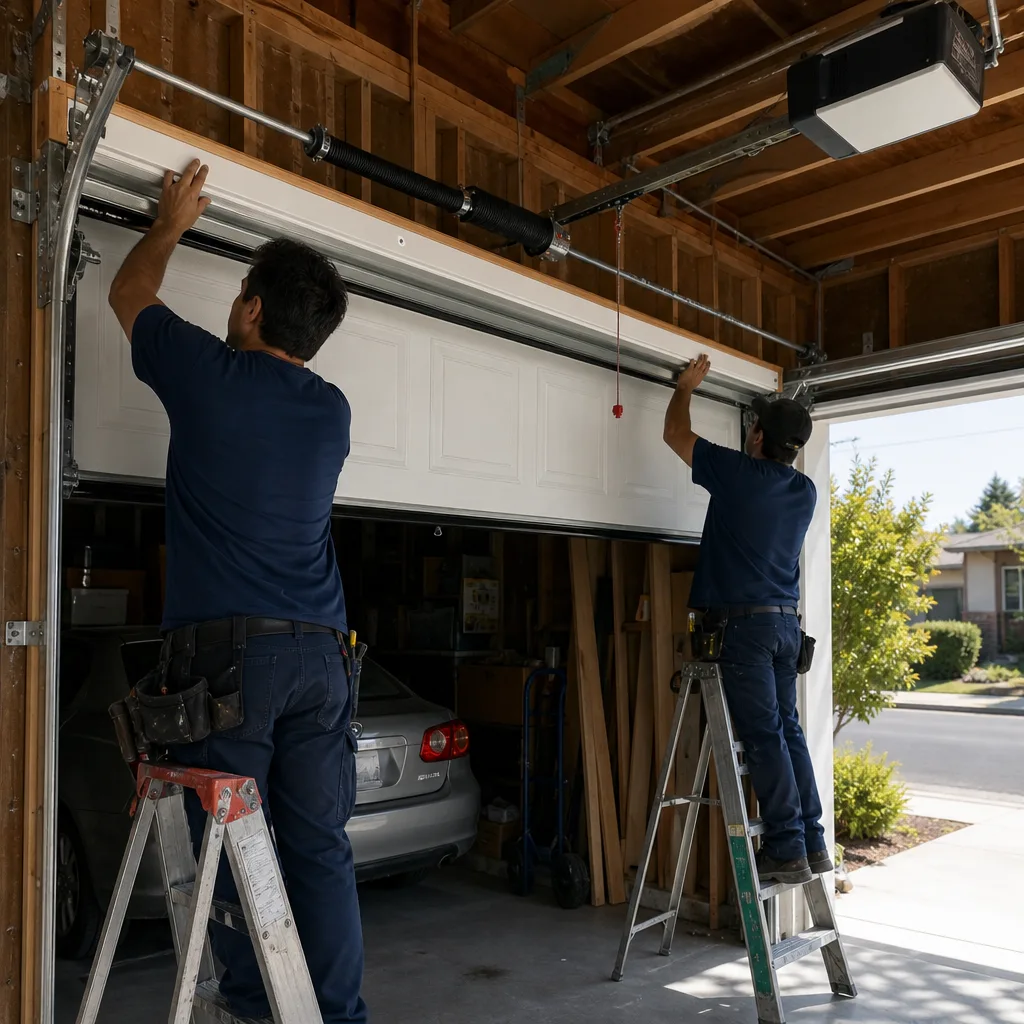
Understanding which permit category your project falls into determines your documentation burden, inspection schedule, and total cost. Here’s the breakdown for Alameda County jurisdictions:
1. Over-the-Counter Permits (Same-Day Issuance)
Available for straightforward replacements with no structural changes. You’ll need:
- Completed permit application (owner or licensed contractor)
- Manufacturer’s specification sheet for the new door
- Opener model number and UL 325 compliance documentation
- Property address and assessor’s parcel number (APN)
Pleasanton Building Division issues these at the counter at 200 Old Bernal Avenue, typically in under an hour if documentation is complete. Fee as of 2024: approximately $150-$220 depending on door size and valuation.
2. Plan-Check Permits (5-10 Business Days)
Required for structural modifications, fire-rated assemblies, or doors in historic districts. Requires scaled drawings showing:
- Existing and proposed opening dimensions
- Header and jamb structural details
- Wind load rating (Pleasanton requires 85 mph basic wind speed per ASCE 7, with exposure category B for most residential areas)
- Fire assembly rating if applicable
3. As-Built Permits (Retroactive)
The expensive path. If work was done without permit and later discovered, the city can require full plan submittal, structural calculations, and inspection with finishes removed if necessary. We’ll cover this in detail below.
Key distinction: “Like-for-like” sounds simple until you realize that a 1987 Wayne Dalton door and a 2024 Clopay door have different wind load ratings, different track geometries, and different spring specifications. The city considers this a replacement, not maintenance, because the building’s structural performance changes.
The Pleasanton Building Division Process: Steps, Timelines, and Costs
Pleasanton’s Building Division operates under the City of Pleasanton Community Development Department at 200 Old Bernal Avenue, with permit intake Monday through Friday, 8:00 a.m. to 4:00 p.m. Here’s the actual process for a standard residential garage door permit:
Step-by-Step: Getting Your Permit
- Determine permit type. Call (510) 398-4466 or use the online permit portal to confirm whether your project qualifies for over-the-counter issuance or requires plan check.
- Prepare documentation. Manufacturer specs, opener UL 325 label photo, and a simple site sketch showing door location on the structure.
- Submit application. Online through Accela Citizen Access, or in person. Contractor must provide CSLB license number; homeowners acting as owner-builder must sign a disclosure acknowledging liability for code compliance.
- Pay fees. Plan check fee (if applicable) plus permit fee. For a standard 16′ x 7′ door replacement: approximately $180 permit + $85 plan review if required.
- Schedule inspection. Pleasanton uses an automated system; inspections typically available within 48 hours for residential garage doors.
- Pass inspection and receive final. The inspector signs off; the permit is finaled and recorded against the property.
Timeline reality: Over-the-counter permits can be issued and inspected within a week. Plan-check permits add 5-10 business days for review. The actual inspection takes 15-30 minutes.
Pleasanton’s specific requirements reflect local conditions: the city’s location in the Amador Valley means wind patterns differ from coastal Alameda County, and the 2019 California Building Code adoption included updated requirements for garage door wind load resistance that affect product selection. We’ve installed Amarr and Clopay doors in Kottinger Ranch and Birdland neighborhoods where the slope and exposure required specific pressure ratings. For year-round maintenance tips tailored to these local conditions, see our Seasonal Garage Door Care for Pleasanton: Year-Round Homeowner’s Guide.
What a Garage Door Inspection Actually Checks
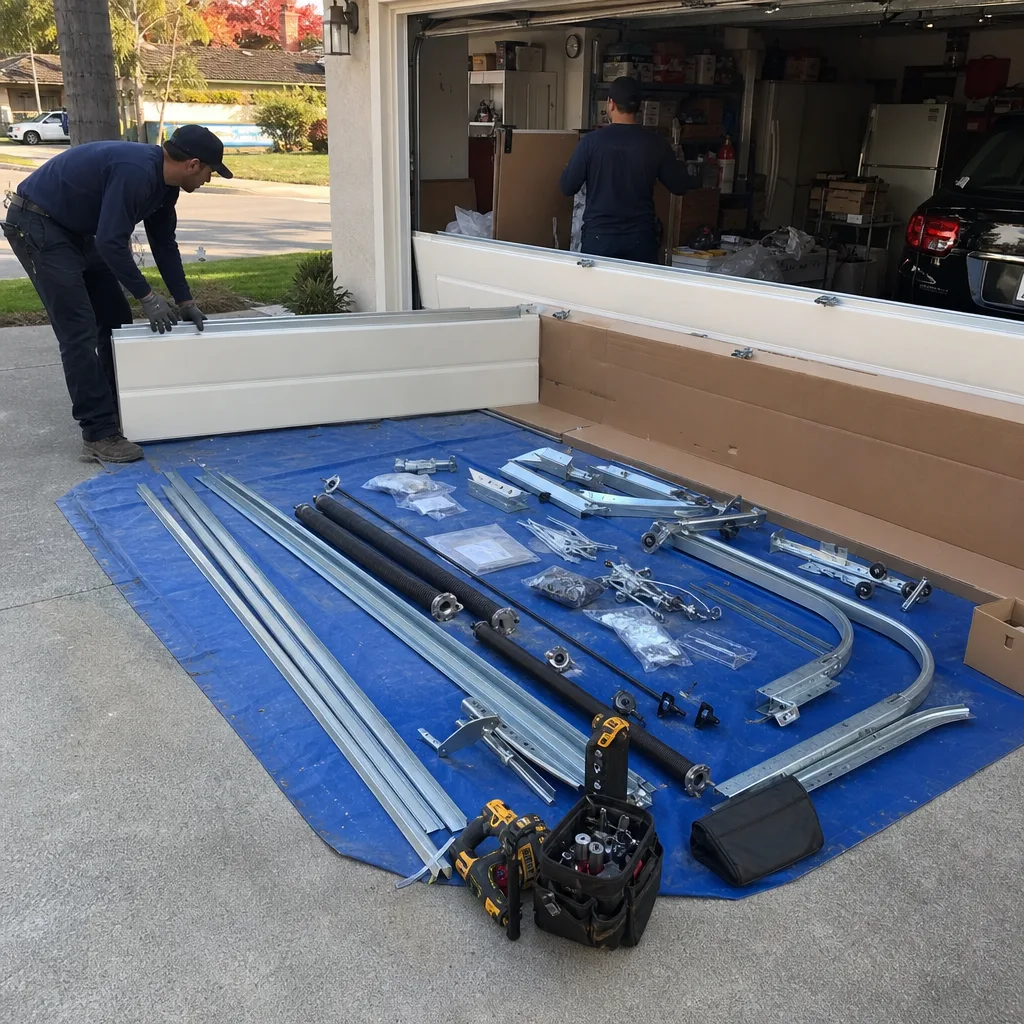
The inspection isn’t a quality review of the installation contractor’s workmanship. It’s a code compliance verification with specific, limited scope. Here’s what Pleasanton inspectors actually examine:
- Door labeling and ratings: Wind load rating matches or exceeds ASCE 7 requirements for the site; fire rating matches the assembly specification if in a fire separation wall.
- Track and hardware anchorage: Lag bolts into framing members, not just sheathing; proper jamb brackets; track alignment that permits full travel without binding.
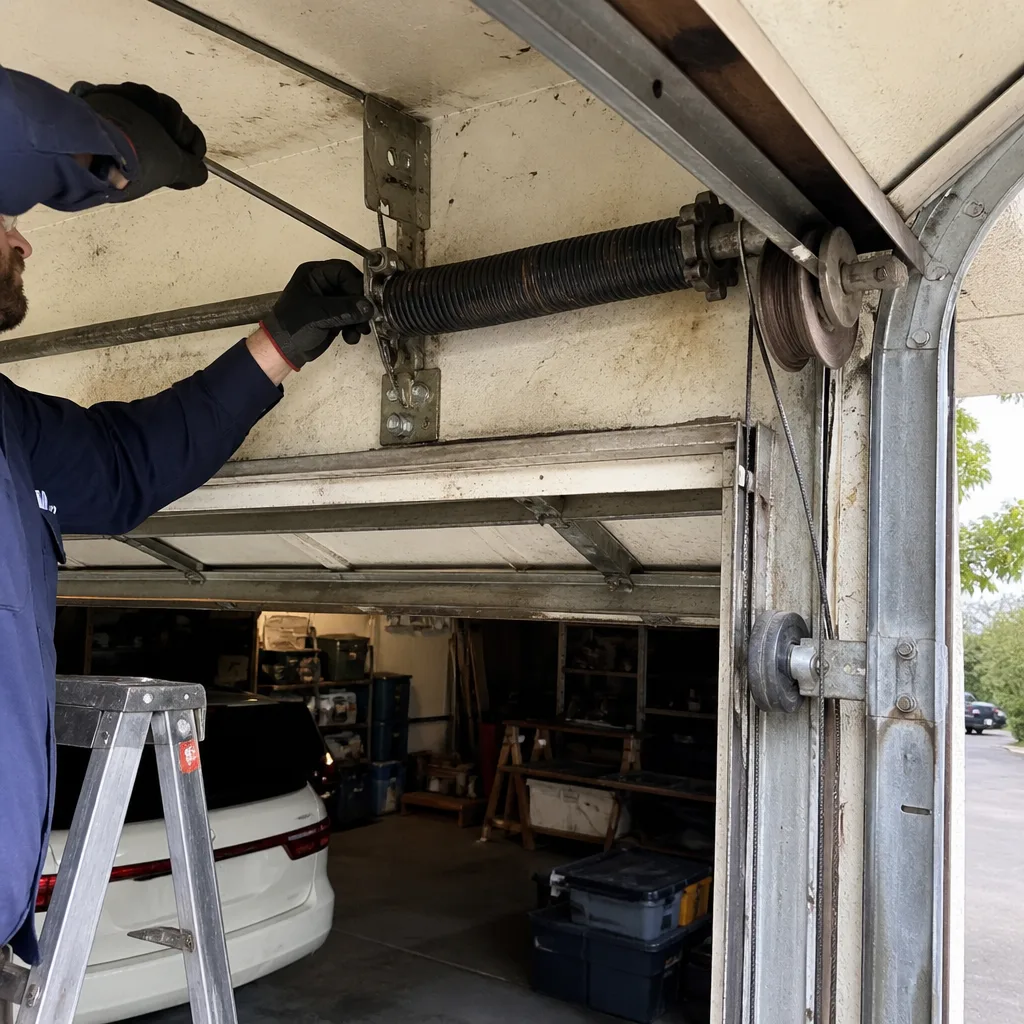
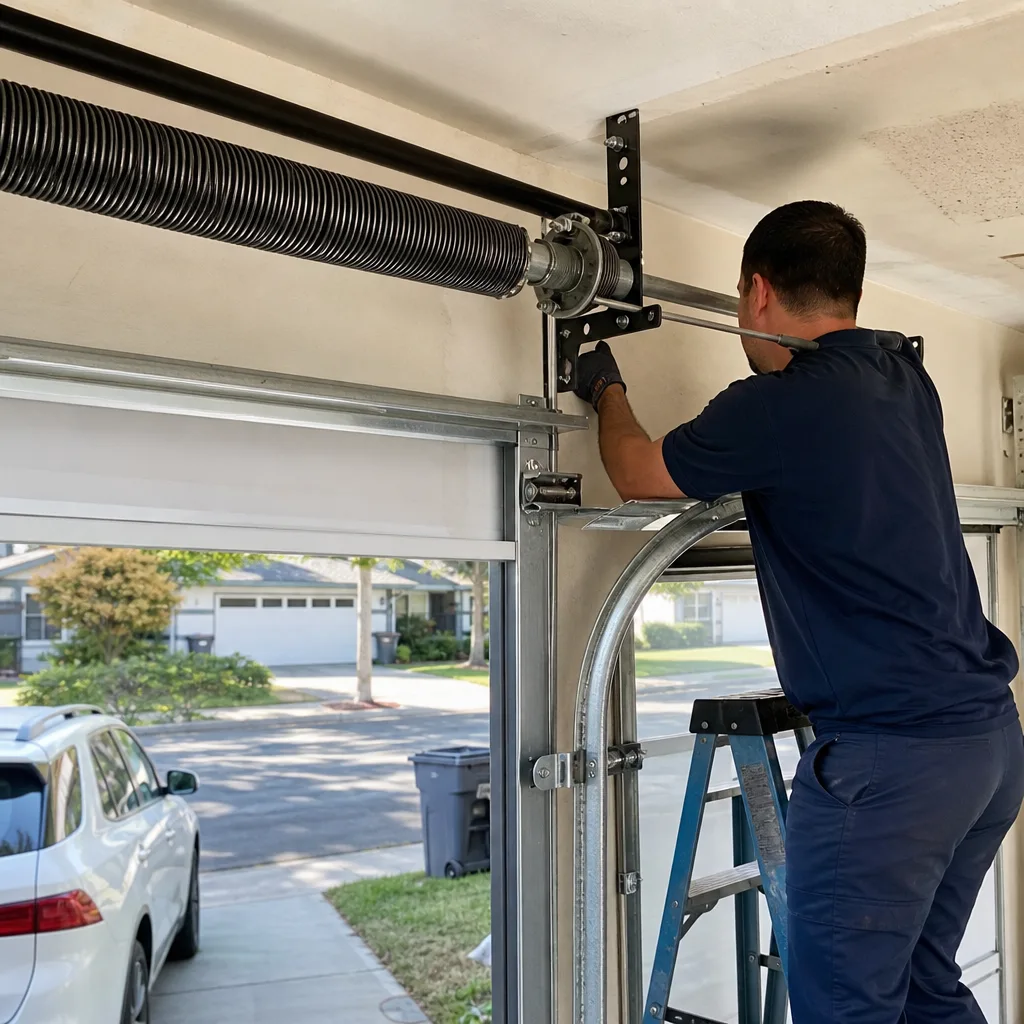
- Spring containment: Extension springs must have safety cables; torsion springs must be properly wound and secured to the shaft. This is where we’ve seen DIY installations fail most often.
- Emergency release: The red handle must be accessible and functional, allowing manual door operation during power failure.
- UL 325 entrapment protection: Photo eyes aligned and functional; door reverses on contact with a 2×4 test block placed on the floor; wall button and remote controls operate correctly.
- Fire separation (attached garages): Door assembly matches the fire-rated specification; no penetrations through the assembly; self-closing device functional if required.
The inspector does not evaluate whether the door is level, whether the paint matches, or whether the installer cleaned up. Those are contractor performance issues, not code compliance.
We’ve accompanied inspections in Pleasanton where the only failure item was a photo eye knocked out of alignment during final cleanup, a 30-second fix. We’ve also seen failures where a DIY installer used drywall anchors for track mounting, which required full removal and reinstallation with proper lag bolts into the king stud.
HOA Architectural Review vs. City Building Permit
This is the distinction that trips up Pleasanton homeowners more than any other. HOA architectural approval and a city building permit are entirely separate processes with separate timelines, and one does not substitute for the other.
In Pleasanton neighborhoods with active HOAs, such as Ruby Hill, Vintage Hills, Kottinger Ranch, and parts of Del Prado, the typical sequence is:
- HOA architectural review first. Submit color samples, door style, window configuration, and hardware finish to the architectural committee. Timeline: 30-45 days typical, with possible revision requests.
- City permit application second. Use the HOA approval letter as supporting documentation; the city will not issue until HOA approval is demonstrated if the HOA CC&Rs require it.
- Install after both approvals. Schedule city inspection within the required window (typically before concealment or within 180 days of permit issuance).
Critical mistake: Getting HOA approval, installing the door, and assuming the HOA process “covers” the permit requirement. It doesn’t. We’ve been called to homes in Pleasanton where the homeowner received a stop-work notice from the city because the contractor (or the homeowner) skipped the building permit after obtaining HOA approval.
Another common error: assuming the HOA’s preferred vendor list means those contractors handle permits. Some do; many don’t. Always verify permit status independently. At Servo Garage Doors Pleasanton, we pull permits as standard practice on all installations requiring them, and we document the permit number in the customer’s file alongside the photo record.
UL 325 Compliance: What It Means for Your Opener
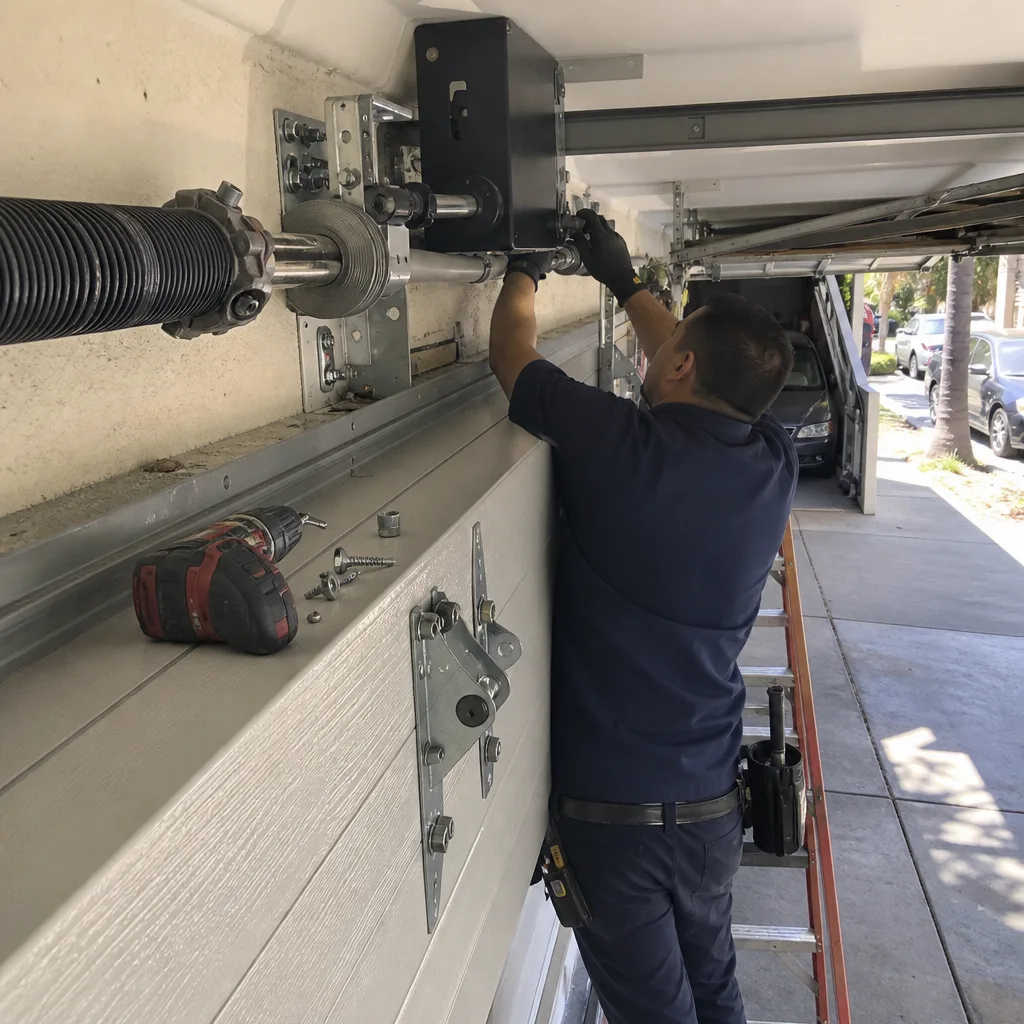
UL 325 is the Underwriters Laboratories standard for door, drapery, gate, louvre, and window operators and systems. For garage doors, the 2010 and later revisions mandate specific entrapment protection features that affect whether an existing opener can legally remain in service when a new door is installed.
Here’s what the standard requires and how Pleasanton inspectors verify it:
- Primary entrapment protection: External entrapment protection devices (photo eyes) must be installed no higher than 6 inches above the floor and must reverse the door when the beam is interrupted.
- Secondary entrapment protection: A constant pressure control (wall button) or equivalent, plus a monitoring system that detects photo eye malfunction and prevents door operation.
- Force settings: The door must reverse within 2 seconds of contacting a test object (the 2×4 test block).
- Warning labels and instructions: Required at specific locations; inspectors verify presence.
The practical problem: Many openers manufactured before 1993 lack photo eyes entirely. Units from 1993-2010 may have photo eyes but lack the monitoring circuitry required by current UL 325. When you install a new door in Pleasanton, the inspector will test the opener for UL 325 compliance regardless of the opener’s age.
We’ve encountered this regularly in Pleasanton’s older neighborhoods, particularly in the Birdland and Downtown areas where original 1960s-1980s homes still have vintage Craftsman or Genie openers. The homeowner wants to keep the “perfectly good” opener; the city won’t pass inspection without compliant entrapment protection. The solution is either opener replacement or, in some cases, retrofit kits for specific models, though retrofit compliance is increasingly difficult as manufacturers discontinue support.
This is why Garage Door Opener Repair & Installation in Pleasanton is often bundled with new door installations in our quotes. We identify the opener compliance issue during our initial assessment, photograph the existing unit’s model and manufacture date, and quote the appropriate path forward before work begins, per Clause 1 of The Haven Standard.
Unpermitted Work, Title Reports, and the As-Built Permit Process
This is where the $150 permit becomes a $5,000 problem. California’s real estate disclosure requirements, combined with increasingly thorough title and natural hazard reports, mean unpermitted garage door work surfaces at the worst possible moment.
How Unpermitted Work Gets Discovered
- Natural Hazard Disclosure (NHD) reports: Companies like JCP-LGS, DisclosureSource, and Property ID cross-reference county permit records against the stated square footage and features of the property.
- Tax assessor records: If a permit was pulled for a room addition or ADU, the garage door modification done at the same time may be flagged as unpermitted ancillary work.
- Buyer inspection: A competent home inspector notices a new door on an older home and checks permit history.
- Insurance claim: Post-sale, a claim for door or opener damage leads to an adjuster’s review of permit status.
The As-Built Permit Process in Alameda County
If you’re buying a home with unpermitted garage door work, or if you’re the seller who did the work, the path forward is an as-built permit:
- Application with disclosure. Acknowledge the work was done without permit; provide as-built drawings and specifications.
- Plan review. The city evaluates whether the installation meets current code. If the work predates code changes, some jurisdictions allow compliance with the code in effect at the time of construction.
- Inspection with possible exposure. If the inspector cannot verify anchorage, spring containment, or fire assembly integrity through finish materials, you may be required to remove drywall, siding, or trim for visual verification.
- Correction and re-inspection. Any deficiencies must be remedied; this is where costs escalate rapidly.
- Final and recordation. Once passed, the permit is recorded and the property’s permit history is cleaned.
Cost reality: The as-built permit fee itself may be only $300-$500, but the correction work, finish repair, and potential door replacement if the original installation doesn’t meet current wind load requirements can reach $3,000-$8,000. The $150 original permit, had it been pulled, would have caught any issues at installation when correction was trivial.
In our experience across Pleasanton and the broader Tri-Valley, as-built permits for garage doors most commonly fail on three items: inadequate header support for modern wind loads, non-compliant openers retained from the original installation, and fire separation breaches where the door assembly doesn’t match the wall rating. We provide free second opinions on as-built correction estimates from other contractors, with no coupon or code required.
Permit and Inspection Cost Breakdown in Pleasanton and Alameda County
Here’s what you’ll actually pay, with Pleasanton-specific figures where available:
| Item | Pleasanton | Alameda County Typical |
|---|---|---|
| Over-the-counter permit, standard residential door | $150-$220 | $120-$280 |
| Plan check fee (if required) | $85-$150 | $75-$200 |
| Inspection fee (included in permit) | Included | Usually included |
| Re-inspection fee (if first fails) | $85-$125 | $75-$150 |
| As-built permit application | $300-$500 | $250-$600 |
| HOA architectural review fee | $50-$200 (varies by association) | $50-$300 |
| Contractor permit handling fee | $75-$150 | $50-$200 |
These figures are based on 2023-2024 fee schedules and exclude the cost of correction work if inspection fails. Pleasanton’s fees are mid-range for Alameda County; Livermore and Dublin are comparable, while Oakland and Berkeley tend higher due to additional plan review requirements.
At Garage Door Installation in Pleasanton, our quotes include permit costs where applicable, broken out as a line item so you see exactly what the city charges versus what we charge for handling. Clause 1 of The Haven Standard requires this transparency: the written price before work starts shows every component, including permit fees, with no lump-sum obscurity.
Common Mistakes to Avoid
- Assuming “like-for-like” means no permit. In Pleasanton, new door installation on an existing opening typically requires a permit even if dimensions haven’t changed. The wind load rating and fire assembly specifications are what trigger review.
- Letting the contractor “handle it” without verification. Always request the permit number and verify it on the city’s online portal before final payment. We’ve been called to jobs where the previous contractor claimed permits were “in process” for months.
- Skipping HOA approval before city permit. In Pleasanton’s managed neighborhoods, city permit applications can be rejected if HOA approval isn’t demonstrated. The sequence matters.
- Retaining a pre-1993 opener with a new door. The opener won’t pass UL 325 inspection, and you’ll face an unexpected replacement cost after the door is already installed.
- DIY installation without understanding spring containment requirements. Torsion springs store lethal energy; improper installation or lack of safety cables is an immediate inspection failure and a genuine safety hazard. We recommend professional installation for any spring system.
- Ignoring permit status when buying a home. The $150 permit gap becomes your problem at closing. Request permit history for all garage door work as part of your inspection contingency.
When to Call a Professional
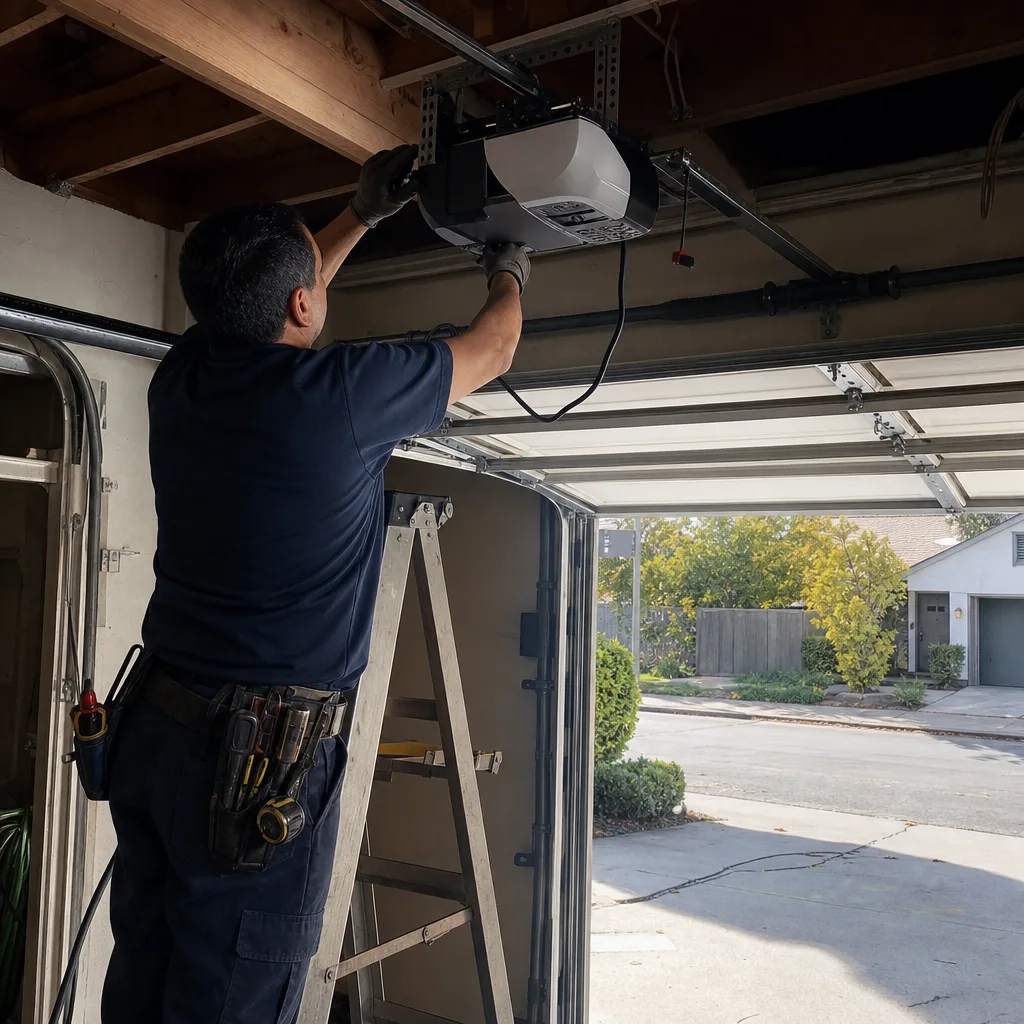
Call a licensed garage door contractor when your project involves any of the following: new door installation on an existing or modified opening; structural modification to the header, jambs, or opening dimensions; replacement of an opener that may not meet current UL 325 standards; or any work in a home you’re preparing to sell where permit history is unclear. For guidance on selecting the right professional, see our How to Hire a Garage Door Contractor in Pleasanton: A Step-by-Step Guide.
Servo Garage Doors Pleasanton offers free estimates in Pleasanton and throughout the Tri-Valley. We’ll assess your specific situation, identify permit requirements, quote the full cost including city fees, and pull permits as standard practice on all installations that require them. Every quote is flat, written, and delivered before any work starts, per Clause 1 of The Haven Standard. Call (510) 398-4466 to schedule. For more guides & resources on garage door maintenance and permitting, visit our blog.
Frequently Asked Questions
No, if you’re only replacing the opener motor on an existing, properly installed door without modifying electrical supply or mounting structure. However, if the replacement is part of a new door installation, or if the existing opener lacks UL 325 entrapment protection that the city inspector will verify, you may need to upgrade the opener to pass inspection. Call (510) 398-4466 if you’re unsure about your specific setup.
A standard over-the-counter residential garage door permit in Pleasanton costs approximately $150-$220 as of 2024, with plan-check permits adding $85-$150 for structural modifications. These fees are paid directly to the City of Pleasanton Building Division, not to your contractor. Our quotes itemize this separately so you know exactly what the city charges versus our installation price.
Over-the-counter permits are typically issued same-day at 200 Old Bernal Avenue if documentation is complete. Inspections are usually available within 48 hours. Plan-check permits for structural modifications require 5-10 business days for review. The actual inspection takes 15-30 minutes.
California Civil Code Section 1102 requires disclosure of unpermitted structural work. The buyer may demand an as-built permit, a price reduction, or may walk away. Lenders and title companies increasingly flag permit discrepancies. The as-built process in Alameda County costs $300-$500 in fees plus potential correction costs of $3,000-$8,000 if the installation doesn’t meet current code.
No. HOA architectural review and city building permits are separate processes. HOA approval governs aesthetics; the building permit governs structural and life-safety code compliance. In Pleasanton, you typically need both, and the HOA approval should be obtained first. One does not substitute for the other.
Only if it meets current UL 325 standards for entrapment protection. Openers manufactured before 1993 lack required photo eyes. Units from 1993-2010 may have photo eyes but lack monitoring circuitry. We check opener compliance during our free estimate and photograph the model plate for verification. If replacement is needed, we quote it upfront, not as a surprise after installation.
The Bottom Line
California garage door permits are triggered by specific actions, not general categories. New door installation on an existing opening requires a permit in Pleasanton; motor replacement typically does not. The cost of permitting is modest, predictable, and protects your property’s clean title. The cost of skipping it is unpredictable, often discovered at resale, and can exceed the original installation price. Pull the permit, keep the documentation, and verify your contractor’s compliance before you pay. If you’re uncertain about your project’s permit status or you’re dealing with unpermitted work from a previous owner, get a documented assessment from a licensed professional before the title company does.
Written by Marcus Deller, Owner at Servo Garage Doors Pleasanton, serving Pleasanton since 2015.