
Last updated September 21, 2026
Full 25-point door and opener safety check with every visit - springs, cables, rollers, tracks, and your LiftMaster or Chamberlain opener included
You get a price before we start. It does not change when the truck arrives.
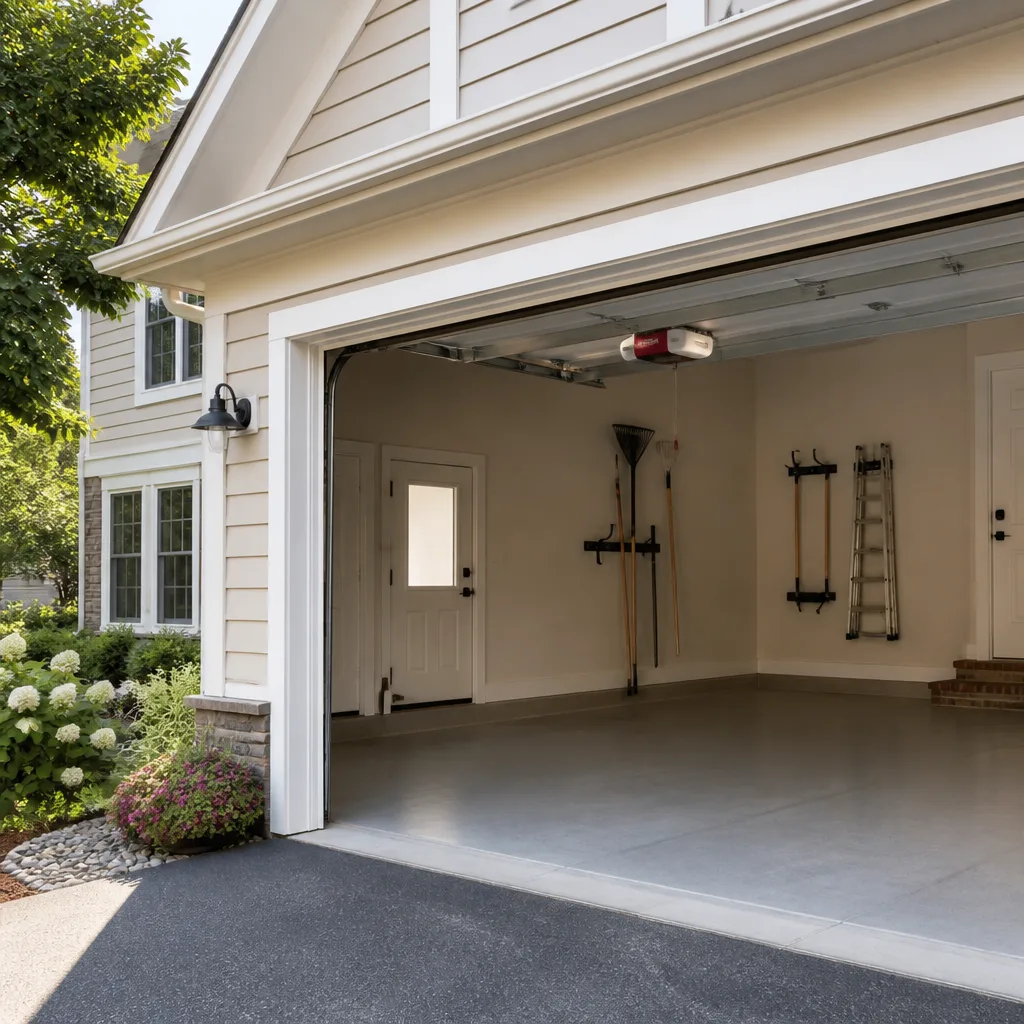
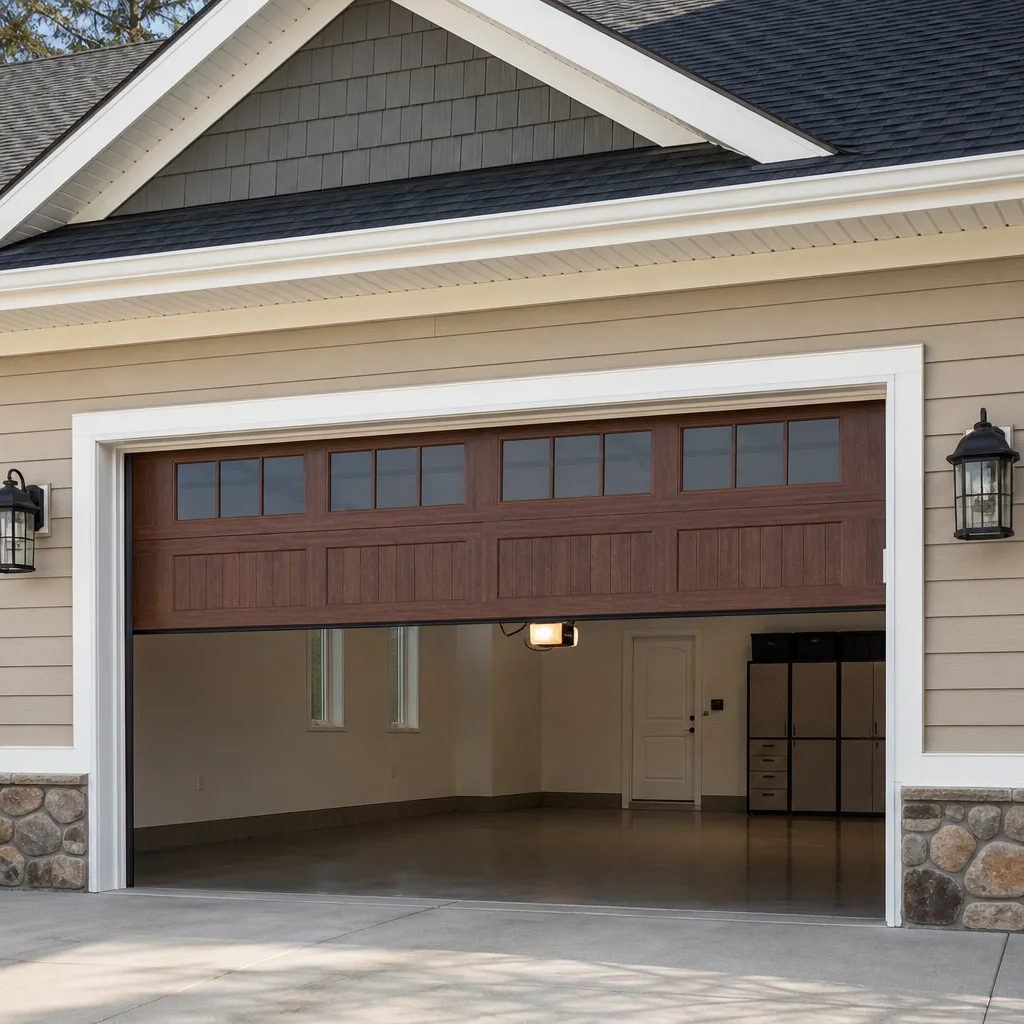
 Before
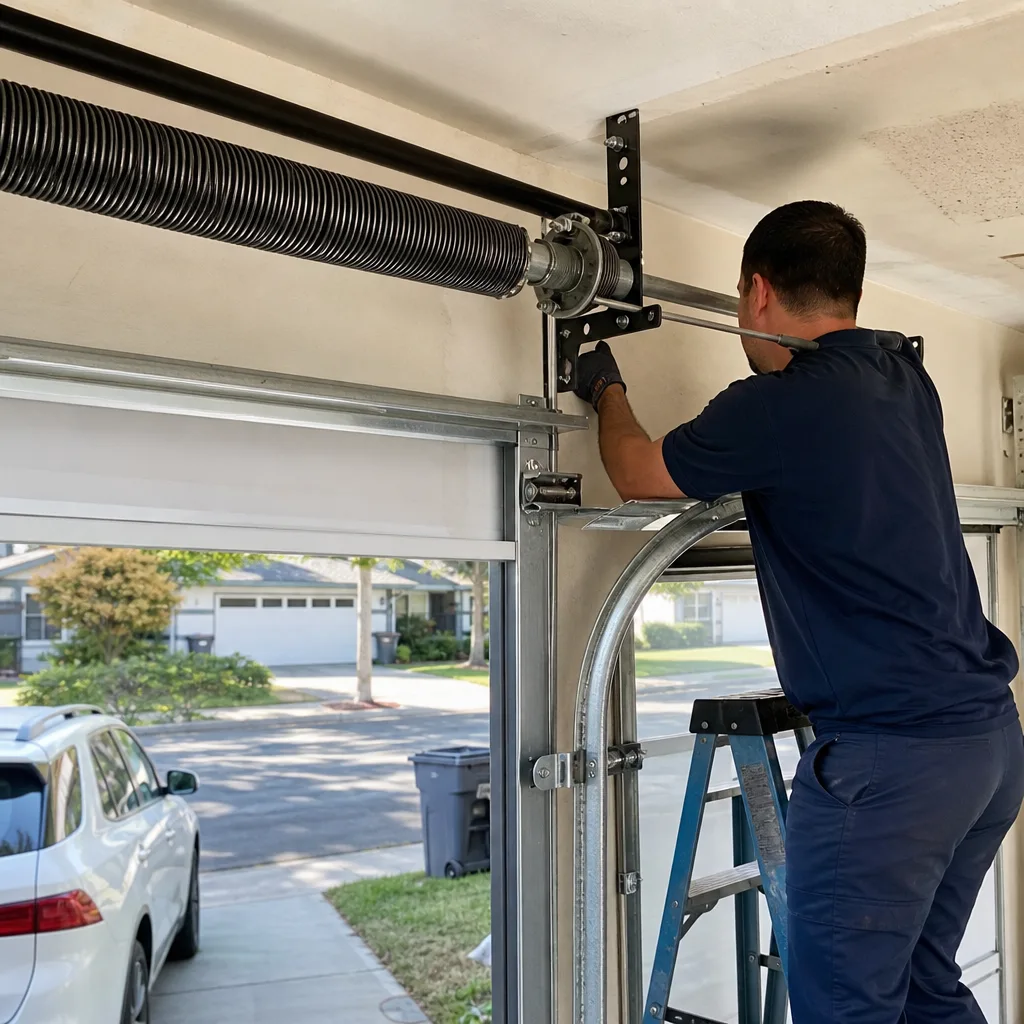 After
After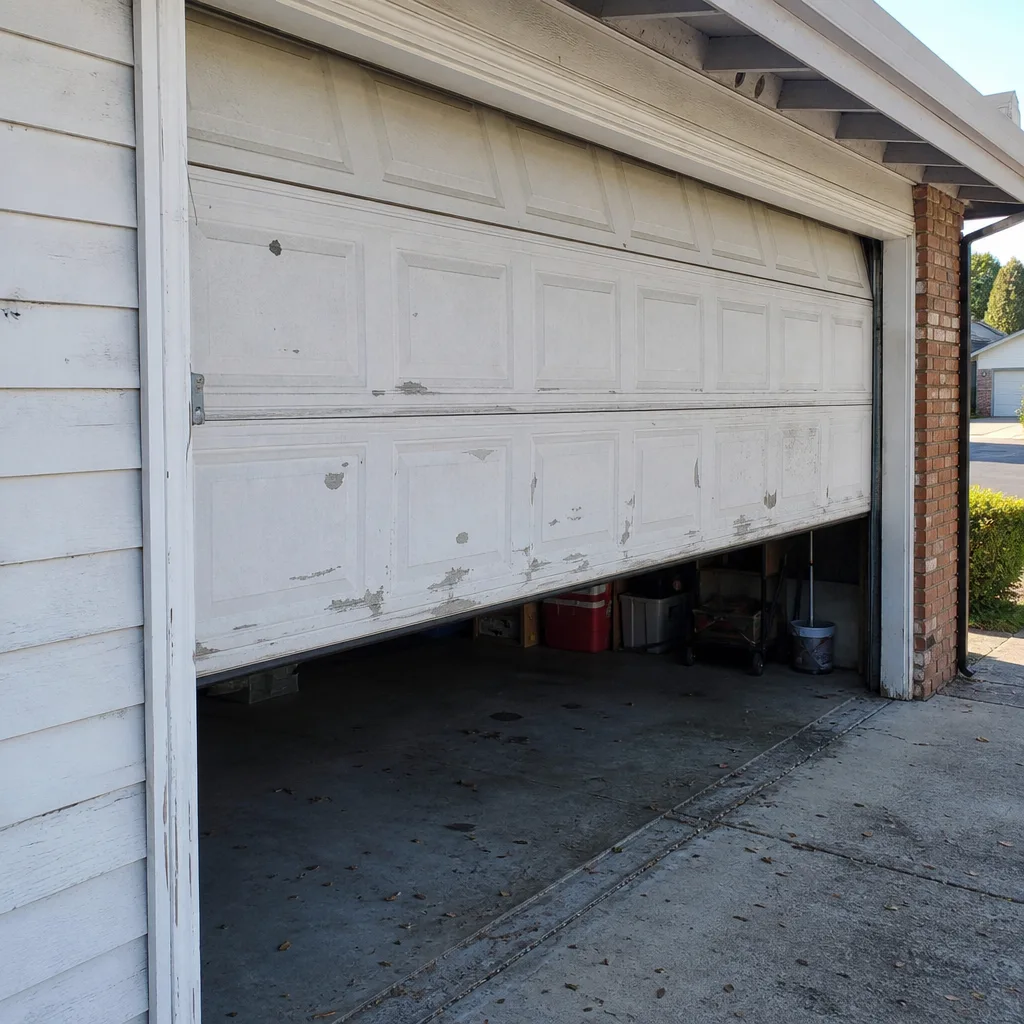 Before
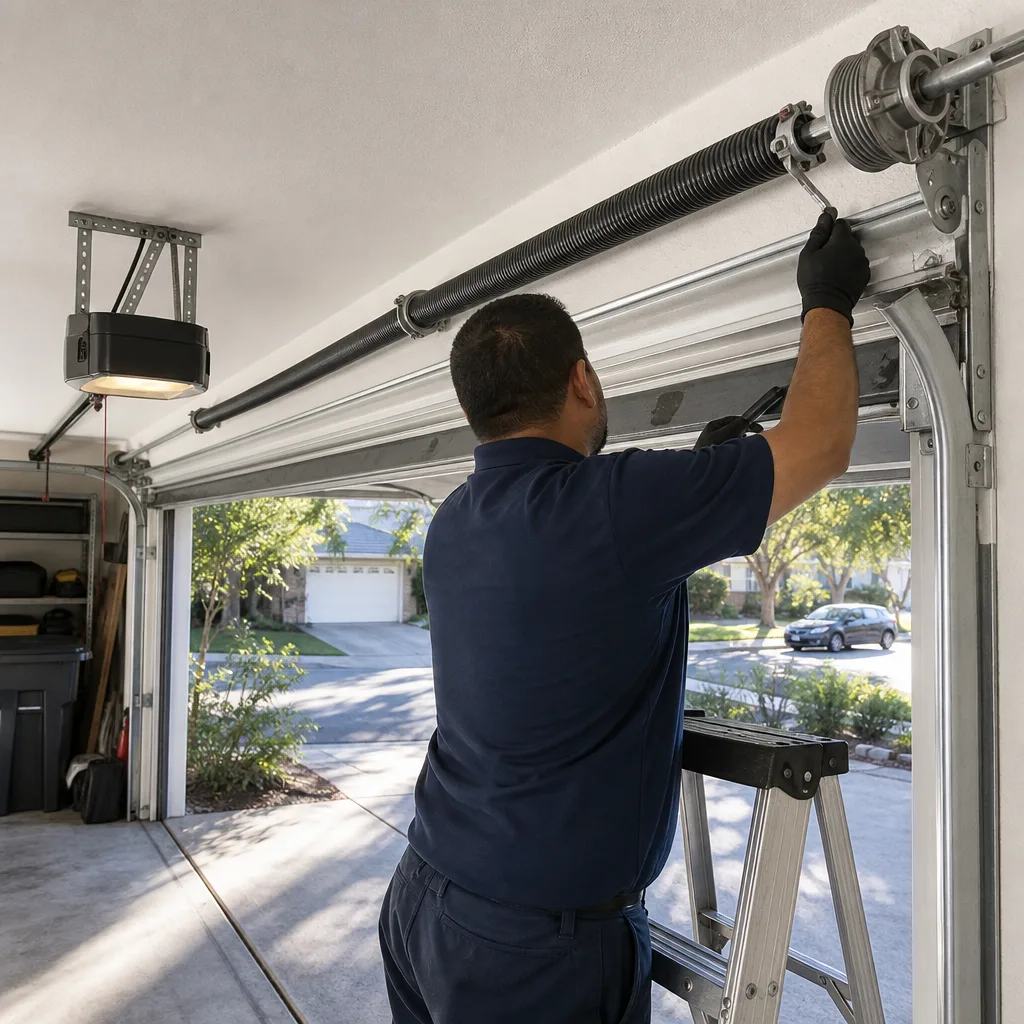 After
After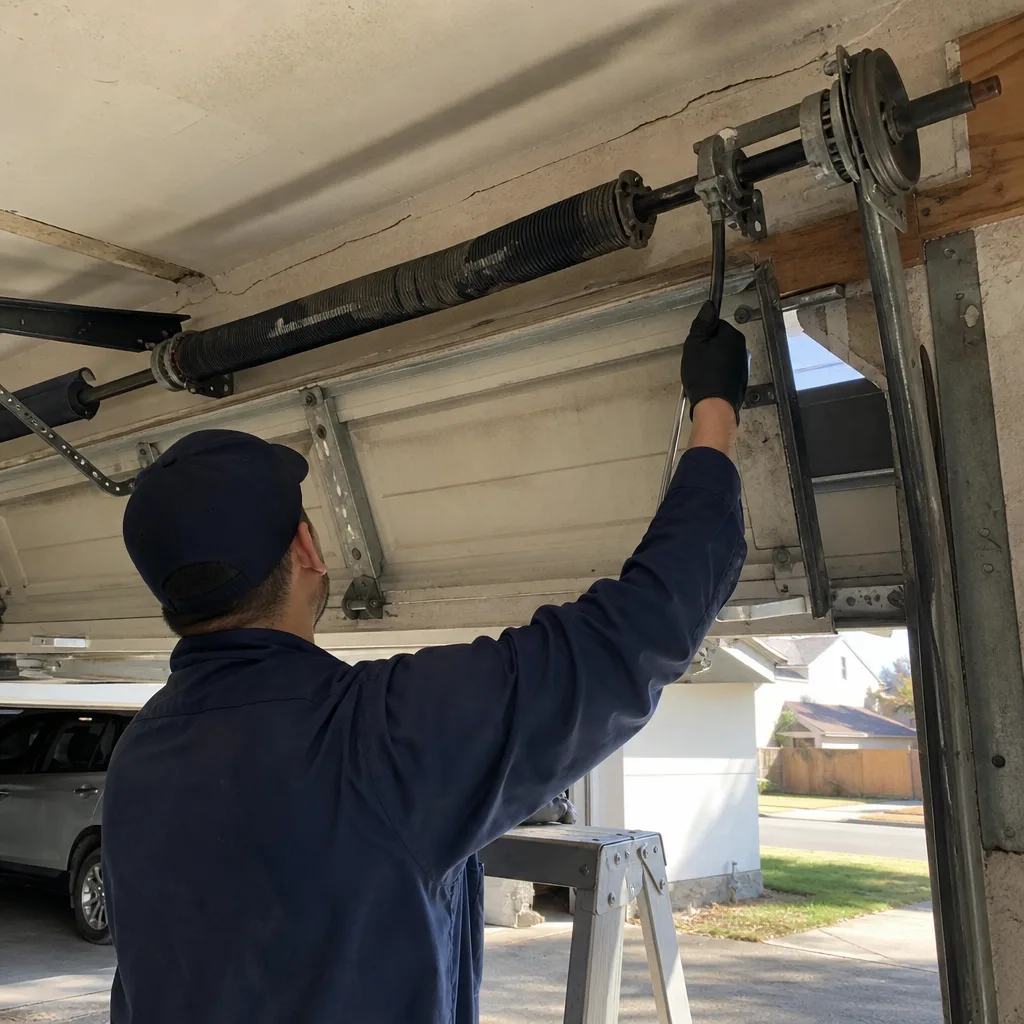 Before
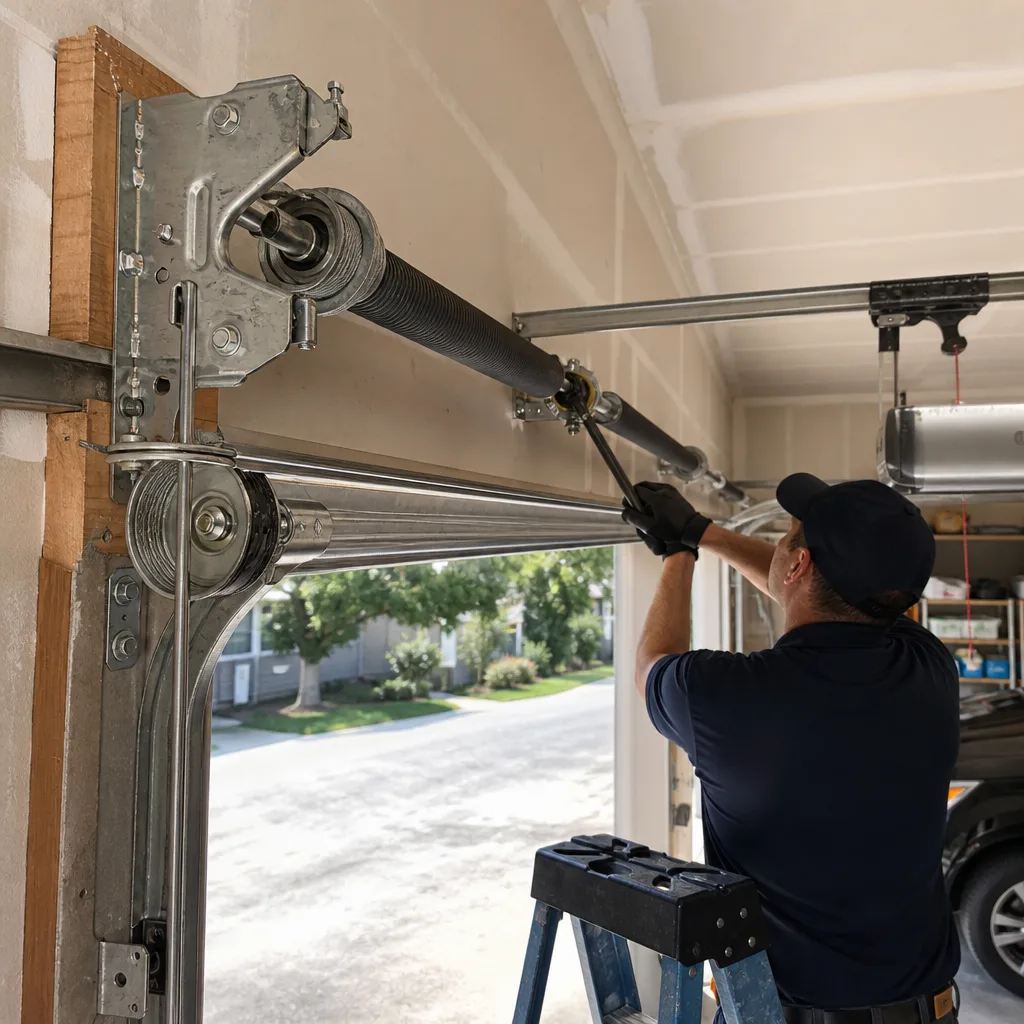 After
AfterSeasonal Garage Door Care for Pleasanton: Year-Round Homeowner’s Guide
Pleasanton averages 29 days per year above 95°F, and steel garage doors expand measurably at that temperature. A door adjusted correctly in March will bind against its stop molding in August if the seasonal offset isn’t factored into the spring tension setting. This guide shows you what Pleasanton’s specific thermal stressors do to your garage door, what to check each season, and when a re-tension or hardware swap prevents a mid-summer failure. For a deeper dive, see The Complete Guide to Garage Door in Pleasanton. We’re not going to give you a generic four-season checklist. The Tri-Valley climate has its own rhythm, and your maintenance calendar should match it.
Quick Answer
Seasonal garage door care in Pleasanton means adjusting for thermal expansion in summer, inspecting weatherstripping before Diablo winds arrive in fall, checking for condensation rust on hardware in winter, and re-tensioning springs after the cold months in spring. Most homeowners can handle visual checks and lubrication; spring tension adjustments and track realignment should be left to a trained technician. Not sure whether to DIY or call a pro? Read DIY vs Professional Garage Door: The Pleasanton Homeowner’s Decision Guide. A documented inspection twice yearly, timed to Pleasanton’s temperature swings, extends door life by years.
Table of Contents
- Summer in Pleasanton: Thermal Expansion and Lubricant Breakdown
- Fall: Diablo Winds and Weatherstripping Failure
- Winter: Condensation, Not Freeze
- Spring: Post-Winter Re-Tension and Cycle Count
- Year-Round: The Photoelectric Sensor Problem
- A Maintenance Calendar Built for Pleasanton
- Common Mistakes to Avoid
- When to Call a Professional
- Frequently Asked Questions
 Before
 After
AfterSummer in Pleasanton: Thermal Expansion and Lubricant Breakdown
June through September in Pleasanton brings the Tri-Valley heat spike that separates this climate from the cooler Bay side. Steel panels on a standard 16-foot door can expand by 1/8 to 3/16 inch across the full width when ambient temperatures climb past 95°F. That doesn’t sound like much until you understand how a sectional door operates: each panel must roll smoothly through the radius of the track without binding against the jamb or stop molding. A door that clears the frame by 3/16 inch in March may rub in August. The rubbing wears paint, then bare steel, then creates a gap where moisture collects.
We’ve seen this in Ruby Hill, in Kottinger Ranch, in older Pleasanton neighborhoods where east-facing garages catch morning sun and bake by 10 a.m. The customer calls in late July saying the door “sounds different.” What we find is the top section grinding against the header stop, or the side rollers wearing flat spots where they’ve been dragging. The fix is not to force the door. The fix is a seasonal tension adjustment that accounts for thermal expansion, performed before the heat peaks.
Lubricant viscosity changes are the second summer factor. Standard white lithium grease thins significantly above 90°F. It runs down the torsion tube or drips onto the door surface, leaving metal-on-metal contact where the lubricant was supposed to be. In our experience, summer-thinned grease on a Clopay or Wayne Dalton door’s hinge points turns to black sludge by October, collecting dust and hardening. We switch to synthetic lubricants rated for 0°F to 300°F on summer service calls in Pleasanton, and we document the product batch in the photo record so the customer knows what’s on their hardware.
UV degradation hits different materials at different rates. Steel doors with factory-baked polyester finishes hold color well but the top coat chalks eventually. Wood doors, rare now in newer Pleasanton construction but still present in Vintage Hills and the downtown corridor, check and crack where UV penetrates the stain. Composite doors, fiberglass-over-foam or vinyl skins, fade and become brittle on the sun-facing side. A UV-protective wash applied in late May, before the peak, adds two to three years of finish life. We photograph the finish condition during our summer inspections so the customer has a dated baseline.
Summer inspection checklist:
- Check door-to-jamb clearance on the sun-facing side with the door fully closed; look for paint transfer or bare metal wear marks.
- Test door balance with the opener disconnected: the door should stay at mid-height without drifting. Drifting up means over-tension; drifting down means the spring has lost torque and will work harder in heat.
- Wipe old grease from hinges, rollers, and the torsion tube. Apply synthetic lubricant rated for high-temperature operation.
- Inspect weatherstripping on the top and sides for hardening or compression set; soft rubber that doesn’t rebound when pressed is already failing.
- Photograph the exterior finish on the sun-facing panel for year-over-year comparison.
Fall: Diablo Winds and Weatherstripping Failure
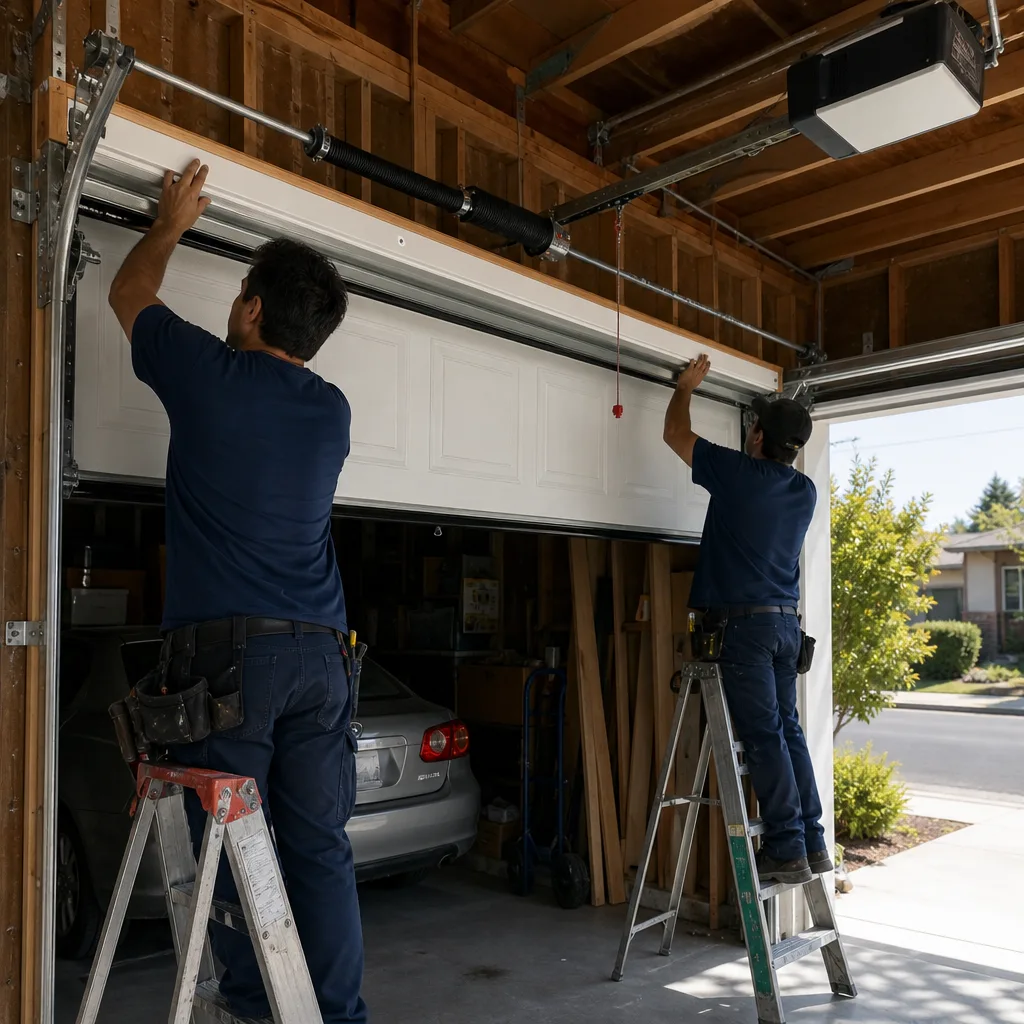
October and November bring the Diablo winds to Pleasanton, hot dry gusts that pressurize garages and test every seal. This is not gentle autumn weather. Wind speeds in the Tri-Valley corridor regularly hit 25-35 mph during Diablo events, with higher gusts in exposed areas near the 680 corridor and the ridgeline above Kottinger Ranch. A garage door with compromised weatherstripping becomes a bellows: wind enters gaps, pressurizes the interior, and can force the door off its tracks or overload the opener’s force settings.
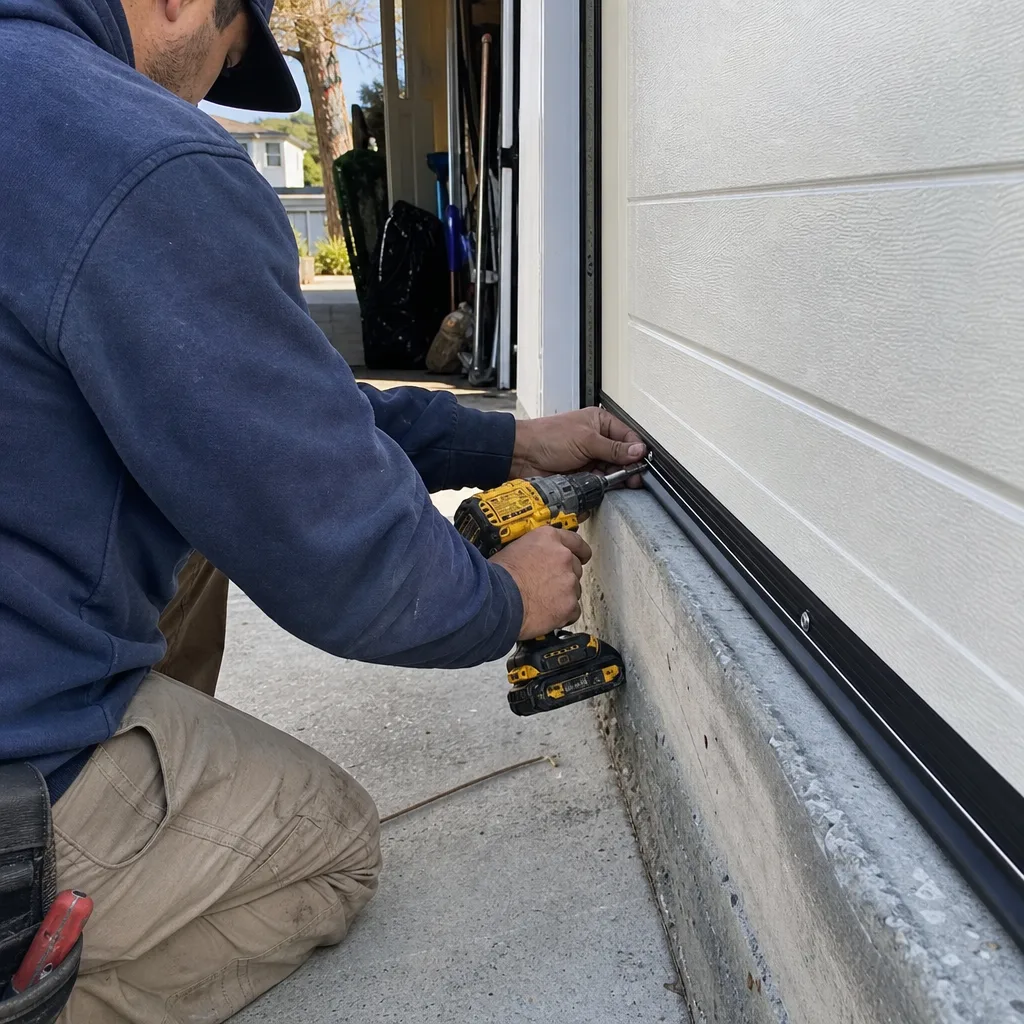
The critical inspection in fall is the bottom seal. This is a U-shaped vinyl or rubber gasket that slides into a retainer channel on the bottom section. In Pleasanton’s climate, UV exposure from summer plus the dry Diablo air causes the rubber to crack in a specific pattern: longitudinal splits that run parallel to the door width, starting at the corners where the seal flexes most. A cracked bottom seal doesn’t just leak dust and wind. It allows water to pool against the bottom section when winter condensation forms, starting rust on the interior face where you won’t see it until the panel is compromised.
We replace bottom seals in Pleasanton every fall as preventive maintenance. The part costs $15-$45 depending on width and profile; installation takes 20 minutes if the retainer channel isn’t corroded. But many homeowners don’t know the seal is failing until they notice leaves blowing in or smell garage odors from the street. By then, the bottom section may already have water staining.
Side and top weatherstripping use a different failure mode. The vinyl or rubber flap compresses against the door face, and over years it takes a permanent set, no longer springing back. Light visible around the door perimeter when closed is the obvious sign. Less obvious: the stripping that has hardened enough to transmit wind vibration into the door panels, causing rattle and premature hinge wear. We check durometer, a measure of rubber hardness, on fall inspections. A reading above 70 Shore A means the stripping is effectively plastic and should be replaced before the first Diablo event.
Fall inspection checklist:
- Close the door from outside on a sunny day; look for light leaks around the perimeter. Any visible gap is a seal failure.
- Run a hand along the bottom seal, flexing it. Cracks, splits, or a brittle texture mean replacement.
- Check the side stripping for compression set: press with a fingernail; it should rebound within two seconds.
- Inspect the retainer channel for corrosion or deformation that would prevent a new seal from seating.
- Test opener force settings: the door should reverse on a 2×4 board placed flat on the floor. A door that doesn’t reverse has excessive closing force, dangerous if wind is pressing against it.
Winter: Condensation, Not Freeze
December through February in Pleasanton rarely brings hard freeze. The overnight low averages 38-42°F. What we get instead is prolonged fog and high humidity, especially in the valley floor neighborhoods near the Arroyo Valle and the areas west of downtown where cool air settles. This pattern creates condensation on garage door hardware that is functionally different from rain exposure: it’s persistent, it’s temperature-cycled, and it reaches places that direct water doesn’t.
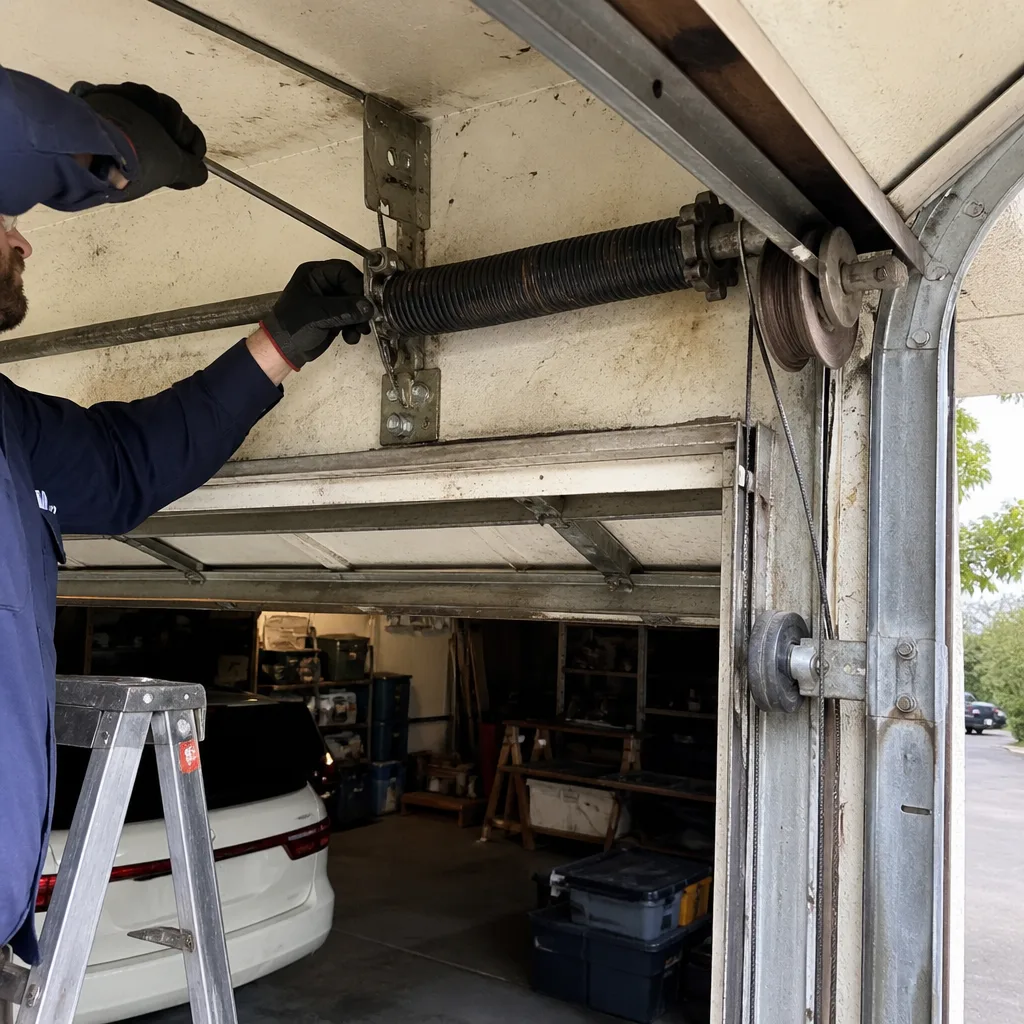
The risk is rust formation on torsion springs and cable drums. A torsion spring is a wound steel wire under extreme tension, typically 10,000-15,000 cycles of rated life. Surface rust doesn’t just look bad; it creates stress risers, microscopic pits where the wire can initiate fatigue failure. In Pleasanton’s winter condensation pattern, we’ve seen springs that looked fine in October develop visible oxidation by February, particularly on the interior-facing coils where warm garage air meets cold steel. The spring doesn’t fail immediately. It loses cycle count, failing at 7,000 or 8,000 cycles instead of 10,000, often in the following summer when thermal expansion adds mechanical stress.
Cable drums, the grooved aluminum wheels at each end of the torsion tube that wind the lift cables, corrode differently. Aluminum oxide is white and powdery; it fills the cable grooves and causes uneven winding. A cable that doesn’t seat properly in its groove can overlap, creating a bind that jerks the door or jumps the drum entirely. We’ve responded to winter callouts in Pleasanton where the customer reported “the door is crooked” and found a cable drum packed with aluminum oxide from three months of condensation cycling.
Opener electronics face a subtler threat. The logic board, the circuit that controls motor direction and force sensing, is sensitive to humidity. Condensation on the board can cause intermittent faults: the door stops mid-travel, the remote works only sometimes, the wall button flashes an error code that clears when the garage warms. These are maddening because they’re not reproducible on demand. We see them most in uninsulated garages in Pleasanton, particularly in homes built 2015-2020 with thin garage wall construction.
Winter inspection checklist:
- Visually inspect torsion springs for rust or oxidation, using a flashlight on the interior-facing coils.
- Check cable drums for white powdery buildup; clean with a dry brush if present, but do not lubricate (lubricant traps moisture).
- Test opener responsiveness: run the door through five complete cycles, watching for hesitation or reversal.
- Inspect the logic board enclosure for moisture staining or corrosion on terminal screws.
- Verify that garage ventilation is adequate; a sealed garage traps humidity, accelerating condensation.
Spring: Post-Winter Re-Tension and Cycle Count
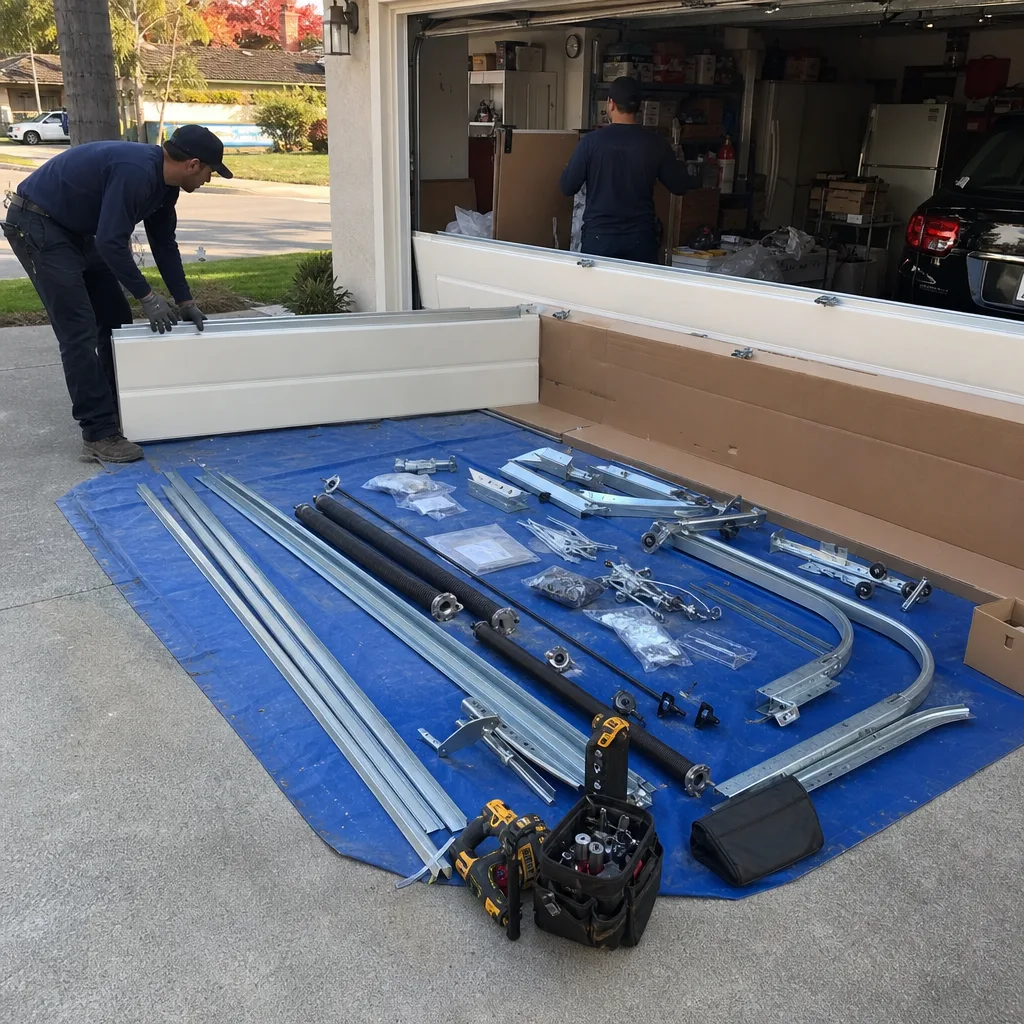
March through May is the reset season for Pleasanton garage doors. The condensation risk drops, the thermal expansion hasn’t peaked, and the door has just survived the mechanical stress of winter. This is when we perform the one re-tension check that every Pleasanton homeowner should schedule annually.
Torsion springs lose torque over time. It’s not dramatic; it’s a few inch-pounds per month. But over a winter of condensation exposure and temperature cycling, the loss accelerates. A spring that was correctly tensioned in September may be 5-10% below spec by April. The symptoms are easy to misread: the opener strains slightly more, the door seems “heavier,” the automatic reverse triggers more easily because the door lacks the momentum to compress the safety sensor beam properly. Homeowners often adjust the opener force settings upward to compensate, masking the real problem and risking a safety override.
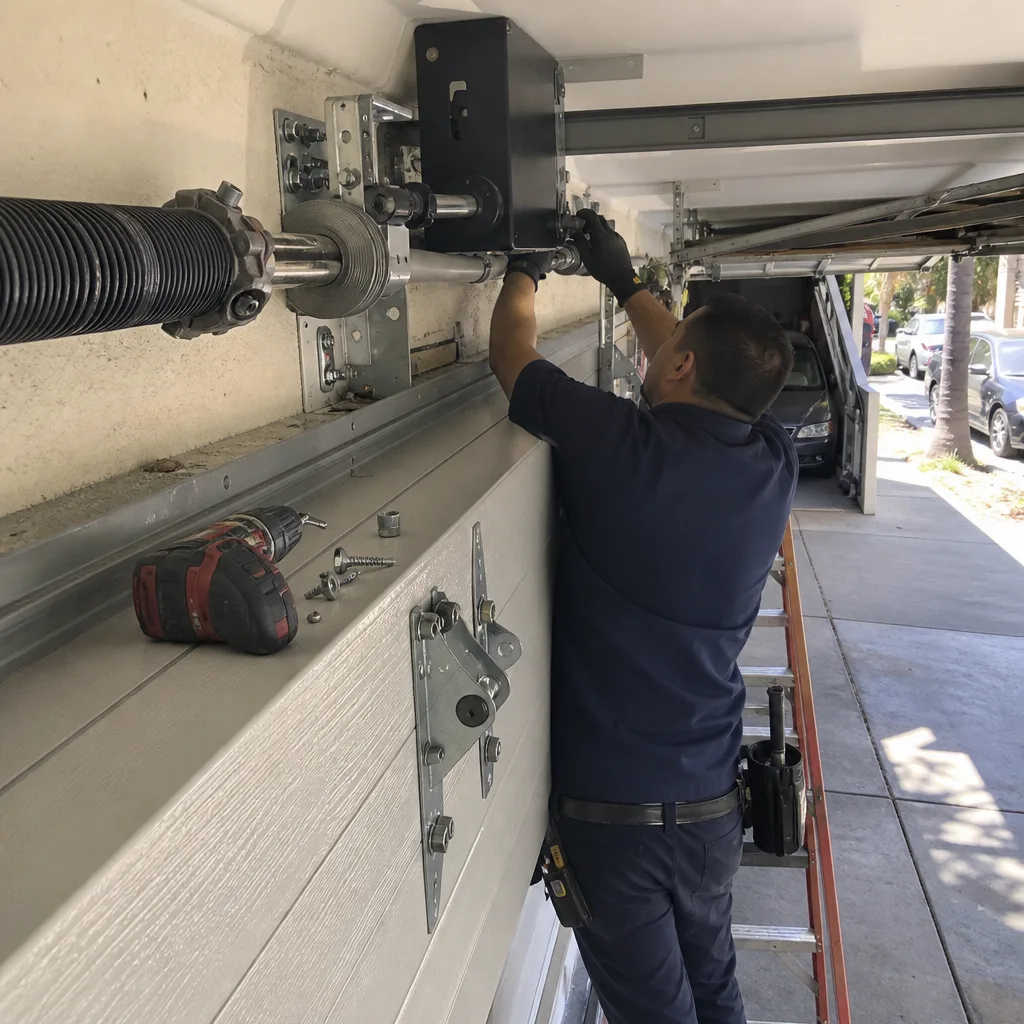
The correct procedure is to measure door balance with the opener disconnected. A properly balanced door stays at any position between fully open and fully closed. If the door drifts downward from the halfway point, the spring is undertensioned. If it drifts upward, it’s overtensioned (less common, but happens if a spring was replaced with a higher-rated unit). Re-tensioning requires winding bars inserted into the cogs of the winding cone, adding or releasing torque in quarter-turn increments. This is genuinely dangerous: the spring stores enough energy to cause serious injury or death if the winding bar slips. We do not provide step-by-step instructions for this procedure. The safety caveat is absolute: torsion spring adjustment requires training, proper tools, and an understanding of how to secure the door against uncontrolled movement.
Cycle count assessment is the companion check. A standard torsion spring is rated for 10,000 cycles, roughly 7-10 years for a typical residential door. But “typical” assumes moderate climate and no corrosion. In Pleasanton, we’ve documented springs failing at 6,500-8,000 cycles when winter condensation was a factor. We estimate remaining cycle count by measuring wire diameter, counting active coils, and cross-referencing the door weight and lift height. This calculation is part of our spring inspection protocol, and we explain the result in the written scope before any replacement is quoted.
Spring inspection checklist:
- Disconnect the opener and test door balance at the halfway point; note drift direction and speed.
- Visually inspect springs for coil gap consistency; gaps that vary indicate a fatigued spring losing its uniform temper.
- Check cable condition: fraying, kinking, or broken strands mean replacement regardless of spring status.
- Inspect end bearing plates for wear; a grinding sound during operation often traces to dry or failing bearings.
- Schedule professional re-tensioning if balance is off; do not adjust opener force settings to compensate.
Year-Round: The Photoelectric Sensor Problem
There’s one maintenance issue in Pleasanton that doesn’t respect seasons: photoelectric sensor misalignment caused by low afternoon sun angles. This affects east-west-oriented garages, which describes a significant portion of Pleasanton’s housing stock, particularly in the neighborhoods south of Bernal Avenue and in the Ruby Hill development where lot orientation follows street grid patterns.
The safety sensors, one transmitting an infrared beam and one receiving it, sit 4-6 inches above the floor on each side of the door opening. When the sun enters a west-facing garage at a low afternoon angle, typically October through February but also during summer evening hours, the infrared receiver can be swamped by ambient light. The door refuses to close, or reverses immediately, or behaves inconsistently. Homeowners often assume the opener is failing and schedule unnecessary service calls.
The diagnostic is simple: try closing the door after sunset or with the garage lights off. If it works normally in darkness but fails in direct sun, the issue is optical, not mechanical. The fix is usually sensor shielding or repositioning, not replacement. We fabricate simple visors from UV-stable material that block direct sun without obstructing the beam path. This is a five-minute adjustment that saves the cost of a new sensor pair.
Another year-round issue in Pleasanton is track alignment drift. The vertical tracks are mounted to the jamb with brackets that loosen over time from vibration. A track that leans even 1/4 inch out of plumb causes rollers to bind, accelerating wear on both the roller and the track itself. We check plumb with a level on every service call and document the measurement in the photo record. Catching this early prevents the cascade failure: binding roller, bent track, door off-track, possible panel damage.
Year-round inspection points:
- Test safety reverse monthly with a 2×4 board or the opener’s force test function.
- Clean sensor lenses with a dry cloth; residue from garage activity blocks the infrared beam.
- Check sensor LED indicators; both should glow steady when aligned and unobstructed.
- Visually inspect vertical tracks for plumb; look for roller wear patterns that indicate binding.
- Listen for new noises: grinding, squealing, or clicking that wasn’t present last season.
A Maintenance Calendar Built for Pleasanton
Generic maintenance calendars divide the year into four equal quarters. Pleasanton’s climate doesn’t cooperate with that symmetry. Here’s a calendar weighted to actual local stressors:
May (Pre-Heat)
- Schedule professional balance and tension check
- Apply UV-protective finish treatment to sun-facing panels
- Switch to high-temperature-rated synthetic lubricant
- Inspect and photograph door-to-jamb clearance baseline
September (Post-Heat, Pre-Wind)
- Inspect weatherstripping durometer and compression set
- Replace bottom seal if cracked or brittle
- Check opener force settings and safety reverse function
- Clean and inspect cable drums for summer grease contamination
January (Mid-Winter)
- Inspect torsion springs and hardware for condensation rust
- Test opener electronics for humidity-related intermittency
- Verify garage ventilation; add if condensation is excessive
- Photograph hardware condition for spring comparison
April (Post-Winter Reset)
- Schedule professional re-tension check
- Assess spring cycle count and remaining life
- Inspect cables and bearings for winter wear
- Adjust or shield photoelectric sensors for changing sun angle
This calendar puts the two professional visits, re-tensioning in spring and balance check in late spring, where they do the most good. The homeowner inspections in fall and winter catch the seal and corrosion issues that lead to expensive failures.
Common Mistakes to Avoid
- Adjusting opener force settings to compensate for a heavy door. This masks spring fatigue and creates a safety hazard; the automatic reverse may not trigger when it should. In Pleasanton, we see this most after winter when springs have lost torque and homeowners want a quick fix.
- Using WD-40 as a garage door lubricant. WD-40 is a solvent and water displacer, not a lubricant. It strips existing grease, attracts dust, and leaves metal unprotected. On a hot Pleasanton day, it evaporates entirely within 48 hours.
- Ignoring the bottom seal until water enters. By the time you notice water or dust, the seal has been cracked for months and may have allowed corrosion of the bottom section interior. Fall inspection in Pleasanton should include seal replacement as routine maintenance, not emergency repair.
- DIY spring adjustment without training or proper tools. Torsion springs store lethal energy. Every year, homeowners are injured attempting this. The correct tool is a solid steel winding bar, not a screwdriver or pliers. The correct procedure requires securing the door and understanding the winding cone geometry. We document our spring work with before-and-after tension measurements in the photo record.
- Assuming all garage door lubricants are equivalent. Summer in Pleasanton thins standard lithium grease to the point of runoff. Winter condensation requires a product that doesn’t trap moisture. We specify lubricant by temperature range and application, and we record what we used.
- Neglecting sensor alignment after seasonal sun angle changes. A door that worked in June may fail in October as the afternoon sun shifts. Before calling for service, test operation at different times of day. The fix is often a simple shield, not a new opener.
- Skipping documentation of baseline conditions. Without dated photos or measurements, you can’t tell if a gap, a rust spot, or a wear pattern is new or years old. Our photo record on every visit creates that baseline automatically.
When to Call a Professional
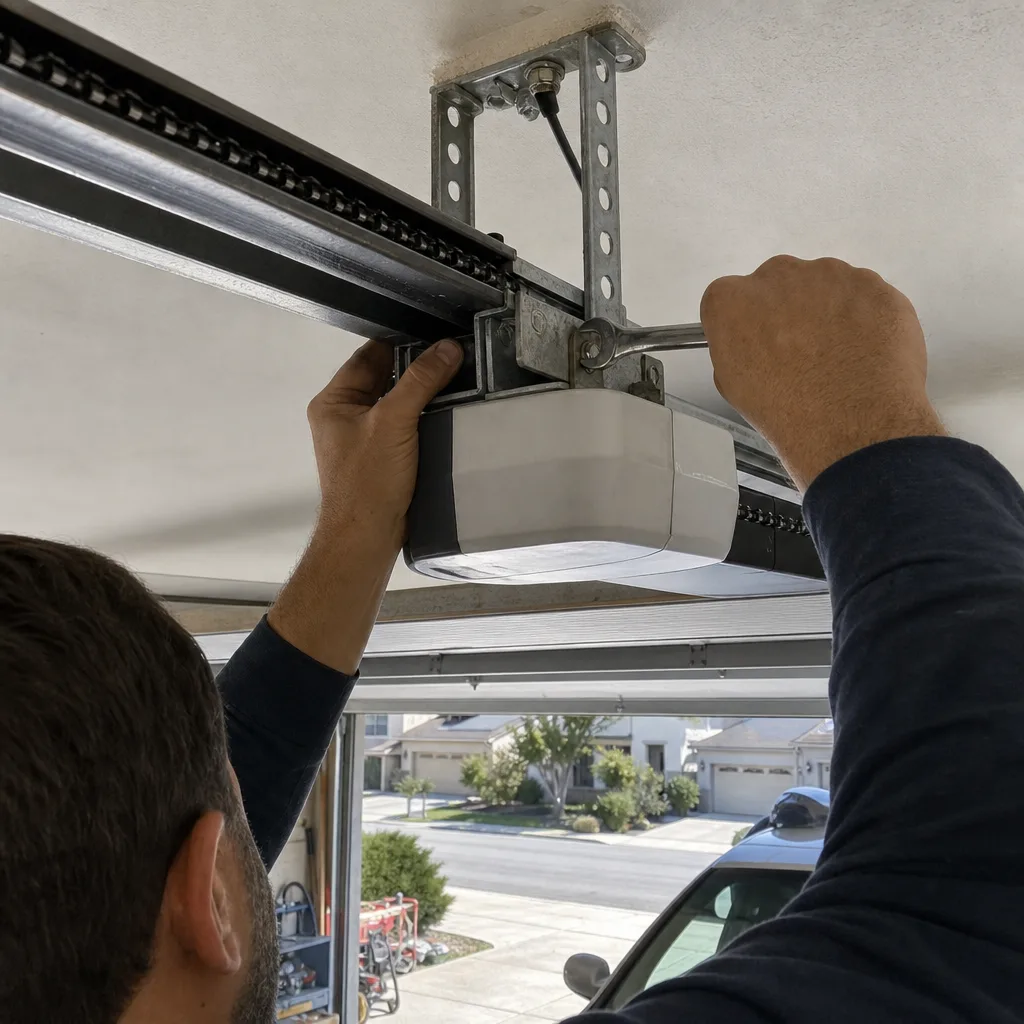
Call a technician when you encounter torsion spring issues, cable fraying or detachment, door off-track, opener logic board faults, or any situation where the door’s weight or stored energy creates injury risk. These are not homeowner repairs. The torsion spring alone, a wound steel wire under thousands of pounds of torque, can cause serious injury if mishandled.
Servo Garage Doors Pleasanton offers free estimates in Pleasanton. We’ll inspect, photograph what we find, and deliver a flat written price and written scope before any work starts, per Clause 1 of The Haven Standard. If you have a written estimate from another company, we’ll provide a free second opinion, no coupon required. Call (510) 398-4466 to schedule.
Frequently Asked Questions
Twice yearly: a balance and tension check in late spring (May) and a weatherstripping and hardware inspection in early fall (September). Pleasanton’s thermal swings and Diablo winds justify this frequency over the generic annual recommendation. Call (510) 398-4466 to schedule either service.
Homeowners can apply lubricant to hinges, rollers, and the chain or screw drive if they use the correct product. Do not lubricate the torsion spring, cable drums, or the track itself. Incorrect lubrication causes more problems than none. If you’re unsure what product matches your door and Pleasanton’s temperature range, have a technician specify it during a service visit.
Low afternoon sun entering an east-west-oriented garage can overwhelm the photoelectric safety sensor receiver. This is common in Pleasanton neighborhoods with grid-oriented lots. Test by blocking the sun or operating after dark. If the problem is optical, sensor shielding or repositioning fixes it without replacing components.
A professional balance check, lubrication service, and safety inspection typically runs $120-$180 in the Pleasanton market. Weatherstripping replacement, spring re-tensioning, or sensor adjustment are quoted separately with flat written prices before work starts. We don’t do “call for a quote” - Clause 1 of The Haven Standard requires the price in writing first.
No. The flat written price and written scope we deliver before any work starts is the price you pay. If we find additional issues during inspection, we photograph them, explain them, and quote them separately. You approve each scope independently. This is documented in our terms page, not promised verbally.
Signs include: the door feels heavier and drifts downward when disconnected from the opener; the opener strains or stalls; you see coil gaps that vary along the spring length; or you find surface rust, especially on the interior-facing coils after a Pleasanton winter. A spring that has lost 10% or more of its torque should be re-tensioned or replaced before it fails completely. Call (510) 398-4466 for an inspection and exact quote.
The Bottom Line
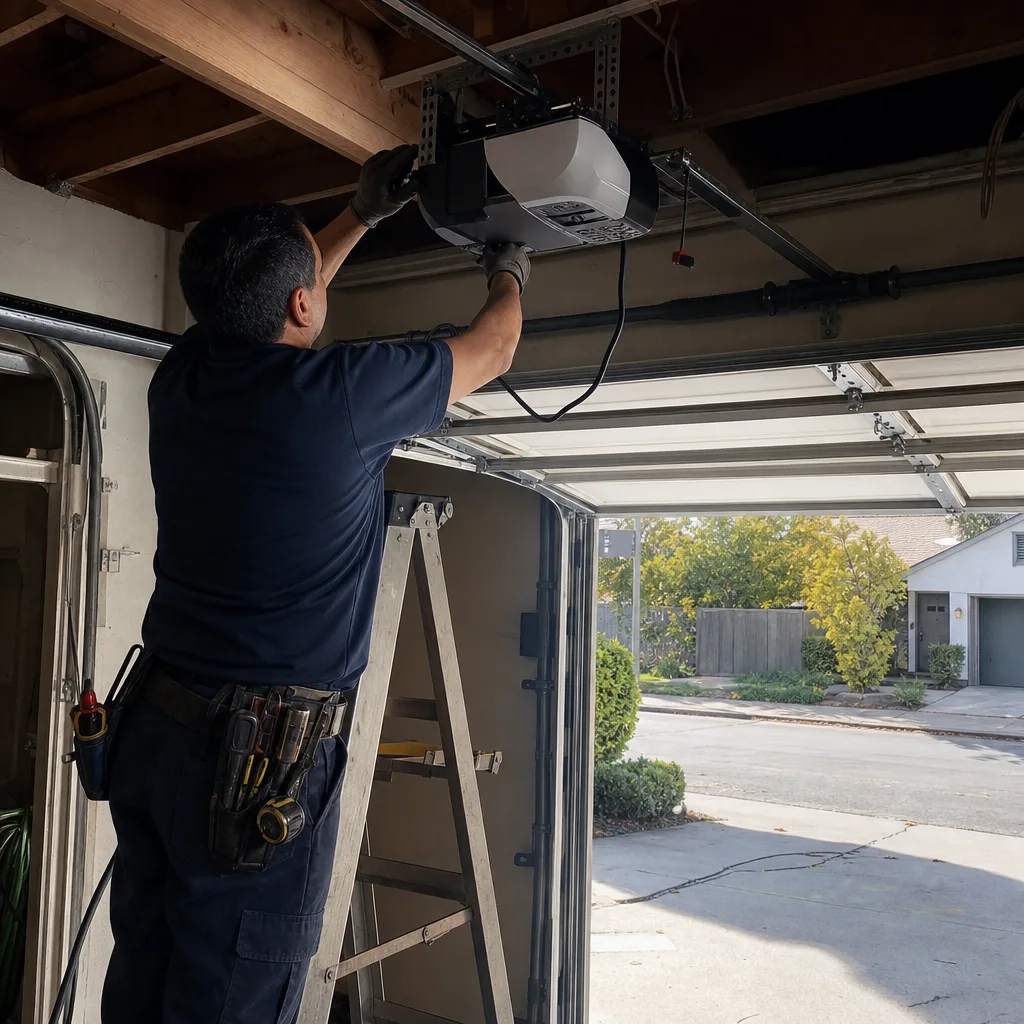
Pleasanton’s garage doors face thermal expansion in summer, wind pressurization in fall, condensation corrosion in winter, and spring fatigue in spring. A generic maintenance schedule misses these specifics. The homeowners who get fifteen years from a door instead of eight are the ones who time their inspections to local stressors, document what they find, and bring in a technician for the work that involves stored energy or precise adjustment. We’re not selling urgency. We’re selling a documented process: photo record, written price, written scope, and a 365-Day Done Right Promise backed by terms you can read. Explore more guides & resources on maintaining your garage door in the Tri-Valley climate. That’s been our practice since 2015.
Ready to schedule your seasonal inspection? Servo Garage Doors Pleasanton serves all Pleasanton neighborhoods with flat written pricing, background-checked uniformed technicians, and live phone coverage 24 hours a day. Whether you need garage door installation in Pleasanton, garage door opener repair & installation in Pleasanton, or garage door parts in Pleasanton, we quote before we touch anything and document everything we do. Call (510) 398-4466 for a free estimate.
Written by Marcus Deller, Owner at Servo Garage Doors Pleasanton, serving Pleasanton since 2015.