
Last updated September 21, 2026
Full 25-point door and opener safety check with every visit - springs, cables, rollers, tracks, and your LiftMaster or Chamberlain opener included
You get a price before we start. It does not change when the truck arrives.
 Before
 After
After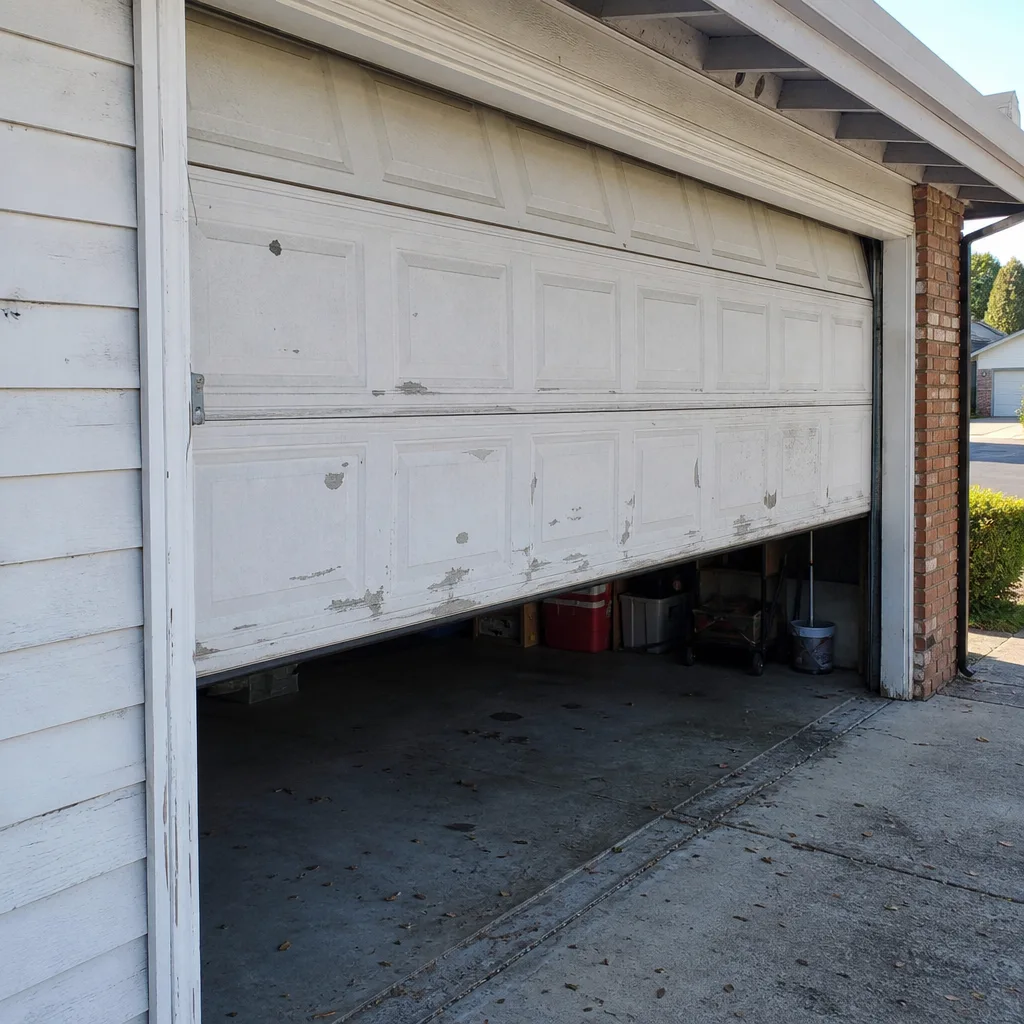 Before
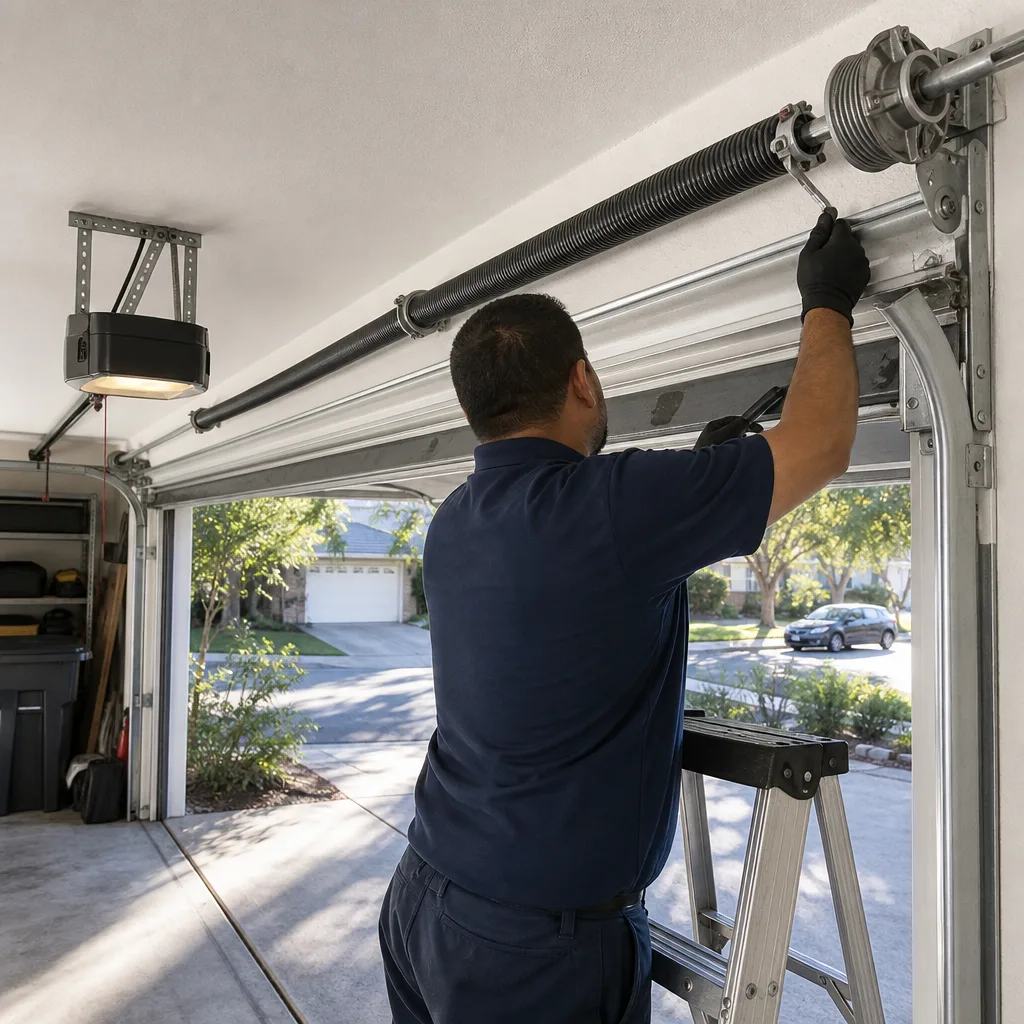 After
After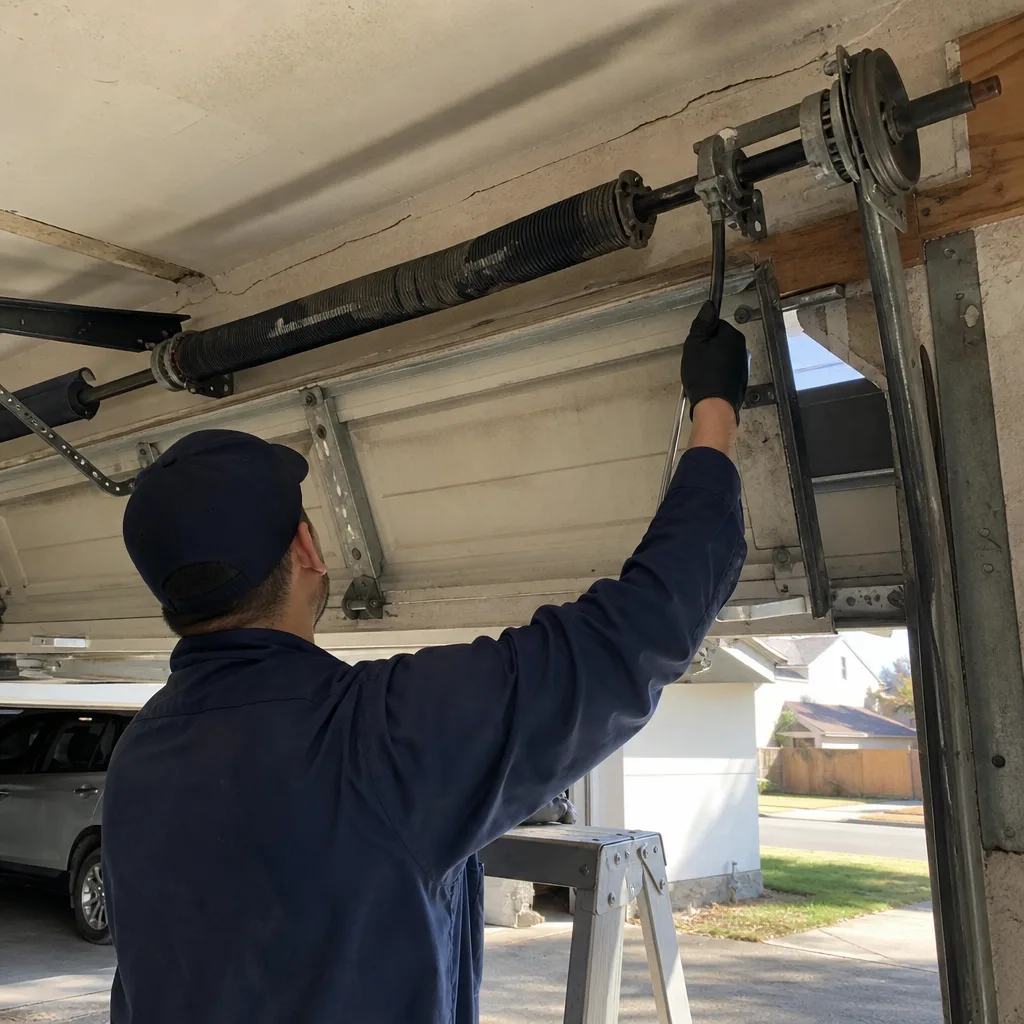 Before
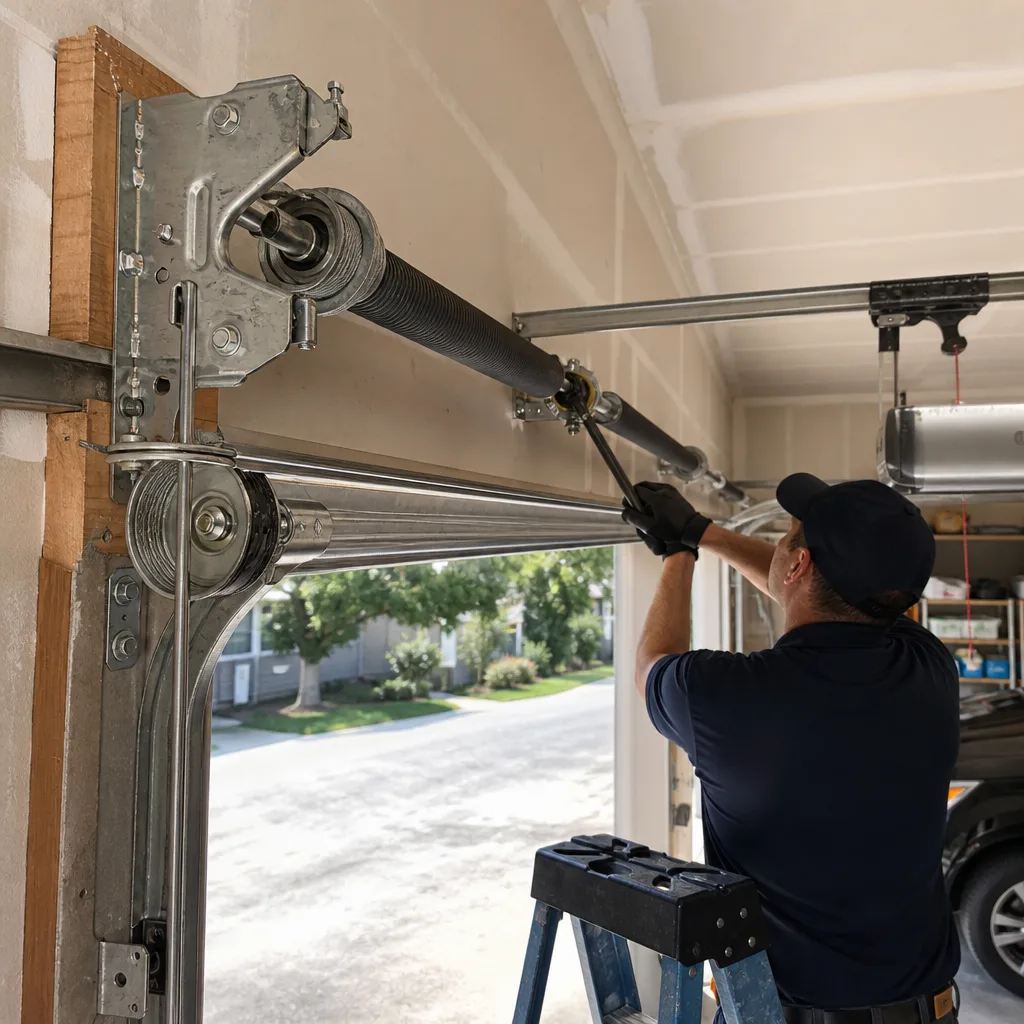 After
AfterGarage Door Cost Breakdown: The Pleasanton Homeowner’s Reference for 2026
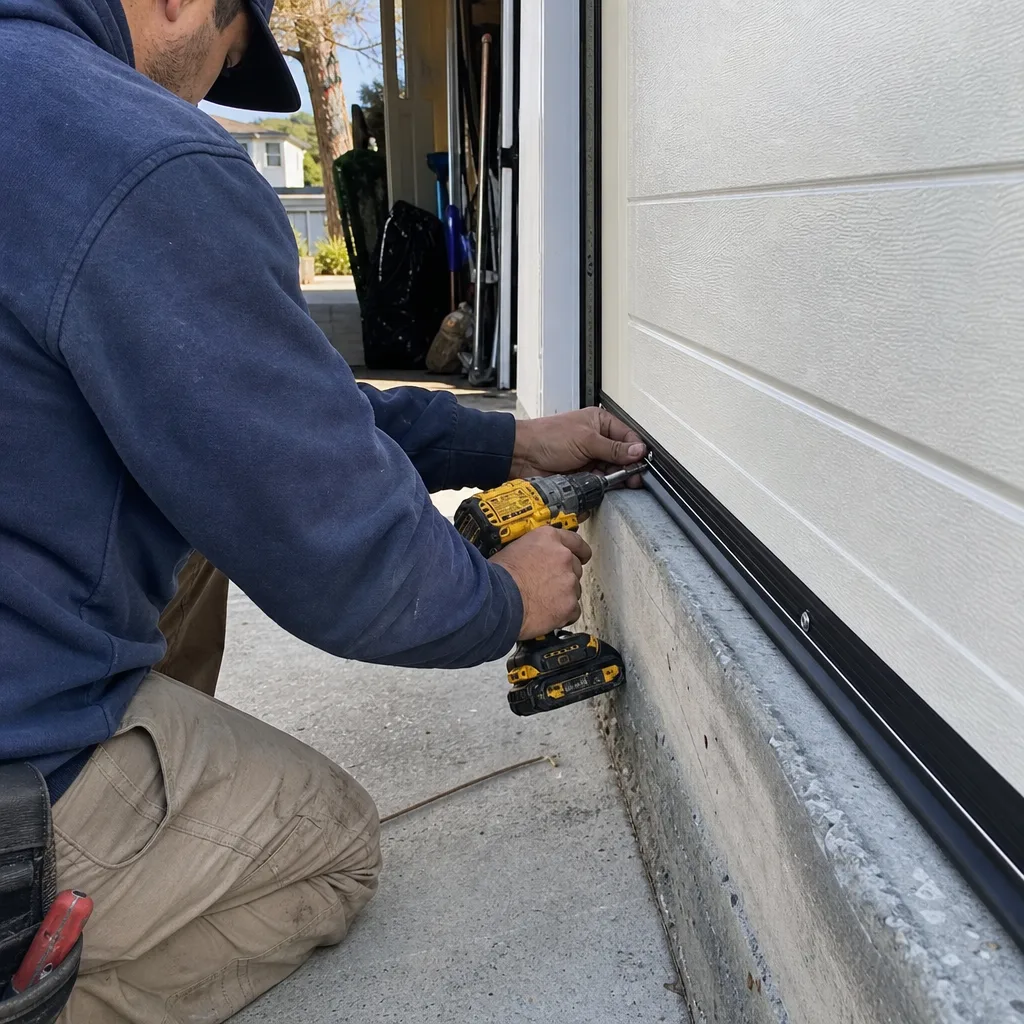
Two Pleasanton contractors can quote the same 16×7 two-car steel door $700 apart without either being dishonest. The gap comes from what lives inside the base price versus what surfaces as a line item when the job is nearly done. One quote assumes you’ll keep every existing component that isn’t visibly broken. The other includes haul-away of the old door, a complete spring system replacement, and a new opener bracket in the flat price. This guide and our Garage Door Installation Maintenance Checklist for Pleasanton Homeowners decode those line items so you can compare quotes that appear to be for different things. Whether you’re in Vintage Hills, Ruby Hill, or a Kottinger Ranch townhome, here’s what garage door work actually costs in Pleasanton in 2026.
Quick Answer
A complete garage door replacement in Pleasanton in 2026 ranges from $1,200 for a single-layer non-insulated steel door to $5,800 for a full custom wood installation. Most two-car steel replacements with standard hardware fall between $1,800 and $3,200 including installation. The final number depends on seven specific line items that contractors bundle differently.
Table of Contents
- Why Two Pleasanton Quotes for the Same Door Can Differ by $700
- 2026 Pleasanton Price Ranges by Door Type
- The Seven Line Items Every Complete Quote Should Include
- Which Components Are Legitimately Variable (and Which Are Upsells)
- Insulation Math for Pleasanton’s Climate: When a Higher R-Value Pays Back
- What Photo-Documented Quotes Change About Final Invoice Accuracy
- Financing and Cost-Over-Time: The Break-Even Calculation
- Common Mistakes to Avoid
- When to Call a Professional
- Frequently Asked Questions
- The Bottom Line
 Before
 After
AfterWhy Two Pleasanton Quotes for the Same Door Can Differ by $700
The door itself is rarely the source of quote variation. A 16×7 Clopay or Amarr steel panel from a major distributor costs roughly the same whether your contractor buys it in Livermore or San Jose. The gap opens in everything surrounding the door.
We’ve seen this directly in Pleasanton. A homeowner in Del Prado received three quotes for what each contractor called a “standard two-car steel replacement.” The lowest was $1,650. The highest was $2,480. The door models were within $80 of each other wholesale. The $830 spread came from:
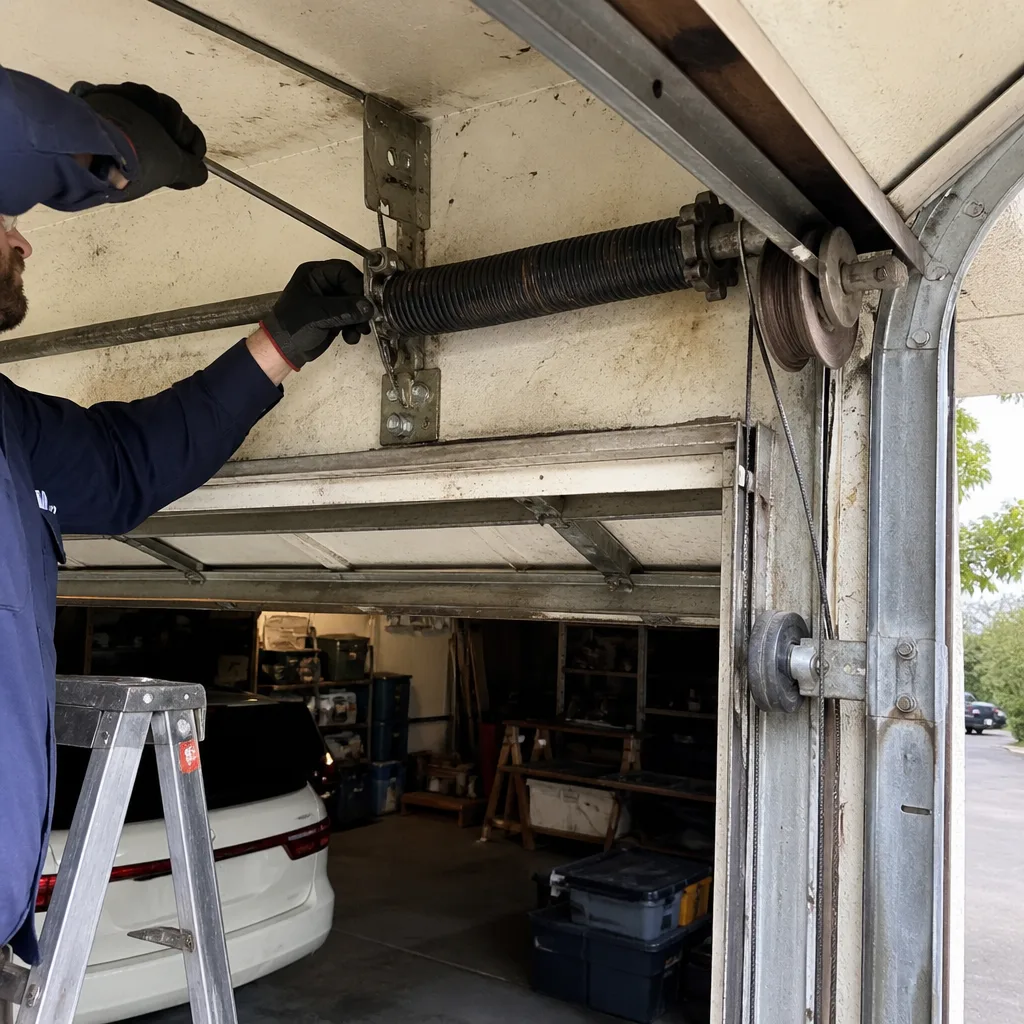
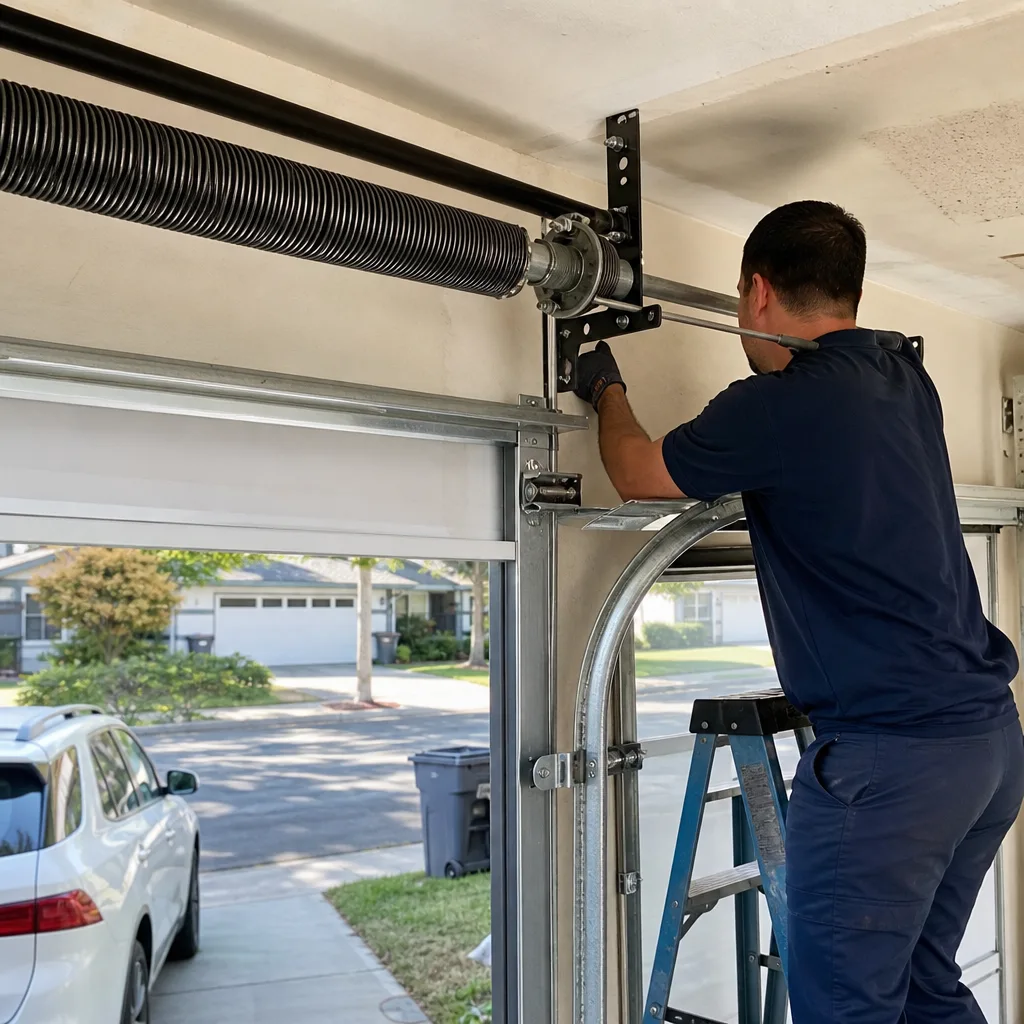
- Spring system: One quote specified new torsion springs. Another assumed the existing springs “looked fine” and excluded replacement. A torsion spring pair runs $180-$340 in Pleasanton’s market.
- Haul-away: The lowest quote assumed the homeowner would handle disposal of the old door. Alameda County transfer station fees plus truck time make this a $120-$180 line item when included.
- Opener bracket: One contractor planned to reuse the existing header bracket. Another included a new bracket engineered for the new door’s weight and wind load.
- Track and hardware: “Reuse existing track” versus “complete new track and roller kit” accounts for $200-$350 in parts and labor.
The honest contractor who excludes these items isn’t necessarily cutting corners. They’re quoting a narrower scope. The problem is that most homeowners don’t know which scope they’re buying until the job is underway and the additions start appearing.
This is why Clause 1 of The Haven Standard exists: a flat, written price and written scope delivered before any work starts. No exceptions. The customer sees every line item before anyone touches a tool.
2026 Pleasanton Price Ranges by Door Type
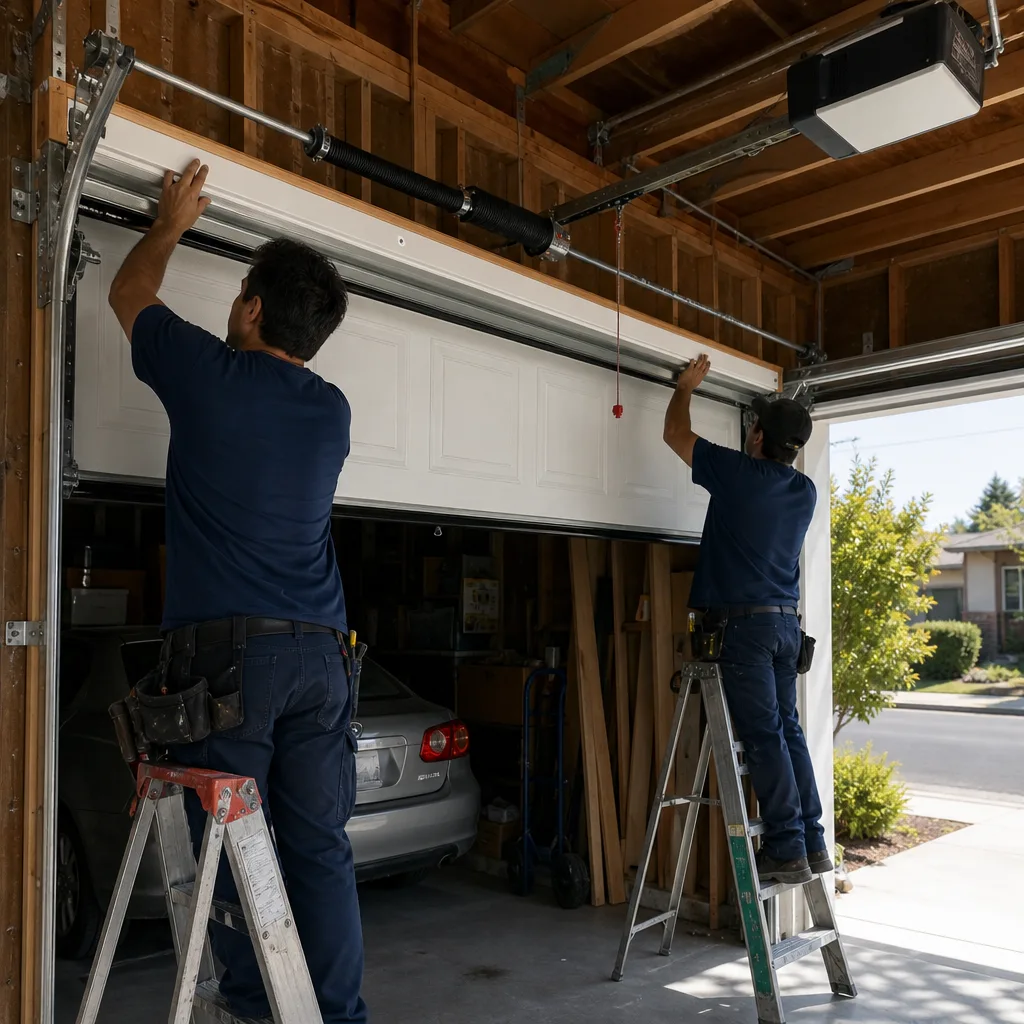
Pleasanton’s garage door market tracks slightly above the national average due to higher labor costs and the prevalence of insulated doors in Tri-Valley new construction. These ranges reflect complete installation with standard hardware, spring system, and haul-away included. They assume a standard 8-foot ceiling height and no structural modifications to the opening.
| Door Type | Single Car (8×7 or 9×7) | Two Car (16×7) | Typical Use Case in Pleasanton |
|---|---|---|---|
| Non-insulated steel (single layer, 25-27 gauge) | $1,200 – $1,650 | $1,800 – $2,400 | Detached garages, rental properties, budget-focused replacements |
| Insulated steel, R-6 to R-9 (double layer, 24-25 gauge) | $1,550 – $2,100 | $2,300 – $3,200 | Most common choice for attached garages in Ruby Hill, Kottinger Ranch |
| Insulated steel, R-12 to R-18 (triple layer, 24 gauge) | $2,000 – $2,700 | $3,000 – $4,100 | Home offices above garage, west-facing doors in Vintage Hills |
| Wood composite (faux wood overlay on steel) | $2,200 – $2,900 | $3,400 – $4,500 | HOA-mandated aesthetic in certain Pleasanton developments |
| Full wood (cedar, redwood, custom) | $3,500 – $4,800 | $4,200 – $5,800 | Custom homes, historic district requirements, specific architectural review board approvals |
These ranges include the door, standard hardware kit, new torsion spring system, installation labor, and haul-away of the old door. Opener installation is separate and covered below.
R-value reality check: R-value measures thermal resistance. In Pleasanton’s climate, with roughly 2,800 cooling degree days annually and winter lows rarely sustained below freezing, an R-6 door performs noticeably better than non-insulated. The jump from R-6 to R-12 delivers diminishing returns for most homeowners unless the garage is conditioned space or has living area above it. The jump from R-12 to R-18 is primarily justified for west-facing doors that absorb afternoon sun, or for garages with ductwork running through them.
The Seven Line Items Every Complete Quote Should Include
A quote that lists only “door + installation” invites scope creep. Here’s what a complete Pleasanton replacement quote should specify, with 2026 price ranges for each:
- Door panels and sections - The visible door itself. $650-$2,800 depending on material, size, and insulation tier.
- Hardware kit - Hinges, rollers, cables, and fasteners. Standard nylon rollers run $45-$75 for the set. Upgraded 13-ball bearing nylon rollers add $80-$120. Steel rollers are rarely specified for residential Pleasanton installations due to noise.
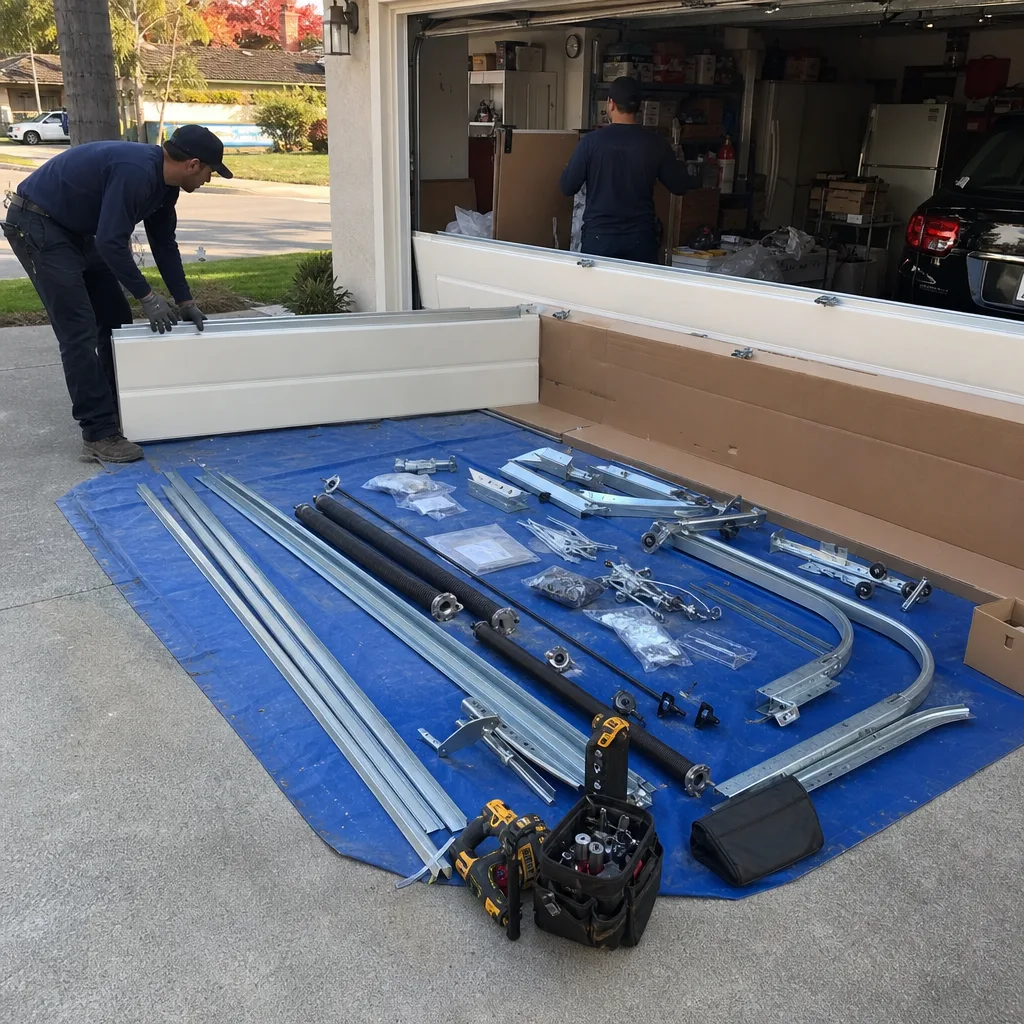
- Spring system - Torsion springs are standard for two-car doors in Pleasanton; extension springs persist on some older single-car installations. New torsion spring pair: $180-$340. Spring cycle life matters: 10,000-cycle springs are common. 20,000-cycle springs add $90-$140 but last roughly twice as long in typical use.
- Installation labor - $400-$700 for standard replacement on existing opening. Structural modifications, header reinforcement, or electrical for new opener circuit add from this base.
- Haul-away and disposal - $120-$180 including Alameda County waste facility fees. Some contractors exclude this, assuming homeowner disposal.
- Opener installation (if applicable) - $280-$450 for standard chain or belt drive. Jackshaft (wall-mount) openers for high-lift or limited-headroom applications run $450-$750 installed. See Garage Door Opener Repair & Installation in Pleasanton for detailed opener pricing.
- Warranty terms - Not a dollar line item, but a cost-equivalent. Manufacturer warranty on door sections typically 1-3 years. Spring warranty varies: 1 year is common, 3-5 years indicates higher-cycle springs. Labor warranty is where contractors differ most: 30 days versus 1 year versus our 365-Day Done Right Promise.
A quote missing any of these seven items isn’t necessarily fraudulent. But it is incomplete. And incomplete quotes correlate with final invoices that exceed the initial number.
At Servo Garage Doors Pleasanton, Clause 1 of The Haven Standard requires all seven items in writing before work begins. Clause 4 requires the technician to photograph the failed or worn components before quoting replacement, so the customer sees the evidence that justifies each line item.
Which Components Are Legitimately Variable (and Which Are Upsells)
Some price variation reflects real choice. Some reflects pressure tactics. Here’s how to tell the difference in Pleasanton’s market.
Legitimate upgrades with measurable differences:
- Torsion spring gauge and cycle life: A 0.207-inch wire diameter spring versus 0.250-inch isn’t about thickness alone. The heavier wire, properly specified for door weight, delivers more cycles before metal fatigue. For a door opened 4 times daily, 10,000-cycle springs last roughly 7 years. 20,000-cycle springs last 13-14 years. The upgrade cost ($90-$140) is straightforward math.
- Roller specification: Standard 7-ball nylon rollers are adequate for most residential use. 13-ball bearing nylon rollers reduce noise and roll more smoothly, which matters for bedrooms above or adjacent to the garage. The $80-$120 upgrade is legitimate if noise reduction is a stated priority.
- Track gauge: Most residential installations use 2-inch, 14-gauge steel track. Heavier 12-gauge track adds $150-$220 and resists sag on wider doors or in high-wind exposures. For standard 16×7 doors in sheltered Pleasanton locations, this is rarely necessary. For hillside homes in Ruby Hill with sustained wind exposure, it can be justified.
Upsells to question:
- “Premium lubrication” or “annual tune-up packages” sold at installation. Quality installation includes proper lubrication of all moving parts. This is not an add-on.
- “Reinforced struts” on standard doors without wind-load requirements. A 16×7 steel door in a standard residential application doesn’t need additional struts unless local code or manufacturer specification requires them.
- Opener replacement bundled with door replacement when the existing opener functions properly. A quality contractor evaluates the opener separately and quotes it only if needed.
The test is simple: can the contractor show you the specification sheet that documents the difference? At Servo, the photo record includes the part label, the measurement, and the specification comparison. If we recommend 20,000-cycle springs, you’ll see the cycle-life calculation based on your actual door weight and usage pattern.
Insulation Math for Pleasanton’s Climate: When a Higher R-Value Pays Back
Pleasanton’s climate is mild by national standards but increasingly warm. The Tri-Valley averaged 35 days above 90°F annually in the 1990s. That number has trended toward 50+ days in recent years. This changes the insulation calculation.
A garage door’s R-value matters in two directions: keeping heat out in summer, and keeping heat in during winter. In Pleasanton, the cooling-season problem dominates. A west-facing garage door in Vintage Hills or a south-facing door in Del Prado absorbs significant solar gain from May through October.
The break-even framework:
Consider a two-car garage under conditioned space, or with a home office or bedroom above it. The garage door is effectively an exterior wall. An R-6 door reduces heat transfer versus non-insulated by roughly 60%. An R-12 door reduces it by roughly 75% versus non-insulated. The incremental improvement from R-6 to R-12 is real but smaller: about 15 percentage points of additional reduction.
In dollar terms: if cooling the room above the garage costs $40 monthly in peak summer months with a non-insulated door, an R-6 door might reduce that to $16. An R-12 door might reduce it to $10. The $6 monthly difference, over 5 peak months annually, is $30/year. At a $700 upfront price difference between R-6 and R-12 doors, simple payback exceeds 20 years.
But this math changes if:
- The garage itself is conditioned (rare in Pleasanton, but increasing with ADU conversions)
- Ductwork runs through the garage (common in 1990s-2000s construction in Pleasanton)
- The door faces west and receives direct afternoon sun
- You plan to sell within 5 years, and buyers in Pleasanton’s price brackets increasingly expect insulated doors
For most Pleasanton homeowners, R-6 to R-9 represents the sweet spot. R-12 and above justify themselves only in specific thermal or resale contexts. We document this calculation in writing when quoting, so the homeowner sees the payback projection before deciding.
What Photo-Documented Quotes Change About Final Invoice Accuracy
There’s a measurable difference between quotes based on visual inspection and quotes based on documented evidence. We’ve tracked this across our 18,000+ jobs since 2015.
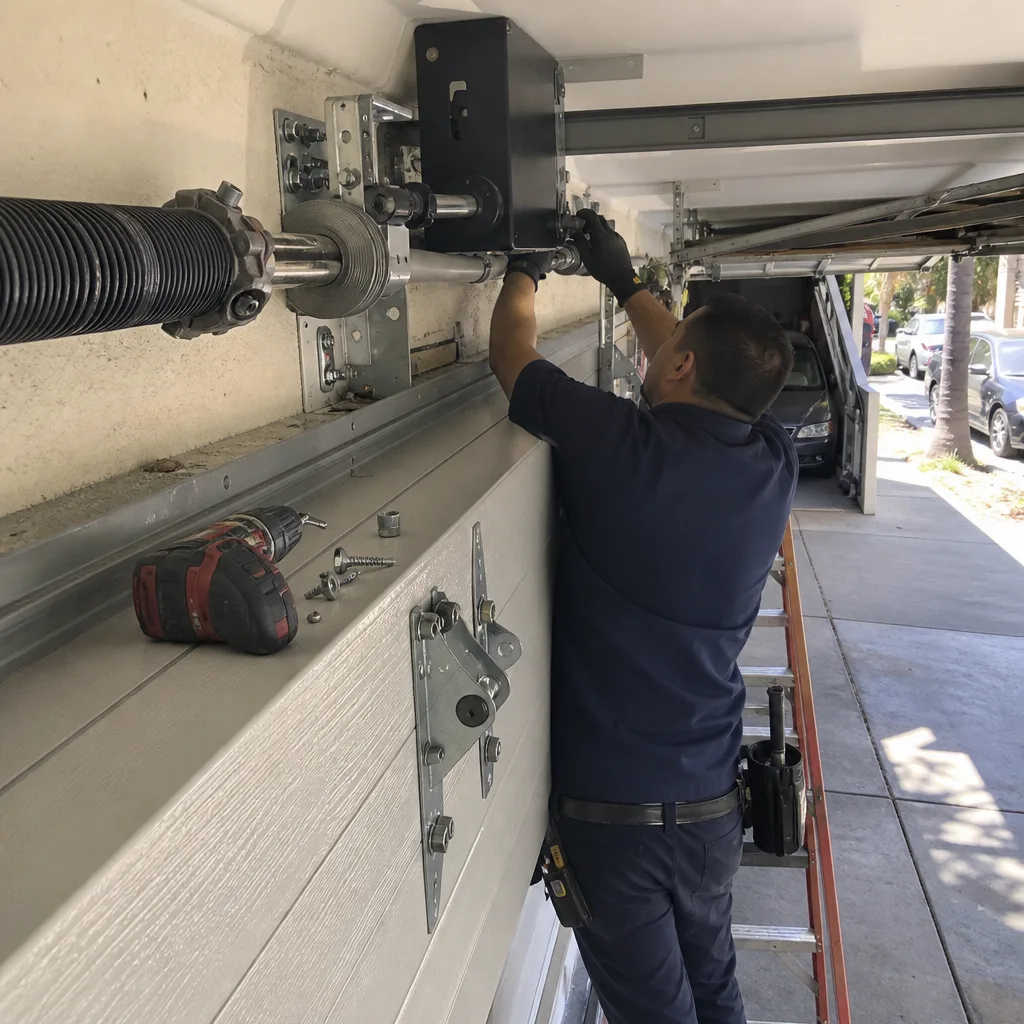
When a technician photographs the failed component, measures it, and records the specification before quoting, two things happen. First, the customer sees the same evidence the technician sees. Second, the quote is built on verifiable facts rather than pattern-matching from similar jobs.
The correlation is straightforward: jobs quoted from photo documentation have lower scope-creep frequency. Not because problems never emerge, but because the pre-work documentation catches the variables that otherwise surface mid-job.
What this looks like in practice:
- The technician arrives and identifies the issue: a broken torsion spring, a cracked bottom panel, a seized logic board in the opener.
- Before quoting, they photograph the failed part, measure wire diameter and coil count for springs, or record the opener model and diagnostic code.
- The customer receives these photos, with annotations, as part of the written quote.
- The quote specifies exactly what will be replaced, with what part, at what flat price.
- After work completion, photos document the installed components and their specifications.
This is Clause 4 of The Haven Standard, and it traces back to how Servo was built in 2015. The customer sees the failed part before anyone quotes a replacement. No exceptions.
For Pleasanton homeowners comparing quotes, ask this question: “Will I receive photos of what you found, and a written scope, before you start work?” The answer reveals whether the quote is built on evidence or assumption.
Financing and Cost-Over-Time: The Break-Even Calculation
Garage door replacement is a capital expense that most Pleasanton homeowners undertake once per decade or less. Financing options exist, but the math favors understanding total cost of ownership rather than monthly payment alone.
Total cost of ownership over 15 years:
| Scenario | Upfront Cost | Mid-Life Repair | Total 15-Year Cost |
|---|---|---|---|
| Budget non-insulated steel, standard springs, minimal hardware | $1,800 | $680 (spring replacement at year 7, roller/cable service at year 10) | $2,480 |
| Mid-grade insulated steel, 20,000-cycle springs, quality rollers | $2,600 | $340 (spring replacement at year 12) | $2,940 |
| Premium insulated steel, high-cycle springs, full hardware upgrade | $3,400 | $0 (components rated beyond 15 years) | $3,400 |
The $1,600 spread between budget and premium upfront narrows to $920 over the full ownership period. For homeowners planning to stay in their Pleasanton home 10+ years, the premium option often costs less in total. For those selling within 3-5 years, the mid-grade option typically maximizes return.
Some Pleasanton contractors offer financing through third-party providers. If considering this, calculate the total interest cost against the ownership-period savings. A 15-year financing term on a $3,000 door at typical home-improvement rates can add $1,200-$1,800 in interest, erasing much of the long-term savings.
Our approach at Servo: quote the flat cash price first. If financing is relevant, we provide the total cost with interest, not just the monthly payment. Clause 1 requires written pricing. That includes the full financing picture if the customer asks.
Common Mistakes to Avoid
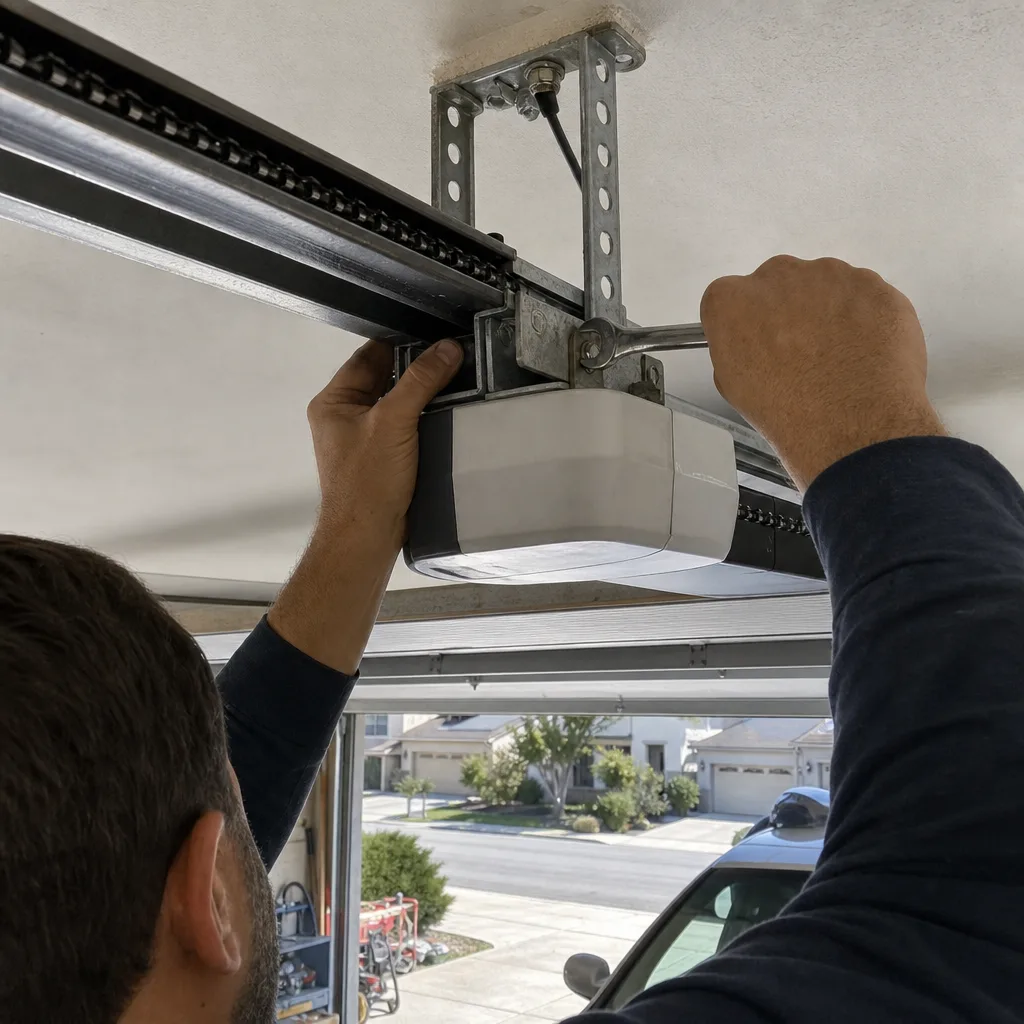
- Comparing quotes with different scope assumptions. A $1,650 quote that excludes springs and haul-away isn’t cheaper than a $2,200 quote that includes them. Itemize before comparing.
- Ignoring the spring cycle specification. “New torsion springs” means little without a cycle rating. Ask for the wire diameter, coil count, and rated cycle life. A 5,000-cycle spring is new but short-lived.
- Assuming existing track is reusable. Track wears. Rollers wear grooves into the track surface. Reusing old track with a new door can cause binding and premature wear. A complete quote addresses track condition explicitly.
- Neglecting Pleasanton’s wind exposure. Hillside homes in Ruby Hill and certain Kottinger Ranch locations experience higher sustained winds than valley-floor properties. Standard door specifications may not suffice. Ask about wind-load rating if your home is exposed.
- Accepting verbal warranties. “Lifetime warranty” sounds reassuring. Lifetime of what? The door? The springs? The labor? Get terms in writing, with duration and coverage specified. Our 365-Day Done Right Promise is documented on a terms page, not offered as a handshake.
- Forgetting the opener interface. A new door with different weight or balance characteristics may strain an older opener. If the opener is more than 8 years old, evaluate it as part of the replacement scope. See Garage Door Opener Repair & Installation in Pleasanton for evaluation criteria.
When to Call a Professional
Some garage door symptoms indicate normal wear. Others signal safety hazards that warrant immediate professional evaluation. See our Garage Door Warning Signs: A Pleasanton Homeowner’s Reference Guide for details.
Call for same-day service if: the door won’t stay open or closed, the opener reverses unexpectedly, cables are frayed or detached, or the door hangs crooked in the opening. These conditions can worsen rapidly and may indicate spring failure or cable separation.
Schedule evaluation within 24-48 hours for: persistent noise during operation, slow or labored opener movement, visible panel damage, or weather seal deterioration. These issues don’t typically constitute emergencies but tend to degrade progressively.
Safety note: Torsion springs are under extreme tension and can cause serious injury or death if mishandled. Never attempt to adjust, repair, or replace torsion springs yourself. The winding and unwinding process requires specialized tools and training. This applies equally to extension spring systems with safety cables. If you suspect spring failure, discontinue use of the door and call a trained technician.
Servo Garage Doors Pleasanton offers free estimates in Pleasanton. We’ll evaluate your door, document our findings with photographs, and provide a flat written price before any work begins. Call (510) 398-4466 to schedule.
Frequently Asked Questions
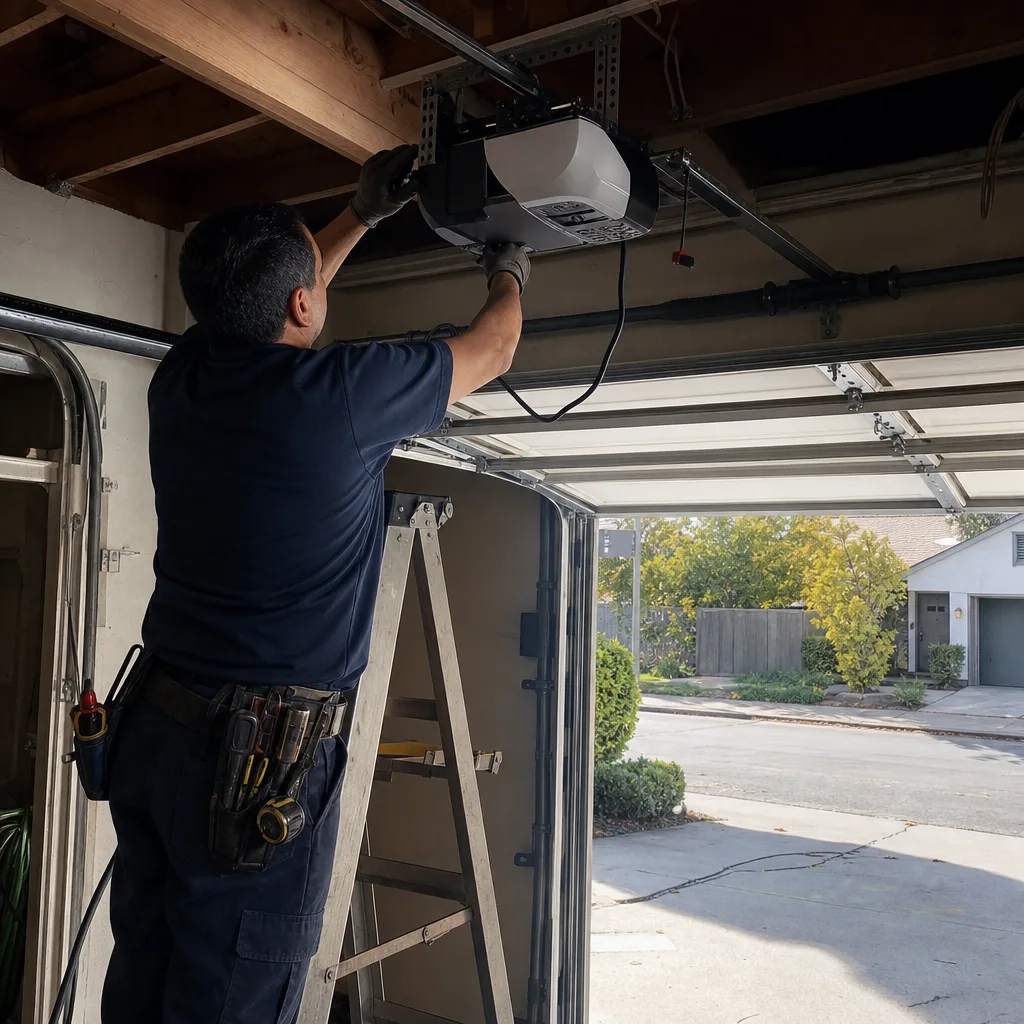
Most complete two-car steel door replacements in Pleasanton range from $1,800 to $3,200 including installation, standard hardware, new springs, and haul-away. Single-car doors start around $1,200. Full custom wood installations can reach $5,800. The specific number depends on insulation level, spring specification, and whether opener work is included. Call (510) 398-4466 for a free written estimate with exact pricing for your door.
Contractors bundle components differently. One quote may include new springs, track, and haul-away in the base price. Another may quote the door alone and add these as line items during the job. The only way to compare accurately is to demand an itemized quote with all seven standard line items specified. At Servo, we provide this in writing before any work starts, per Clause 1 of The Haven Standard.
For attached garages or garages with living space above, yes. R-6 to R-9 insulation delivers noticeable thermal improvement in Pleasanton’s warm-season climate. The incremental benefit of R-12 and above is smaller unless the garage is conditioned, has ductwork, or the door faces direct afternoon sun. We calculate payback projections in writing based on your specific home orientation and usage.
At Servo, no. Our flat written price is final. We photograph and measure before quoting, so the scope is established before work begins. If unforeseen structural issues emerge (rot in the header, for example), we document them, explain the finding, and quote the additional work separately before proceeding. The original scope remains unchanged. This is core to how The Haven Standard operates.
Standard 10,000-cycle torsion springs last roughly 6-8 years with typical residential use (3-4 cycles daily). Higher-cycle springs (20,000 cycles) last 12-15 years. Pleasanton’s moderate climate doesn’t significantly accelerate spring corrosion compared to coastal or high-humidity regions, but temperature cycling between warm days and cool nights contributes to metal fatigue over time.
Yes. Our trucks stock components for LiftMaster, Chamberlain, Genie, Clopay, Amarr, Wayne Dalton, Craftsman, and Raynor systems. For less common brands or older models, we can typically source parts within 24-48 hours. See Garage Door Parts in Pleasanton for specific component availability.
A complete inspection of your door system, photographs of any worn or failed components, measurements of spring specifications and door balance, and a flat written price with all seven line items specified. No obligation, no pressure, no callback required. The estimate typically takes 20-30 minutes. Call (510) 398-4466 to schedule.
The Bottom Line
Garage door pricing in Pleasanton isn’t mysterious, but it is fragmented. The same door can carry vastly different final costs depending on what surrounds it in the quote. The informed homeowner demands itemization-door, hardware, springs, labor, haul-away, opener work, and warranty terms, each specified in writing before work begins-and understands Garage Door Permits, Codes & Inspections in CA: What You Need to Know.
The cheapest quote is rarely the least expensive job. The complete quote, with documentation of what was found and what will be done, produces the most predictable outcome. That’s the purpose of The Haven Standard, and it’s how we’ve operated since 2015. Explore more guides & resources to protect your investment.
For a free written estimate with flat pricing and photo documentation, call Servo Garage Doors Pleasanton at (510) 398-4466. We’ll inspect your door, show you what we found, and quote the complete job before any work starts.
Written by Marcus Deller, Owner at Servo Garage Doors Pleasanton, serving Pleasanton since 2015.