
Last updated September 21, 2026
Full 25-point door and opener safety check with every visit - springs, cables, rollers, tracks, and your LiftMaster or Chamberlain opener included
You get a price before we start. It does not change when the truck arrives.
 Before
 After
After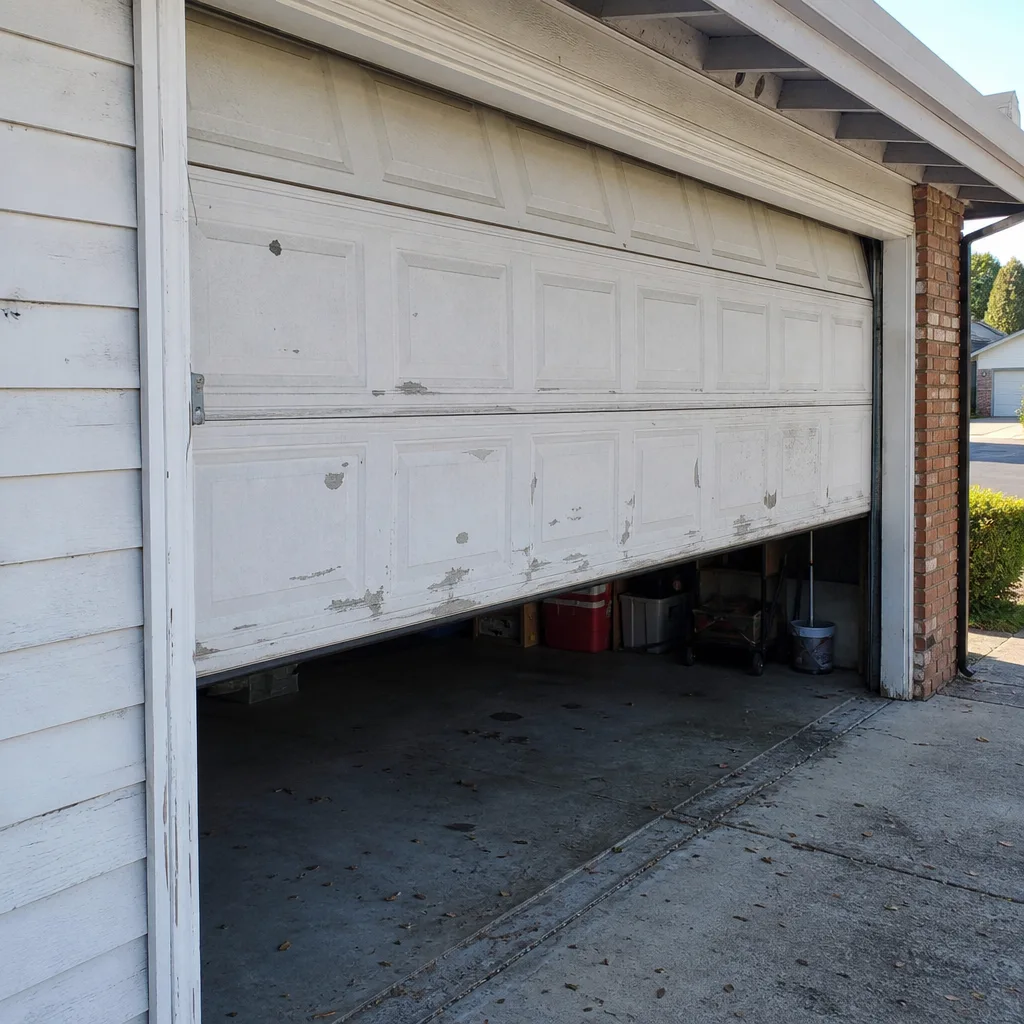 Before
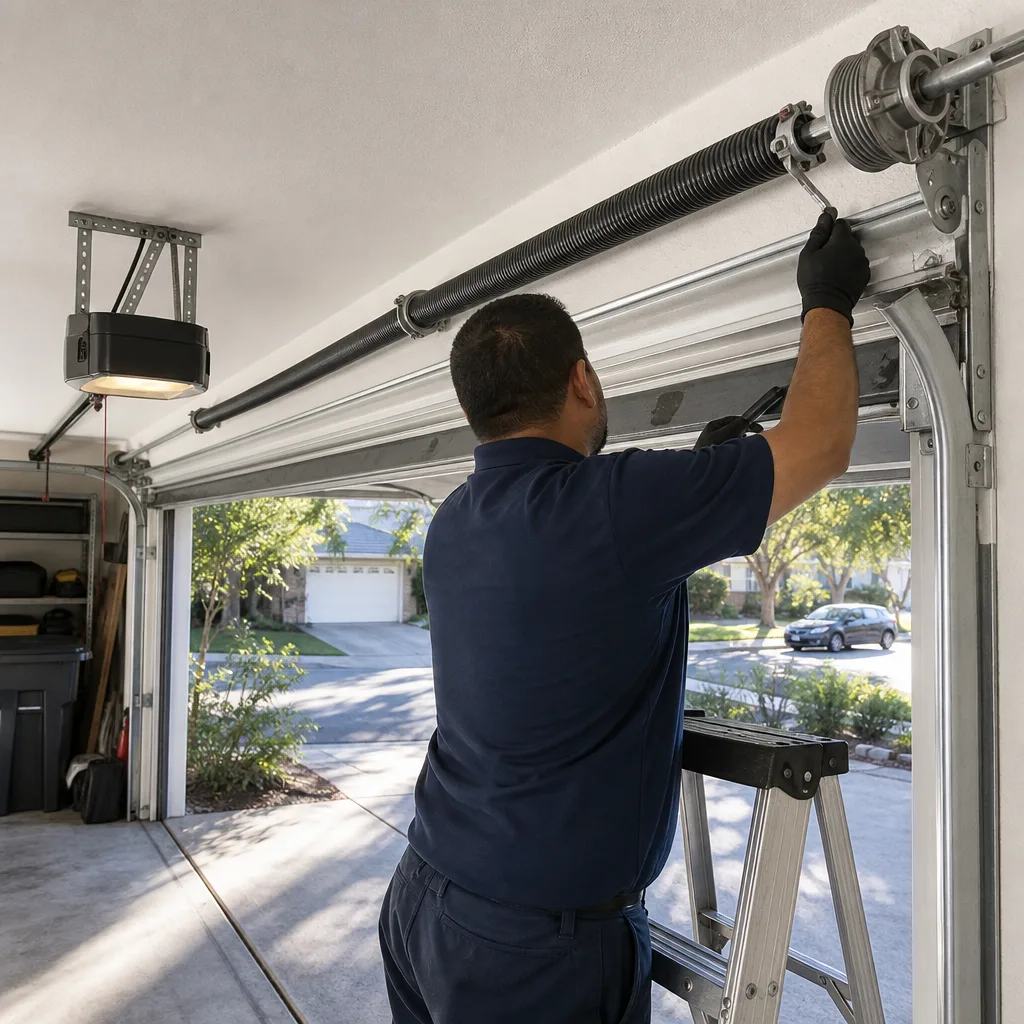 After
After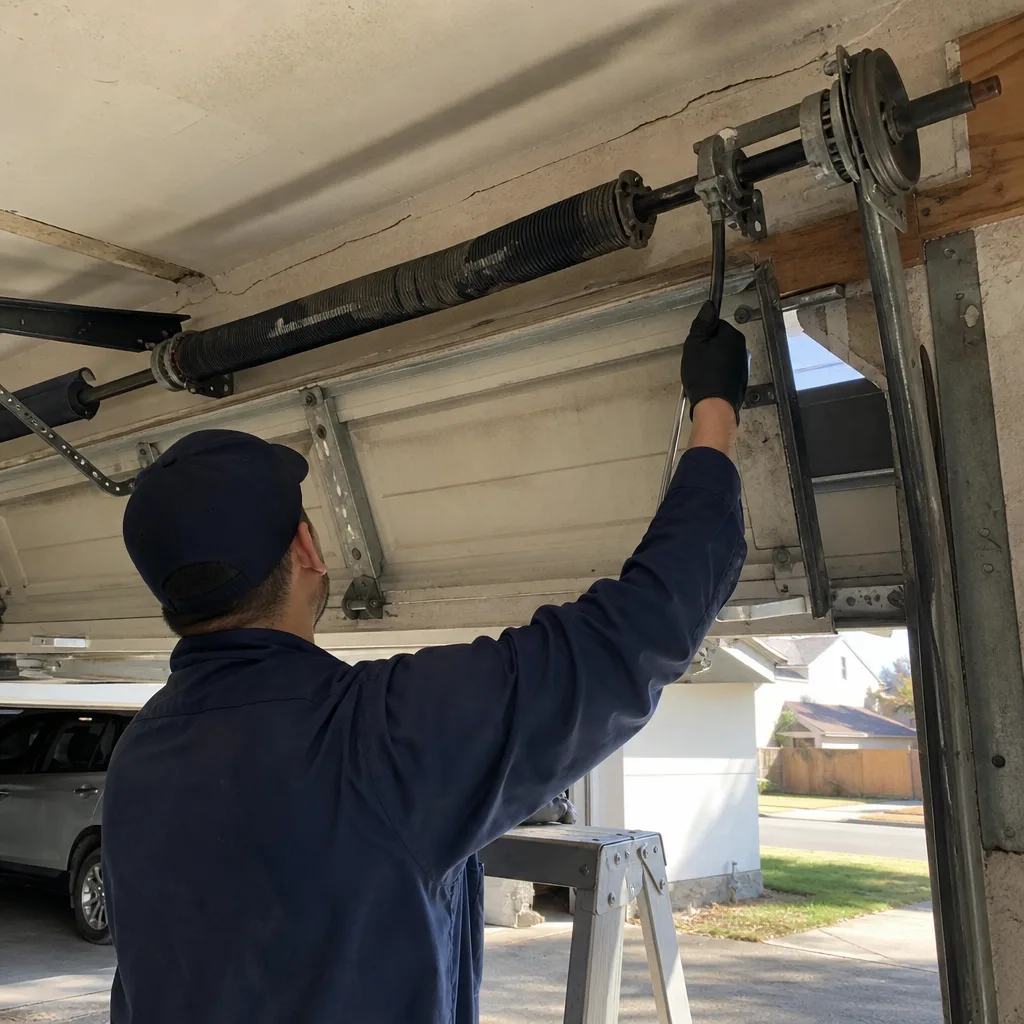 Before
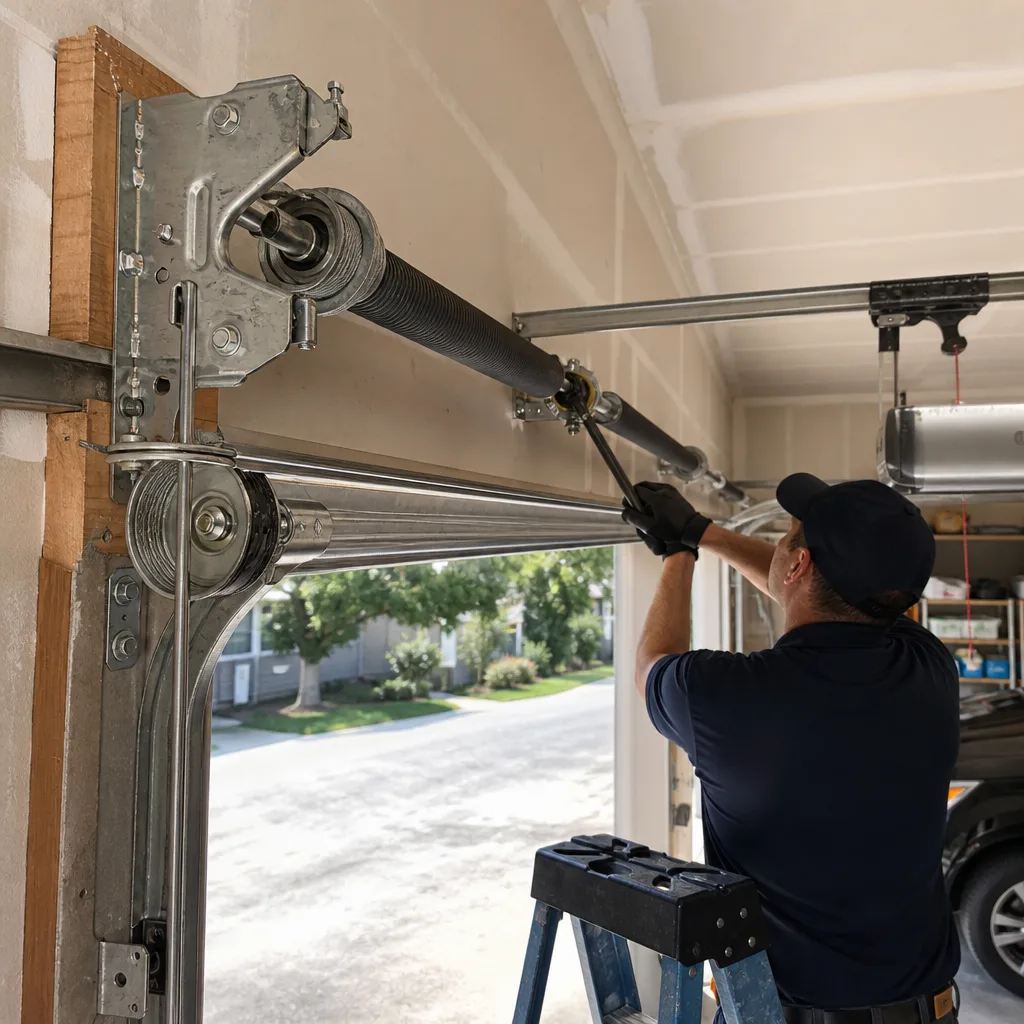 After
AfterDIY vs Professional Garage Door: The Pleasanton Homeowner’s Decision Guide
Torsion spring replacement isn’t difficult to understand mechanically. A 200 lb-in spring under winding tension stores enough energy to fracture a wrist if the winding bar slips, and that risk doesn’t decrease with YouTube preparation. In Pleasanton, where garage doors face thermal cycling from 100°F summer afternoons to 40°F winter mornings, we see more spring failures than coastal Bay Area cities - and more homeowners who watched a tutorial before deciding the $180 labor cost was the wrong number to bet against a trip to Stanford ValleyCare. This guide maps which garage door tasks are genuinely safe to handle yourself, which trigger permit requirements regardless of who does the work, and how to weigh the real costs when the stakes include injury liability and resale documentation.
Quick Answer
Most Pleasanton homeowners can safely handle weatherstripping, sensor realignment, lubrication, and remote programming themselves. Any work involving torsion springs, cables, or bottom brackets should be done by a trained technician due to injury risk. New door installation requires a city permit and inspection whether you DIY or hire out, and DIY doesn’t eliminate that cost or the need for proper documentation when you sell the home.
Table of Contents
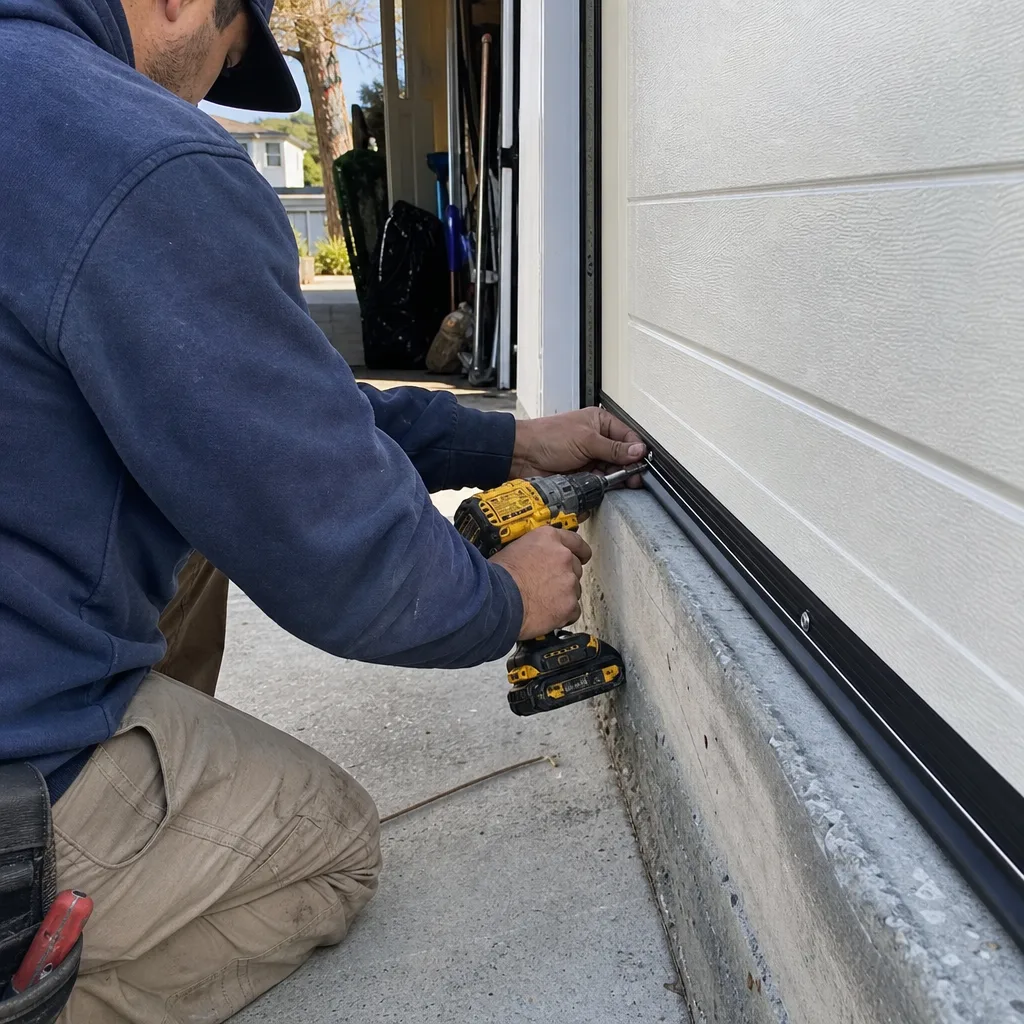
- Safe DIY Tasks: What You Can Handle Without Risk
- Never DIY: Components That Can Cause Serious Injury
- Pleasanton Permit Requirements: What DIY Doesn’t Eliminate
- Honest Cost Comparison: DIY vs. Professional for a 16×7 Steel Door
- The Documentation Problem: Resale and Warranty Records
- Tools and Skills You’ll Actually Need
- When to Call a Professional
- Frequently Asked Questions
 Before
 After
AfterSafe DIY Tasks: What You Can Handle Without Risk
Some garage door maintenance tasks carry zero structural consequence and zero permit trigger. These are the ones we encourage Pleasanton homeowners to learn, because they prevent the expensive problems that later require a technician.
Weatherstripping Replacement
The vinyl or rubber seal along the bottom and sides of your door degrades faster in Pleasanton’s dry summers and occasional heavy winter rains. A cracked bottom seal lets water pool on the concrete, which in older neighborhoods like Vintage Hills can seep toward the foundation. Replacement is straightforward: pull the old seal from the retainer channel, measure the width, and press the new one in. No tools beyond scissors and maybe a flathead screwdriver. Cost: $15-$40 in parts.
Photoelectric Sensor Realignment
Those two small boxes near the floor, one on each track, shoot an invisible beam across the door opening. If they’re knocked out of alignment - common after kids, bikes, or stored items bump them - the door reverses immediately or won’t close. The LED on each sensor tells you the story: steady light means aligned, blinking means blocked or misaligned. Loosen the wing nut, pivot until both LEDs hold steady, then retighten. Takes five minutes. No parts cost.
Lubrication
Silicone-based spray on the rollers, hinges, and torsion spring (from a safe distance - don’t touch the spring itself) reduces noise and wear. Do this in late spring, after the pollen season that coats Pleasanton tracks with sticky residue. Avoid WD-40; it attracts dust. A $12 can lasts two years.
Opener Remote Programming
Modern LiftMaster and Chamberlain openers use a learn button on the motor unit. Press it, then press the remote button within 30 seconds. For wall-mounted smart controls, the app walks you through it. No risk, no structural consequence.
Key Takeaways - Safe DIY Column:
- Weatherstripping, sensors, lubrication, and remote programming: no permit, no injury risk, no structural load
- Total annual maintenance cost if DIY: under $60
- These tasks prevent the failures that later require professional repair
Never DIY: Components That Can Cause Serious Injury
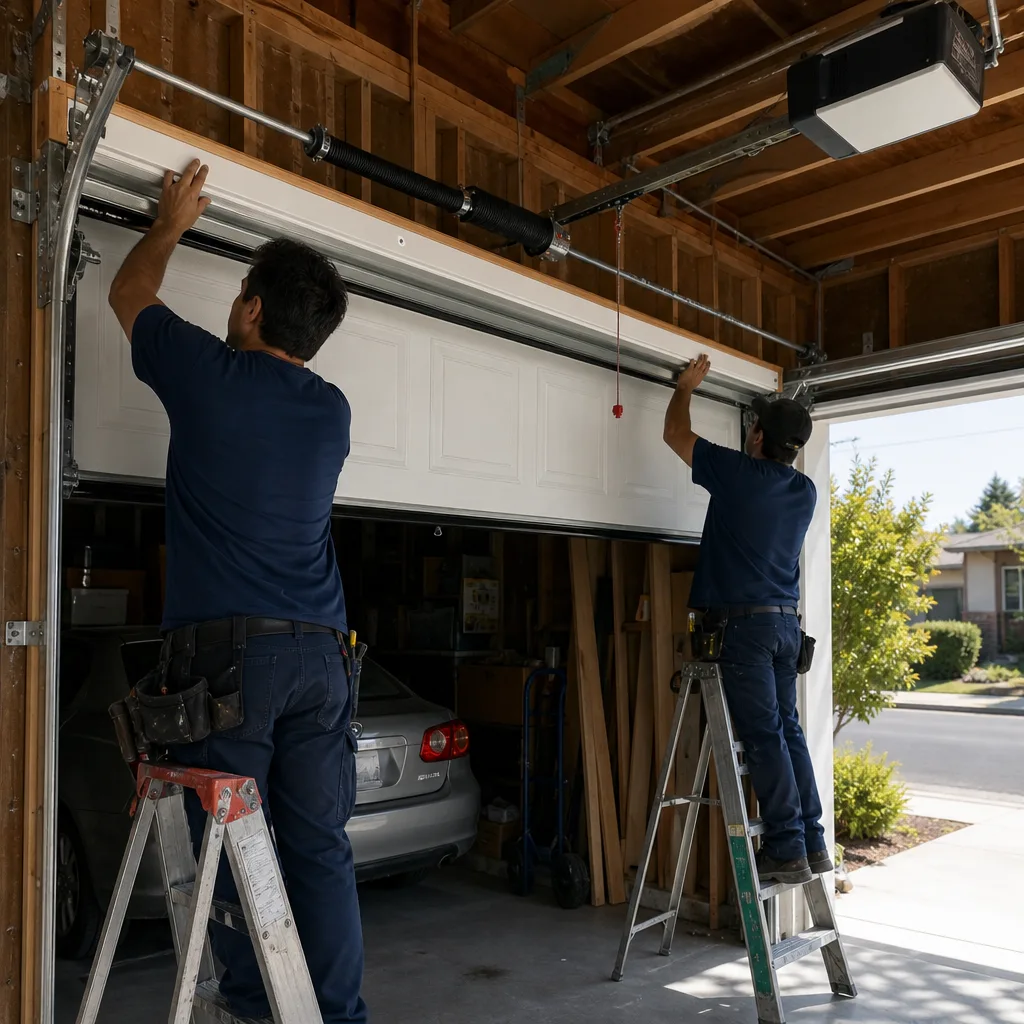
This is where the DIY vs. professional question stops being about skill and starts being about physics and liability. Three components on every garage door store enough energy to cause hospital-grade injury if handled incorrectly.
Torsion Springs
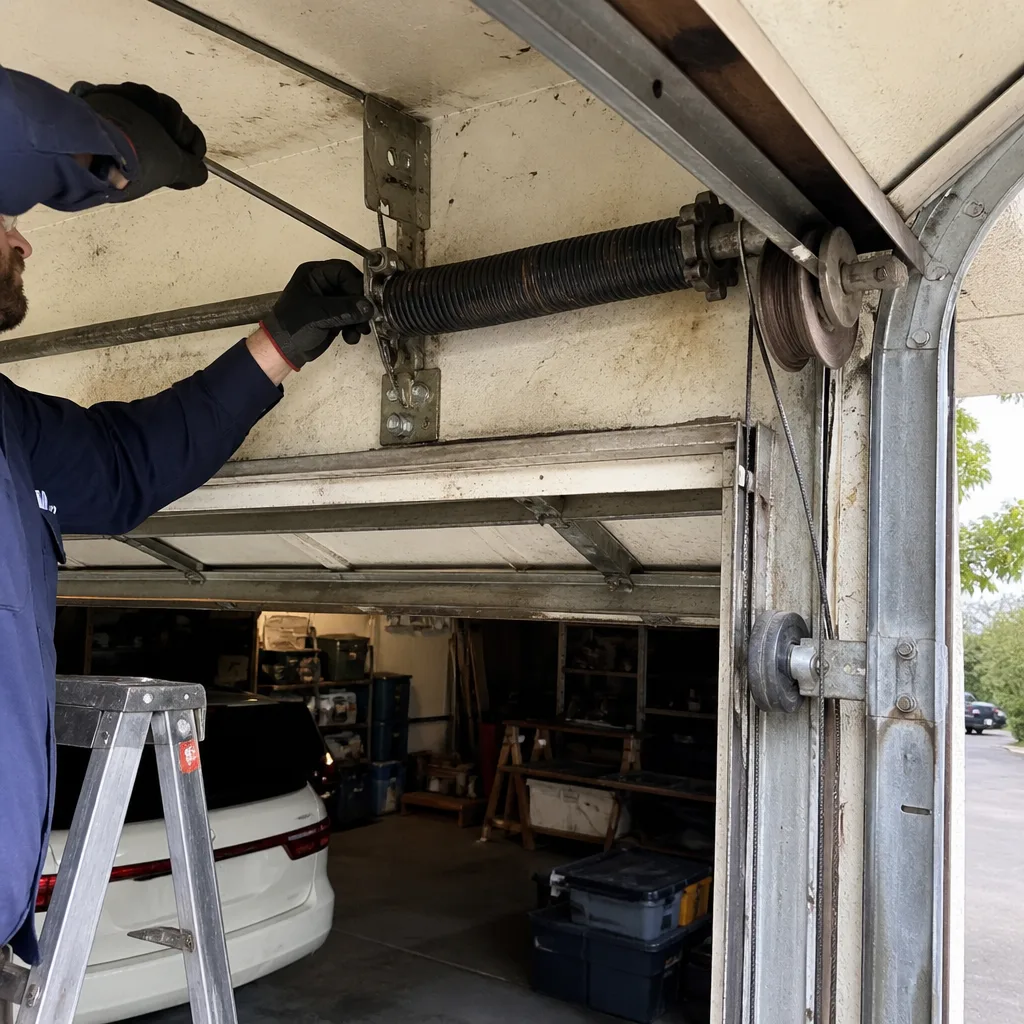
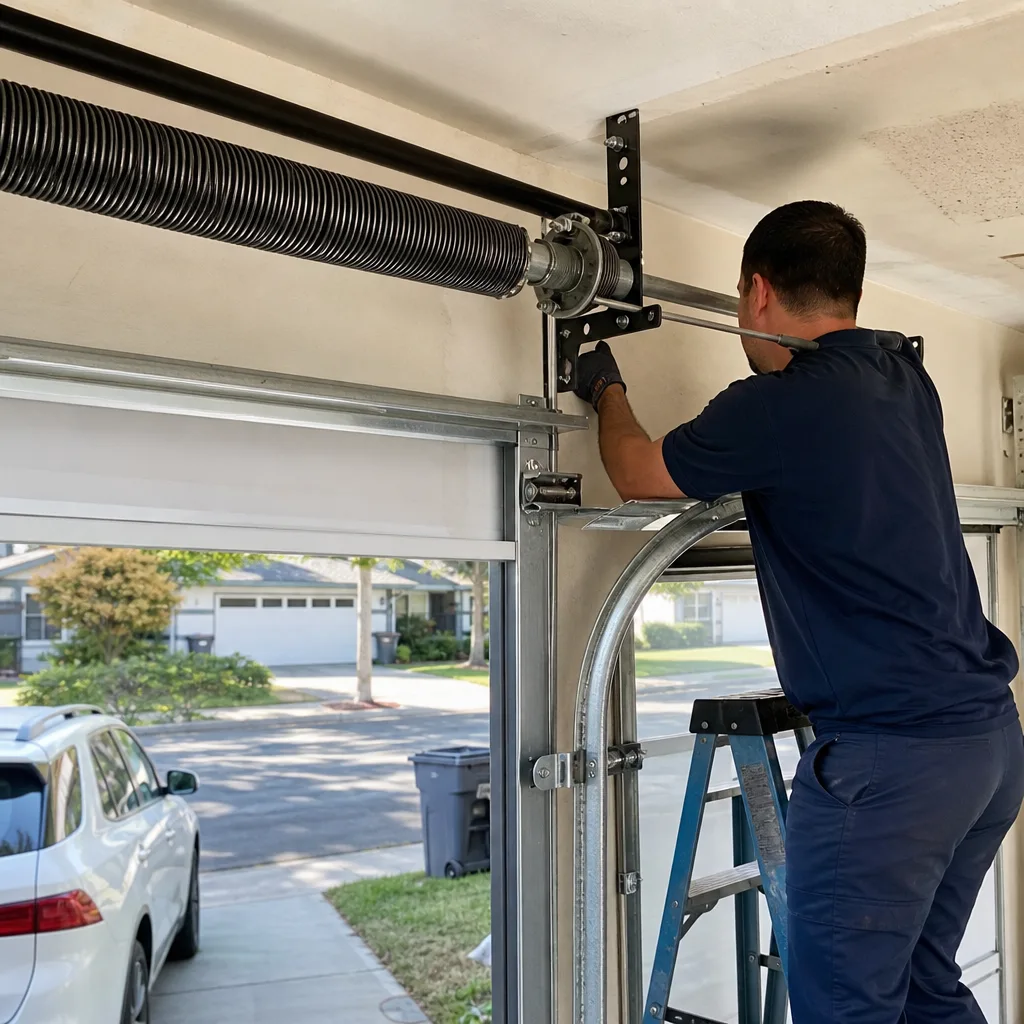
The torsion spring sits horizontally above the door, wound tight to counterbalance the door’s weight - typically 150-250 pounds for a 16×7 steel door. When we measure a failed spring in Pleasanton, we’re checking wire diameter (usually 0.225 to 0.250 inch), coil count, and inner diameter to specify the replacement. Winding a new spring requires inserting steel bars into the winding cone and adding tension in quarter-turn increments. If the bar slips, the cone spins, and the stored rotational energy releases instantly. We’ve seen broken wrists, facial fractures, and worse. The $180-$340 professional repair cost includes the technician’s training, the correct winding bars, and liability insurance - not just labor.
Clause 4 of The Haven Standard is why our technician photographs the failed spring before quoting a replacement. You see the 0.25-inch wire with the clean coil break, you see the measurement, and you get the written price before we touch anything.
Cables
The lift cables run from the bottom bracket up to the drum at each end of the torsion shaft. They’re under constant tension, even when the door is closed, because the spring is always wound. A frayed cable can snap without warning. Replacing it requires releasing spring tension first - which means you’re already in torsion spring territory.
Bottom Brackets
These brackets attach the cable to the bottom of the door. They’re under the full spring tension plus the door’s weight. Never loosen the bolts on a bottom bracket with tension on the cables. The bracket can become a projectile.
Our rule: if the component is under tension or load when the door is in its normal resting position, it’s not a DIY task. The risk isn’t that you’ll install it wrong. The risk is that you’ll be holding it when it fails.
Pleasanton Permit Requirements: What DIY Doesn’t Eliminate
Here’s the point most online guides miss entirely: California building code doesn’t distinguish between homeowner and contractor for permit-triggered work. The permit requirement attaches to the scope, not the person.
In Pleasanton, new garage door installation requires a building permit through the city’s Community Development Department, as covered in our Garage Door Installation Maintenance Checklist for Pleasanton Homeowners. The permit covers structural safety, wind load compliance, and proper egress - especially relevant if your garage has living space above or adjacent to it, common in newer developments like Ruby Hill and Kottinger Ranch. The inspection verifies that the door is properly secured to the framing, that the opener electrical connection meets code, and that safety features (auto-reverse, photoelectric eyes) function correctly.
DIY doesn’t eliminate the permit fee, which runs $150-$300 for a typical residential garage door in Pleasanton. DIY doesn’t eliminate the inspection scheduling or the re-inspection if the first fails. And here’s the catch: if you install the door yourself and the inspector finds a code violation, you’re the one pulling the permit and you’re the one responsible for the correction. A licensed contractor’s permit includes their liability coverage and their relationship with the inspector’s office.
For Garage Door Installation in Pleasanton, the permit is the same whether you do it or we do it. The difference is who carries the liability if the inspection fails and who provides the documentation that transfers cleanly at sale.
Honest Cost Comparison: DIY vs. Professional for a 16×7 Steel Door
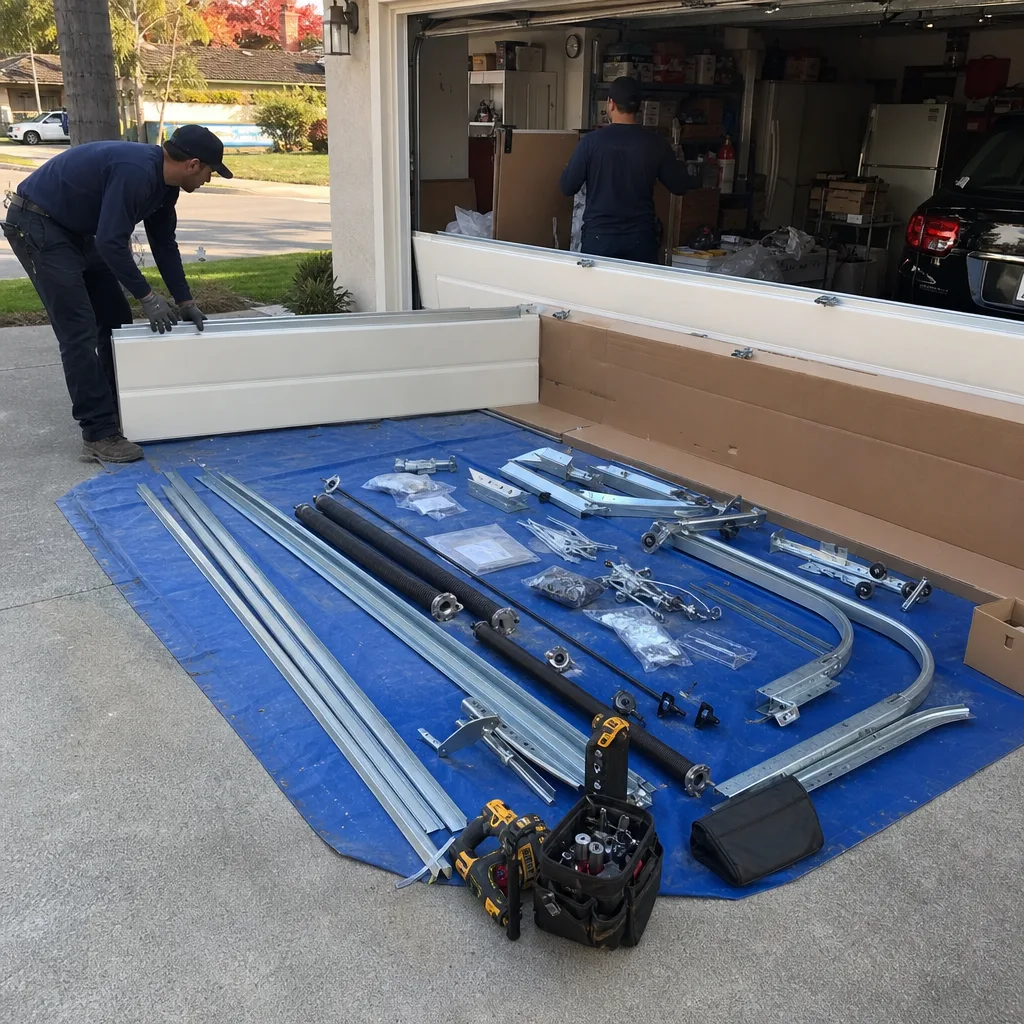
Let’s price a like-for-like scenario - see our Garage Door Cost Breakdown: The Pleasanton Homeowner’s Reference for 2026 - replacing a standard 16×7 insulated steel door in Pleasanton, mid-grade, with a standard chain-drive opener, on an existing wood frame in good condition.
| Cost Item | DIY Route | Professional Route (Servo) |
|---|---|---|
| Door (16×7, insulated steel, Clopay or Amarr equivalent) | $800-$1,400 | $800-$1,400 (our cost, passed through) |
| Opener (½ HP chain drive, LiftMaster or Chamberlain) | $180-$280 | $180-$280 |
| Hardware, track, springs (matched set) | $200-$350 | Included in labor |
| Permit fee (Pleasanton) | $150-$300 | $150-$300 |
| Tool rental (spring winding bars, torque wrench, level, etc.) | $80-$150 | N/A |
| Disposal of old door | $75-$150 (self-hauling or Bagster) | Included |
| Labor | Your weekend (8-12 hours) | $400-$700 |
| Warranty on installation | None - manufacturer warranty only | 365-Day Done Right Promise |
| Photo documentation for resale | You create it yourself | Documented photo record included |
| Total Comparable Cost | $1,485-$2,730 + your time + your liability | $1,530-$2,680 with warranty, documentation, and zero injury risk |
The DIY savings evaporate when you account for tool rental, disposal, and the value of a weekend. The real difference isn’t the dollar total. It’s what you get for the margin: a written warranty, a documented photo record, and the transfer of injury risk to a trained technician with workers’ compensation coverage.
We quote Garage Door Installation in Pleasanton with a flat, written price and written scope before any work starts - Clause 1 of The Haven Standard. No estimate range that balloons. No “call for a quote” that contradicts our own process.
The Documentation Problem: Resale and Warranty Records
This is the hidden cost of DIY that doesn’t appear in any parts list.
When you sell a Pleasanton home, the buyer’s inspector and the title company want documentation of major improvements. A garage door installed by a licensed contractor comes with a permit record on file with the city, an invoice showing the scope and date, and often a warranty transferable to the new owner. DIY installation has none of this unless you deliberately create it.
What Professional Documentation Looks Like
When Servo completes an installation, the customer receives:
- A written invoice with scope, parts, and flat price - the permanent record of what was done and when
- A documented photo record: the old door condition, the new door installed, the opener mounted, the safety tests performed - Clause 4 of The Haven Standard
- The permit completion certificate from Pleasanton Community Development
- The 365-Day Done Right Promise in writing, with terms, not a handshake
What DIY Documentation Requires You to Create
If you install your own door, you’ll need to:
- Pull the permit yourself and keep the approved plans and final inspection sign-off
- Photograph every stage: old door removal, rough opening condition, new door hung, track alignment, opener electrical connection, safety reverse test
- Keep all receipts with part numbers and serial numbers
- Write your own scope document describing what you did and when
- Store all of this for the average 7-10 years you’ll own the home
Most homeowners don’t do this. The folder gets lost, the phone with the photos upgrades, the permit paperwork sits in a drawer that moves with you. When the buyer’s inspector asks when the door was replaced and whether it was permitted, you have a story instead of a record. In Pleasanton’s competitive resale market, where homes in Birdland and Downtown sell quickly with multiple offers, a missing permit record can delay closing or trigger a price reduction.
For Garage Door Parts in Pleasanton, we can supply components if you’re committed to DIY - but we’ll also tell you what documentation to keep and how to pull the permit correctly.
Tools and Skills You’ll Actually Need
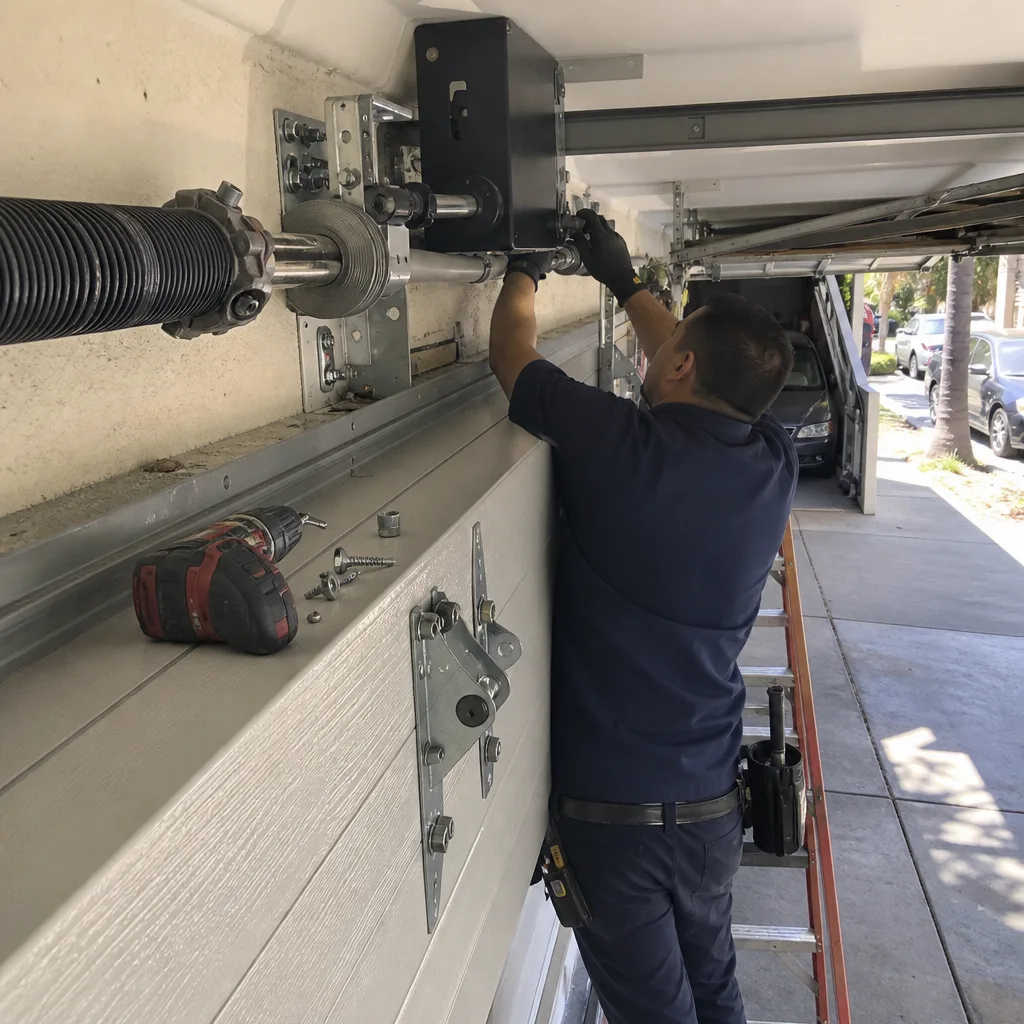
Honest assessment of whether a task is DIY-appropriate requires looking at the tool list and the skill threshold. Here’s our breakdown for Pleasanton homeowners.
Safe DIY: Minimal Tools, No Specialized Knowledge
- Weatherstripping: Scissors, tape measure, maybe a flathead screwdriver. Skill level: anyone.
- Sensor realignment: No tools. Skill level: anyone who can follow an LED indicator.
- Lubrication: Silicone spray can. Skill level: anyone; just don’t overspray.
- Remote programming: The remote itself. Skill level: anyone; follow the learn-button sequence in the opener manual.
Gray Area: Moderate Tools, Some Mechanical Aptitude
- Roller replacement (with door down, no tension work): Socket set, locking pliers to hold the track. Skill level: comfortable with basic hand tools. Risk: low if you don’t touch the spring or cables. We see homeowners in Pleasanton’s older neighborhoods handle this after watching a proper tutorial.
- Opener replacement on existing door (no spring work): Drill, ladder, basic wiring. Skill level: comfortable with electrical connections and ceiling mounting. Risk: moderate - the door must be manually operable and balanced before the opener is attached, or you’ll burn out the motor.
Professional Territory: Specialized Tools, Training, and Risk Management
- Torsion spring work: Winding bars (solid steel, specific diameter), torque wrench, vise grips, ladder rated for your weight plus tools. Skill level: trained technician. Risk: severe injury.
- Cable or bottom bracket work: Same as above, plus cable pullers. Risk: severe injury.
- New door installation: Level, shims, impact driver, spring winding setup, knowledge of Pleasanton’s wind-load requirements. Risk: structural failure, injury, permit rejection.
For Garage Door Opener Repair & Installation in Pleasanton, we handle everything from logic board replacement to full new-opener installation. The logic board - the computer that runs the opener - is a common failure point after power surges, which we see more of in Pleasanton’s eastern hills where PG&E lines run longer distances.
Common Mistakes to Avoid
- Using the wrong spring. A torsion spring is specified by wire diameter, inner diameter, and length - not just “the one for a 16-foot door.” The wrong spring overworks the opener or fails prematurely. In Pleasanton’s temperature range, the wrong spring rate causes extra cycles and early fatigue.
- Ignoring the permit. Installing a new door without a permit doesn’t save money; it creates a disclosure problem at sale and potential code enforcement if a neighbor reports construction activity. Pleasanton’s Community Development Department can require retroactive permitting with penalties.
- DIYing with a helper who isn’t informed. We’ve responded to calls where a homeowner’s spouse or friend was holding the door or track when a component failed. Anyone near the work area must understand the risks, not just the person with the tools.
- Reusing old hardware on a new door. Rollers, hinges, and cables have cycle ratings. Mixing new door panels with worn hardware guarantees a callback. The hardware set for a new installation is $200-$350 - not the place to save.
- Programming the opener without testing safety reverse. Federal law requires auto-reverse; California requires photoelectric eyes. Test with a 2×4 laid flat - the door must reverse on contact. A non-functioning safety system is a liability if a child or pet is injured.
- Disposing of the old door illegally. Pleasanton waste services won’t collect a full garage door at curbside. Self-hauling to the transfer station requires a vehicle that can handle the load and the $75-$150 fee. We include disposal in our installation price.
When to Call a Professional
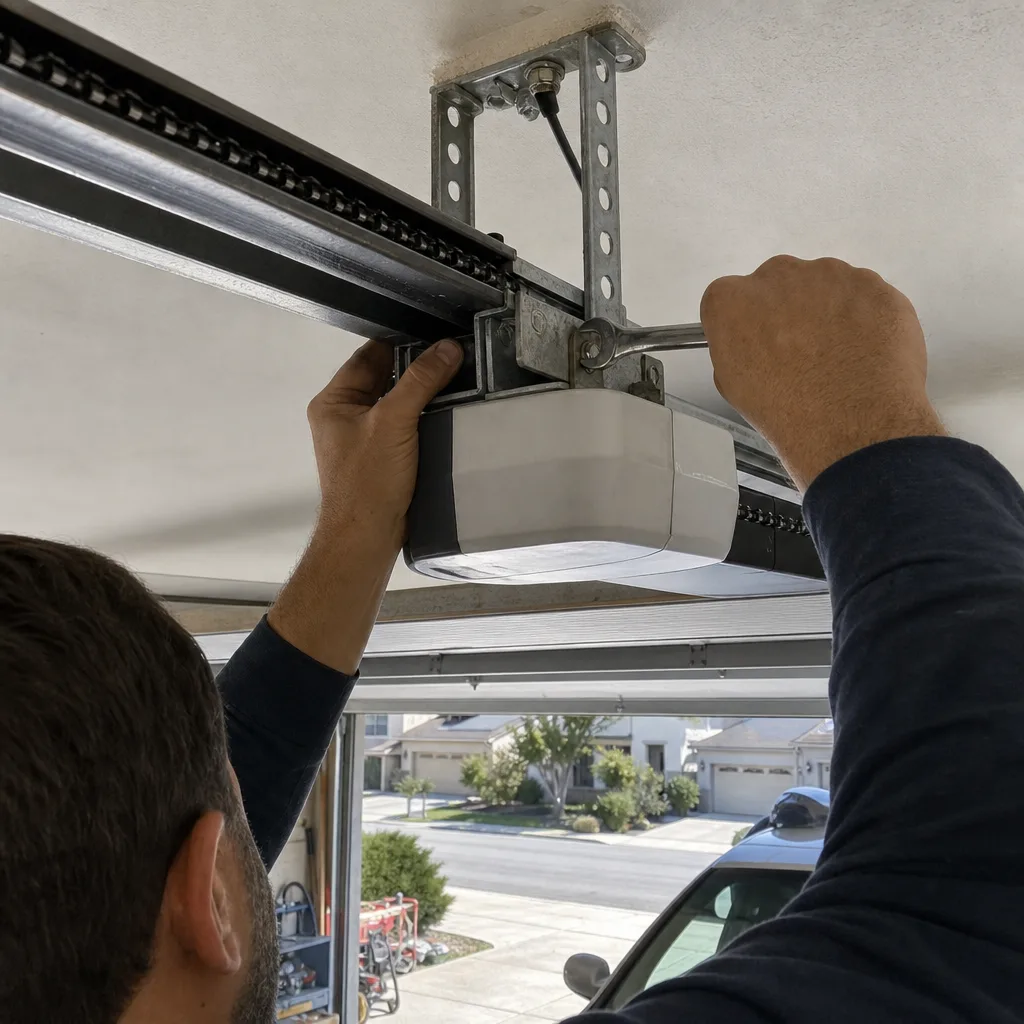
Call a technician when the component is under tension, when the work triggers a permit, or when the failure prevents you from securing your home. Specific scenarios: the door is off the tracks and you can’t manually lift it; a spring is broken and the door feels twice as heavy; the opener runs but the door doesn’t move, suggesting a stripped trolley carriage or failed limit switch; or you’re selling the home and need clean documentation of recent work.
Servo Garage Doors Pleasanton offers free estimates in Pleasanton - call (510) 398-4466. We’ll show you the failed part, quote a flat written price, and leave you with a documented photo record. No urgency, no upsell, just the evidence and the number.
Frequently Asked Questions
Torsion spring replacement in Pleasanton typically runs $180-$340 for a standard residential door, including the spring, winding, and balance adjustment. The price varies with spring size (heavier doors need thicker wire) and whether both springs are replaced as a matched set. Call (510) 398-4466 for an exact quote - estimates are free.
You can, but the savings are smaller than they appear once you add permit fees, tool rental, disposal, and the documentation you’ll need for resale. For a 16×7 steel door in Pleasanton, the DIY vs. professional cost difference is often under $200 - and the professional route includes warranty, photo documentation, and zero injury risk.
Yes. New garage door installation requires a building permit through Pleasanton Community Development, whether a homeowner or contractor does the work. The permit covers structural attachment, wind load, and safety system verification. The fee is $150-$300. DIY doesn’t eliminate this requirement.
No. Servo quotes a flat, written price and written scope before any work starts - Clause 1 of The Haven Standard. The technician photographs the failed component, confirms the diagnosis with you, and presents the price. If the scope doesn’t change, the price doesn’t change.
Weatherstripping replacement, photoelectric sensor realignment, annual lubrication of rollers and hinges, and opener remote programming. These tasks involve no tension components, no structural load, and no permit trigger. Do them quarterly to prevent the failures that require professional repair.
Repair is appropriate when the door moves but behaves erratically - intermittent response, partial opening, or reversed direction without obstruction. These often indicate a failing logic board, misaligned limit switch, or worn trolley carriage. Replacement makes sense when the opener is over 15 years old, lacks modern safety features, or the repair cost exceeds half the replacement cost. We service all major brands including LiftMaster, Chamberlain, and Craftsman.
The Bottom Line
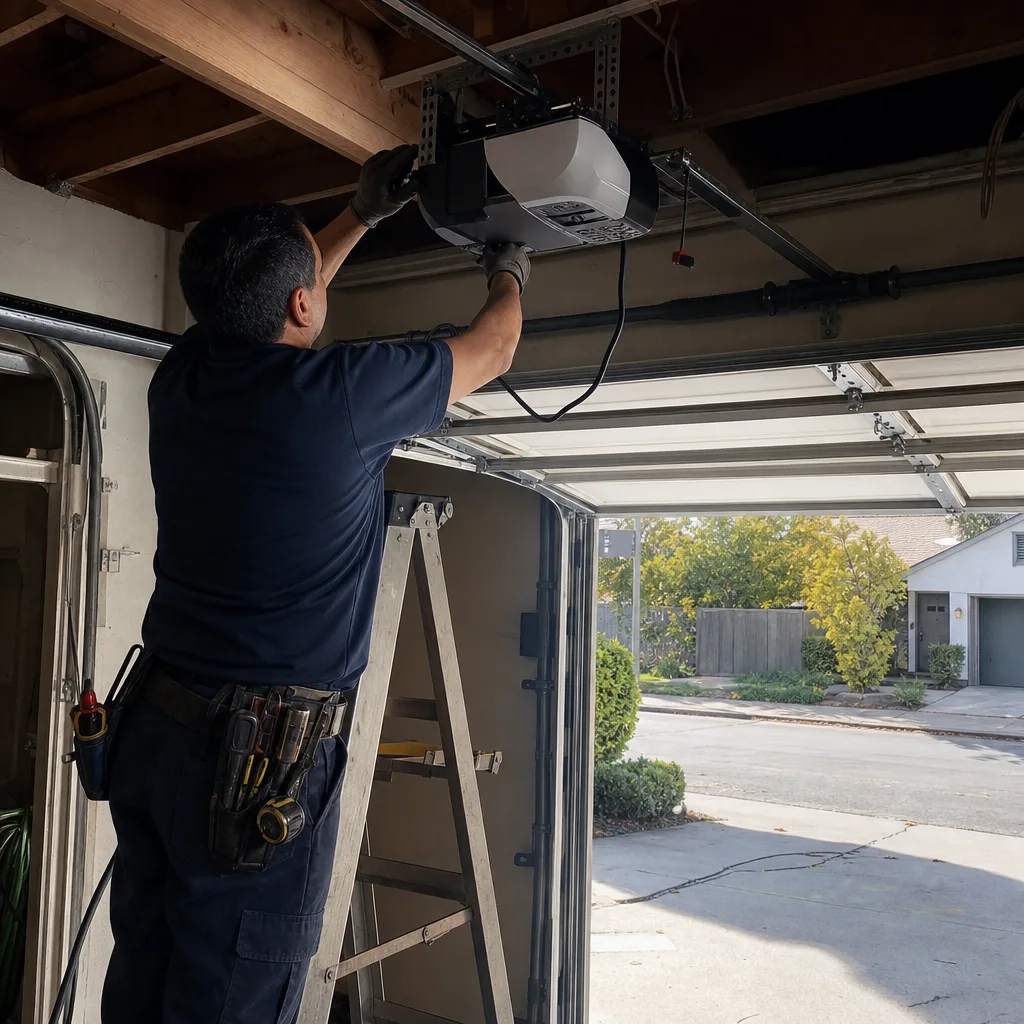
The DIY vs. professional question for garage doors isn’t about whether you’re handy. It’s about which tasks carry consequences beyond a broken door. Weatherstripping and sensor alignment: no consequences, go ahead. Torsion springs and cables: injury consequences, hire out. New installation: permit consequences either way, and the professional margin buys warranty, documentation, and transferred liability. In Pleasanton’s market, where resale documentation matters and thermal cycling stresses components harder than coastal cities, the math favors professional work for anything under tension or requiring a permit. For the small stuff, DIY maintenance prevents the big problems - and that’s where your weekend is well spent. For more guides & resources, explore our blog.
Written by Marcus Deller, Owner at Servo Garage Doors Pleasanton, serving Pleasanton since 2015.