
Last updated September 21, 2026
Full 25-point door and opener safety check with every visit - springs, cables, rollers, tracks, and your LiftMaster or Chamberlain opener included
You get a price before we start. It does not change when the truck arrives.
 Before
 After
After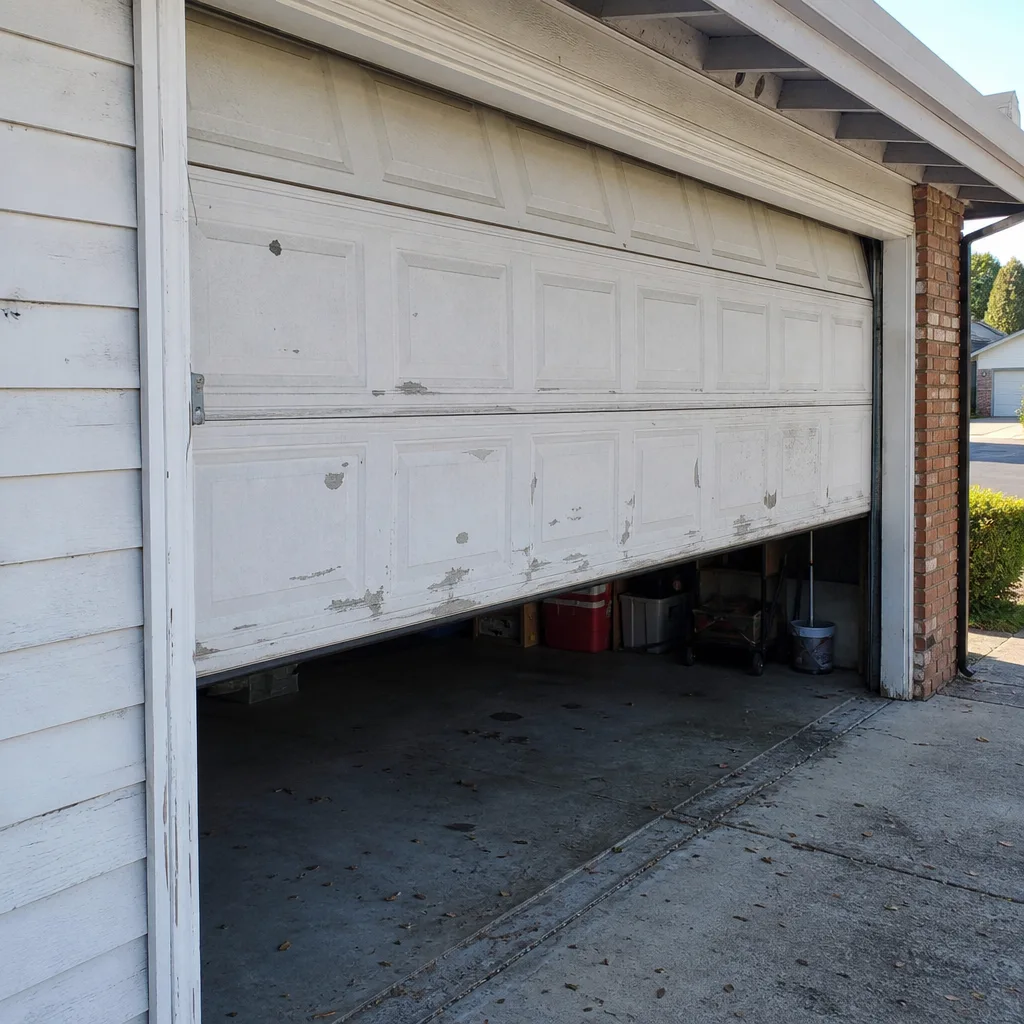 Before
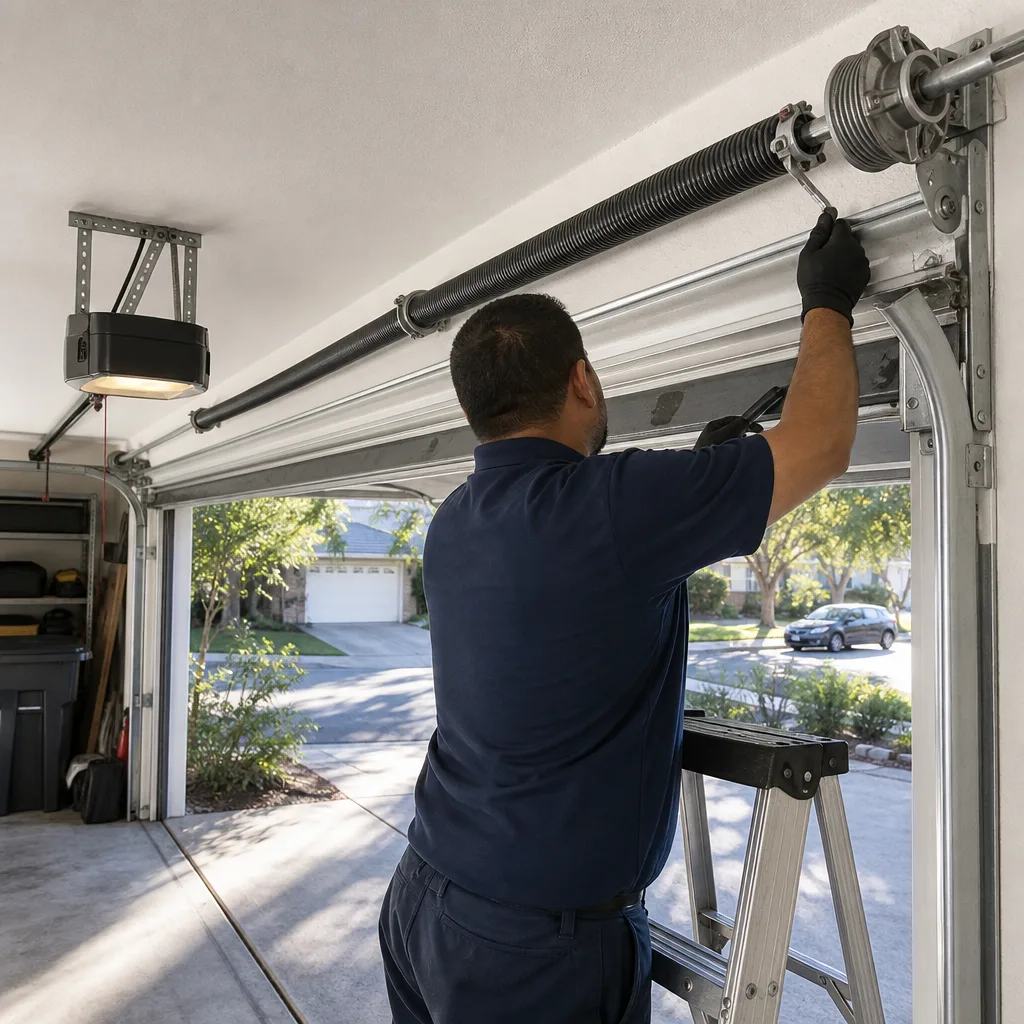 After
After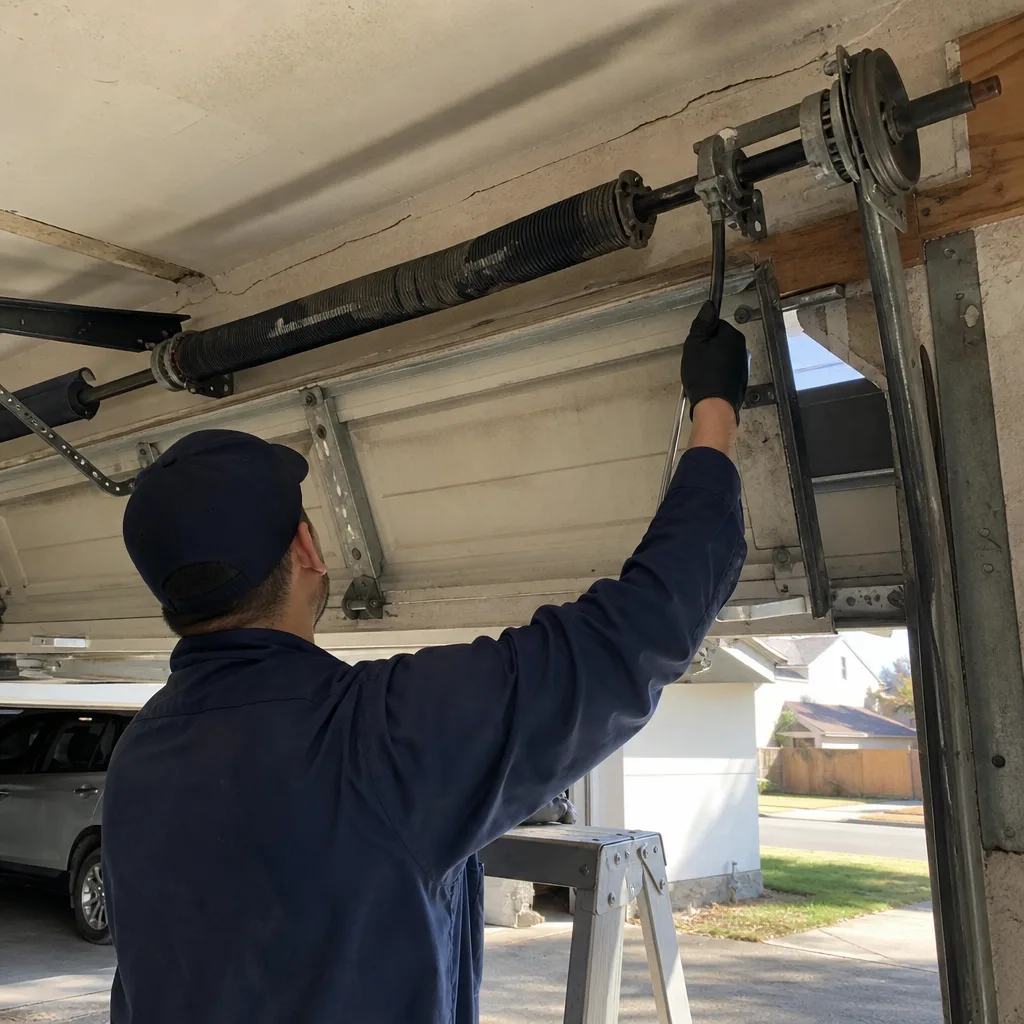 Before
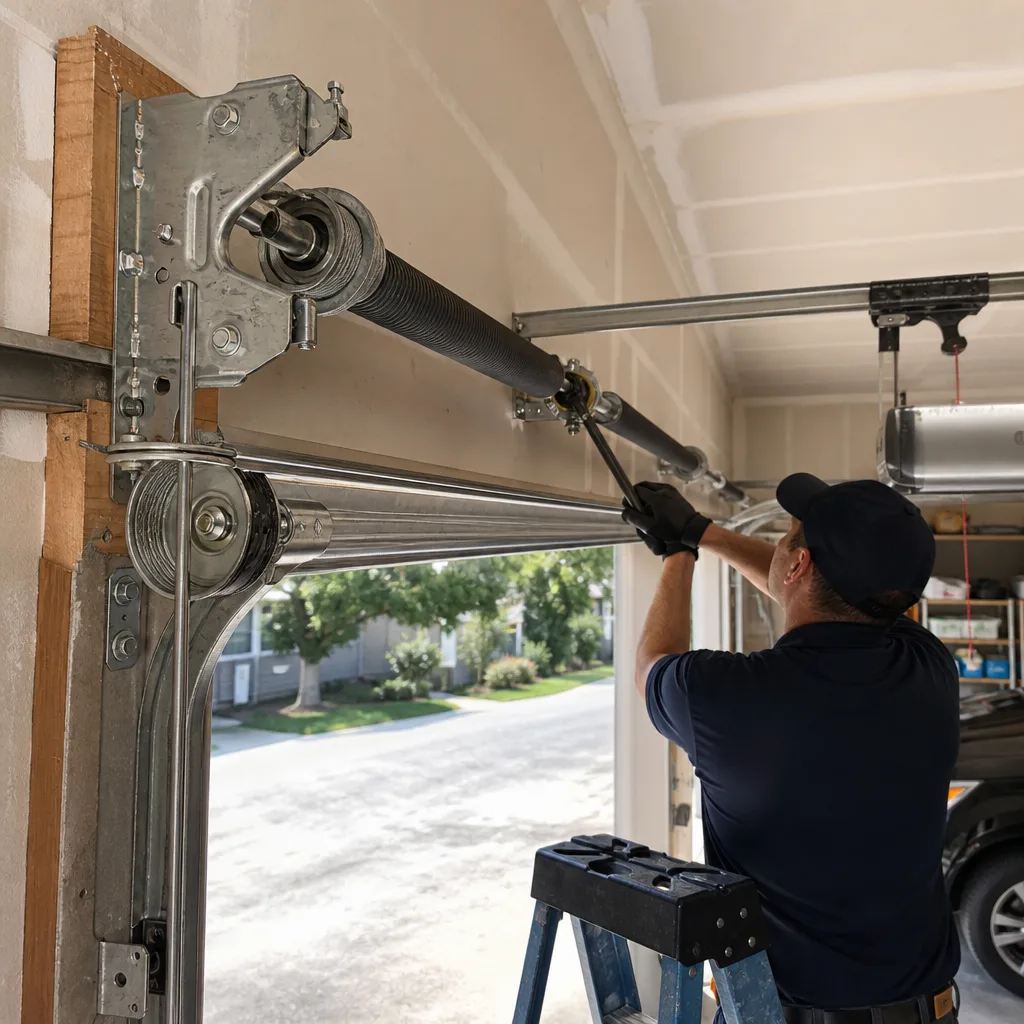 After
AfterHow to Hire a Garage Door Contractor in Pleasanton: A Step-by-Step Guide
A contractor’s CSLB license number takes 45 seconds to verify online, but 80% of garage door disputes in California aren’t about unlicensed work - they’re about work that was licensed but never written down in enough detail to enforce. In Pleasanton, where homes in Ruby Hill, Kottinger Ranch, and Vintage Hills range from 1980s tract builds to new construction with custom carriage doors, the gap between a good contractor and a bad outcome usually comes down to paperwork, not skill. This guide - along with our Complete Guide to Garage Door in Pleasanton - shows you how to build a paper trail that protects you before anyone touches your garage door.
Quick Answer
Hiring a garage door contractor in Pleasanton starts with verifying an active CSLB license and requesting four documents before any work begins: a written itemized quote, proof of general liability insurance, a workers’ compensation certificate, and written warranty terms. The best contractors in the Tri-Valley area will provide a flat, written price and photo-documented scope before starting work, not after they’ve opened up your door.
Table of Contents
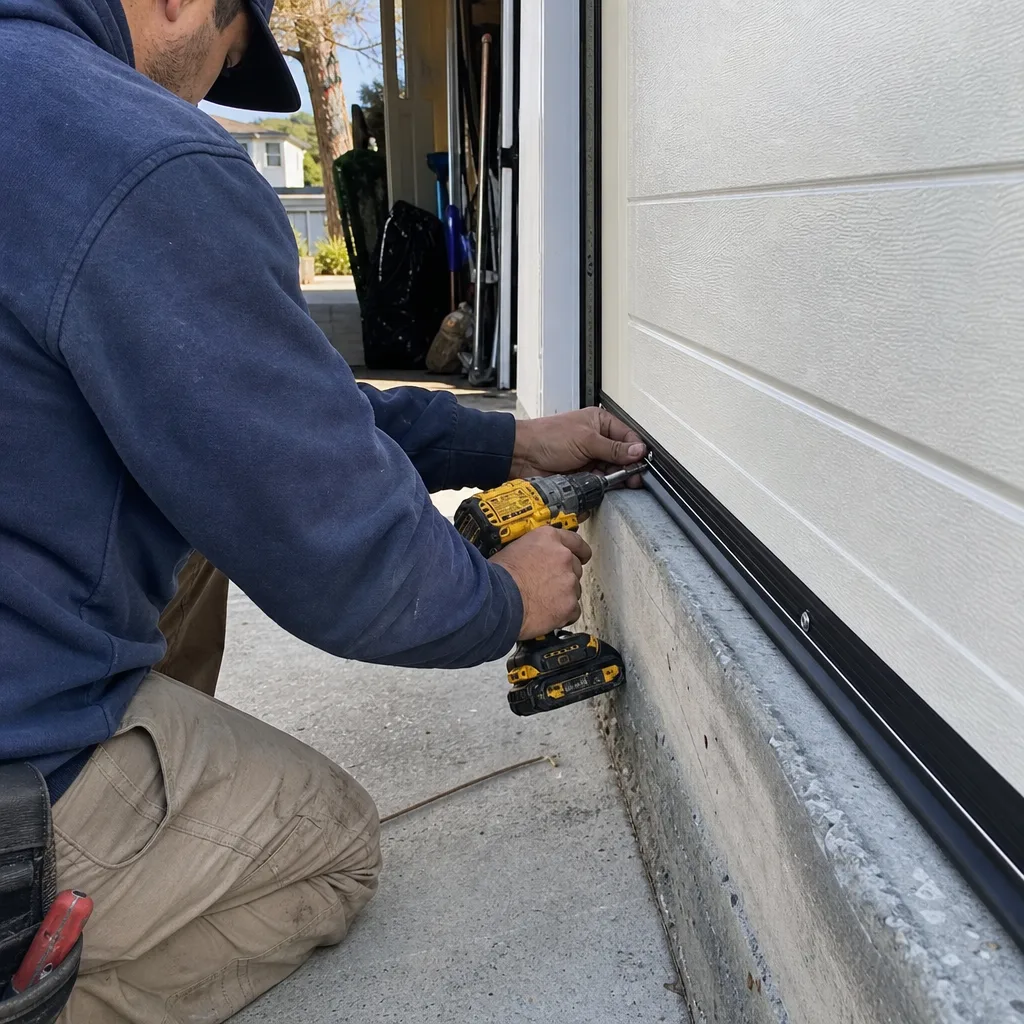
- How to Verify a License (And Why the License Number Alone Isn’t Enough)
- The Four Documents to Request Before Signing Anything
- How to Read Garage Door Quote Language (And Spot Red Flags)
- How to Compare Two Quotes for the Same Job
- What to Put in Writing at Job Completion
- Pleasanton-Specific Considerations: Climate, Codes, and Neighborhoods
- Brand Knowledge and Parts Availability
- Common Mistakes to Avoid
- When to Call a Professional
- Frequently Asked Questions
- The Bottom Line
 Before
 After
AfterHow to Verify a License (And Why the License Number Alone Isn’t Enough)
Every legitimate garage door contractor in California must carry a CSLB license for the work they perform. In Pleasanton, you’ll find both dedicated garage door companies and general handyman services advertising spring replacement and opener installation. The distinction matters: CSLB Class C-61/D-28 (Doors, Gates, and Activating Devices) or C-61/D-49 (Machinery and Pumps, which covers garage door openers) is the correct classification for this work.
Here’s how to verify beyond just checking the number exists:
- Go to cslb.ca.gov and use the Instant License Check. Enter the six- or seven-digit license number. Confirm the status reads “Active,” not “Suspended,” “Expired,” or “Cancelled.”
- Check the business name match. The name on the license should match the name on the quote, the website, and the vehicle that arrives. Mismatches suggest subcontracting or borrowed licenses, both common in the Bay Area.
- Review the bond history. Click through to see if the bond has ever lapsed. A gap in bond coverage means a gap in your protection if something goes wrong.
- Read complaint disclosures. CSLB lists disciplinary actions and citations. One complaint resolved quickly is different from a pattern of “abandonment of work” or “contracting without proper classification.”
- Verify workers’ compensation coverage separately. The CSLB site shows whether the contractor is required to carry it, but request the certificate directly for current dates and your address listed as the certificate holder.
In our experience serving Pleasanton since 2015, the contractors who lead with their license number - who put it on the website header, the quote header, the technician’s uniform - are rarely the ones who create problems. The ones who make you ask for it, or who give you a number that doesn’t match the business name, are the ones to watch.
At Servo Garage Doors Pleasanton, our license number appears on every page, every quote, and every technician’s badge. Not because it’s impressive, but because it’s the minimum standard for operating legally in Alameda County, and minimum standards should be visible.
The Four Documents to Request Before Signing Anything
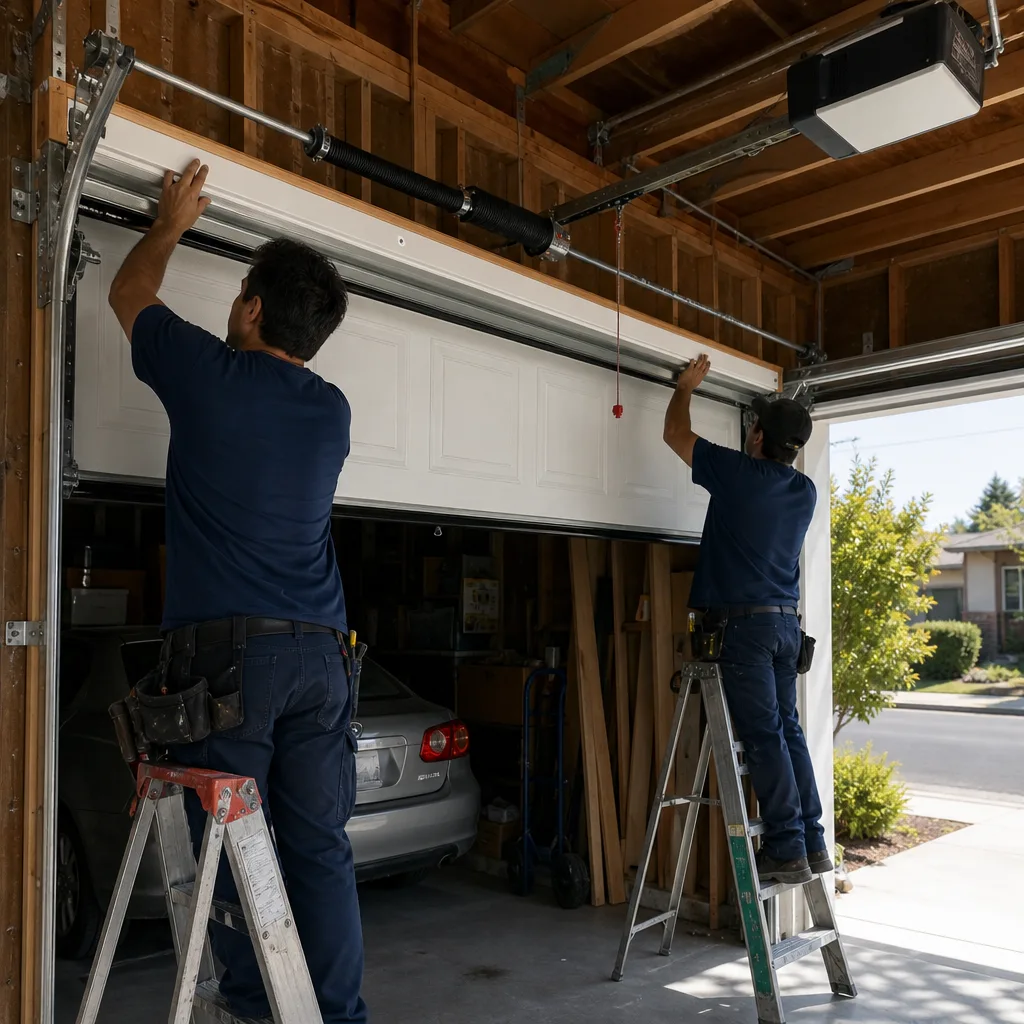
Verbal agreements fail because memory fails. Pleasanton homeowners in neighborhoods like Birdland or Downtown Pleasanton who accept a handshake quote for a spring replacement often find themselves arguing three weeks later about whether the price included both springs, the cables, or the safety sensor realignment. These four documents eliminate that ambiguity.
Document 1: Written Itemized Quote
This is not an estimate. An estimate is a guess. A written itemized quote specifies:
- Each part by name, size, and manufacturer (example: “2-inch ID torsion spring, 0.250 wire, 32 inches long, oil-tempered, Clopay OEM or equivalent”)
- Labor hours or flat labor rate with scope definition
- Disposal fees, if any
- Permit costs, if applicable
- Expiration date of the quote
Clause 1 of The Haven Standard, which we operate under, requires a flat, written price and written scope before any work begins. No exceptions. The customer sees the full dollar amount and every line item before saying yes. This is the opposite of “we’ll figure it out once we open it up.”
Document 2: Proof of General Liability Insurance
Request a certificate of insurance (COI) showing at least $1 million per occurrence. Verify the policy dates include your project period. For garage door work in Pleasanton, where hillside homes in Kottinger Ranch may require ladder work on sloped driveways, liability coverage protects against property damage if a door panel drops or a ladder shifts.
Document 3: Workers’ Compensation Certificate
If the contractor has employees, California requires workers’ comp. If they don’t carry it and a technician is injured on your property, your homeowner’s insurance may be drawn into the claim. Request the certificate with your address listed as “certificate holder” so you’re notified if coverage lapses.
Document 4: Written Warranty Terms
Not a verbal “yeah, we warranty our work.” Written terms specifying:
- What is covered (parts, labor, or both)
- Duration in years or months
- Whether the warranty is prorated or full replacement
- Who honors it (the contractor, a manufacturer, or a third party)
- What voids it (DIY adjustments, non-OEM parts, etc.)
Our Garage Door Installation in Pleasanton includes the 365-Day Done Right Promise - if it’s not done right, we make it right - backed by The Haven Standard and a terms page, not a handshake.
How to Read Garage Door Quote Language (And Spot Red Flags)
Certain phrases in quotes and verbal discussions predict problems. Here’s the translation table for common red-flag language:
| What They Say | What It Often Means | What You Should Hear Instead |
|---|---|---|
| “We’ll figure it out once we open it up” | Open-ended billing with no price ceiling | “We’ll photograph the failed component, diagnose the issue, and provide a written quote before any work begins” |
| “Spring replacement, starting at…” | The final price will exceed the opener | “Your specific spring is [size/spec], and the flat price is $X including labor, parts, and tax” |
| “Premium hardware upgrade recommended” | Unspecified upsell with no technical justification | “Your current roller is 2-inch 13-ball standard; the 10-ball nylon option lasts 3x longer in Pleasanton’s salt air, and the price difference is $Y” |
| “Labor by the hour” | Incentive to work slowly or send multiple techs | “Flat labor rate for this scope, regardless of time required” |
| “Material allowance” | Budget figure that will be exceeded | “Itemized parts list with specific SKUs and quantities” |
The phrase “starting at” deserves special attention in the Pleasanton market. Garage door spring replacement in the Tri-Valley typically ranges from $180-$340 for standard torsion springs on a single-car door, and $280-$520 for double-car doors or high-cycle springs. A quote of “starting at $99” that doesn’t specify spring size, cycle rating, or whether both springs are included is not a quote. It’s a lead-generation number designed to get a foot in the door.
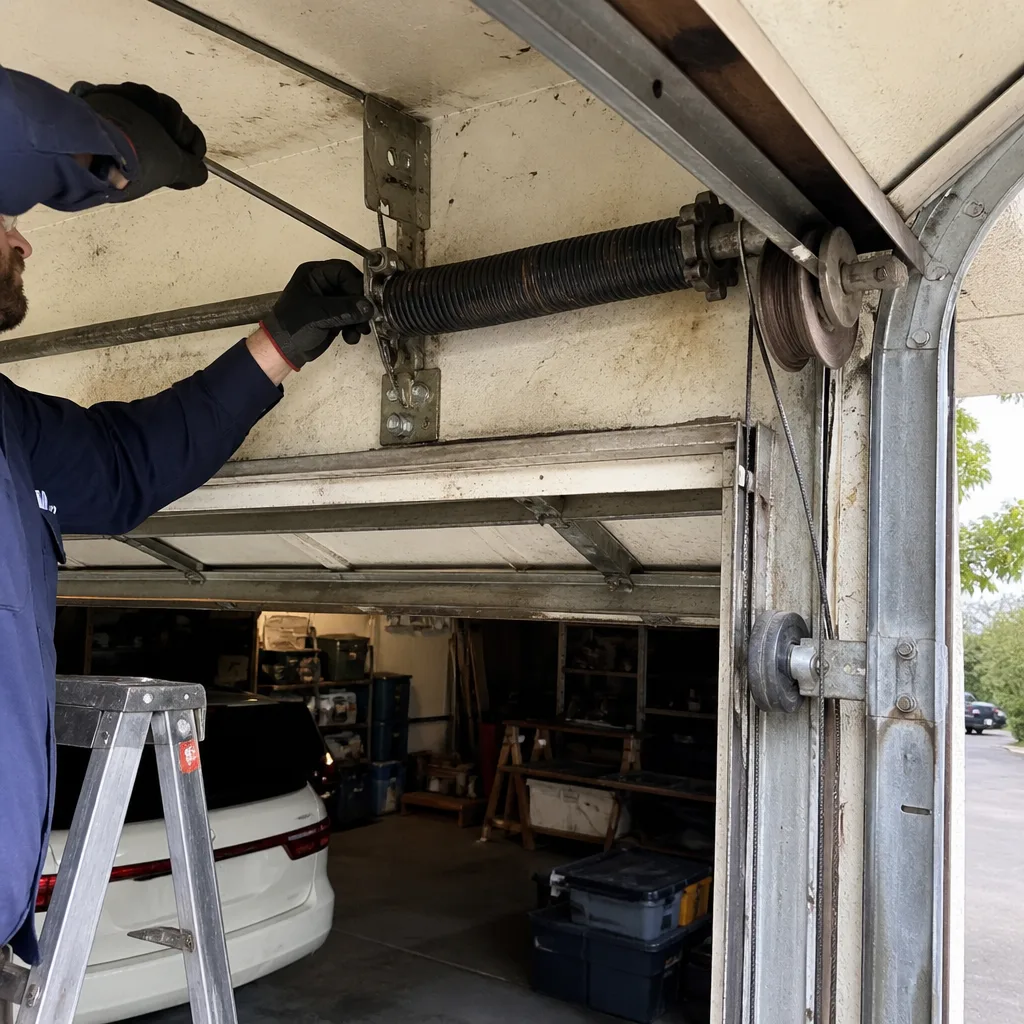
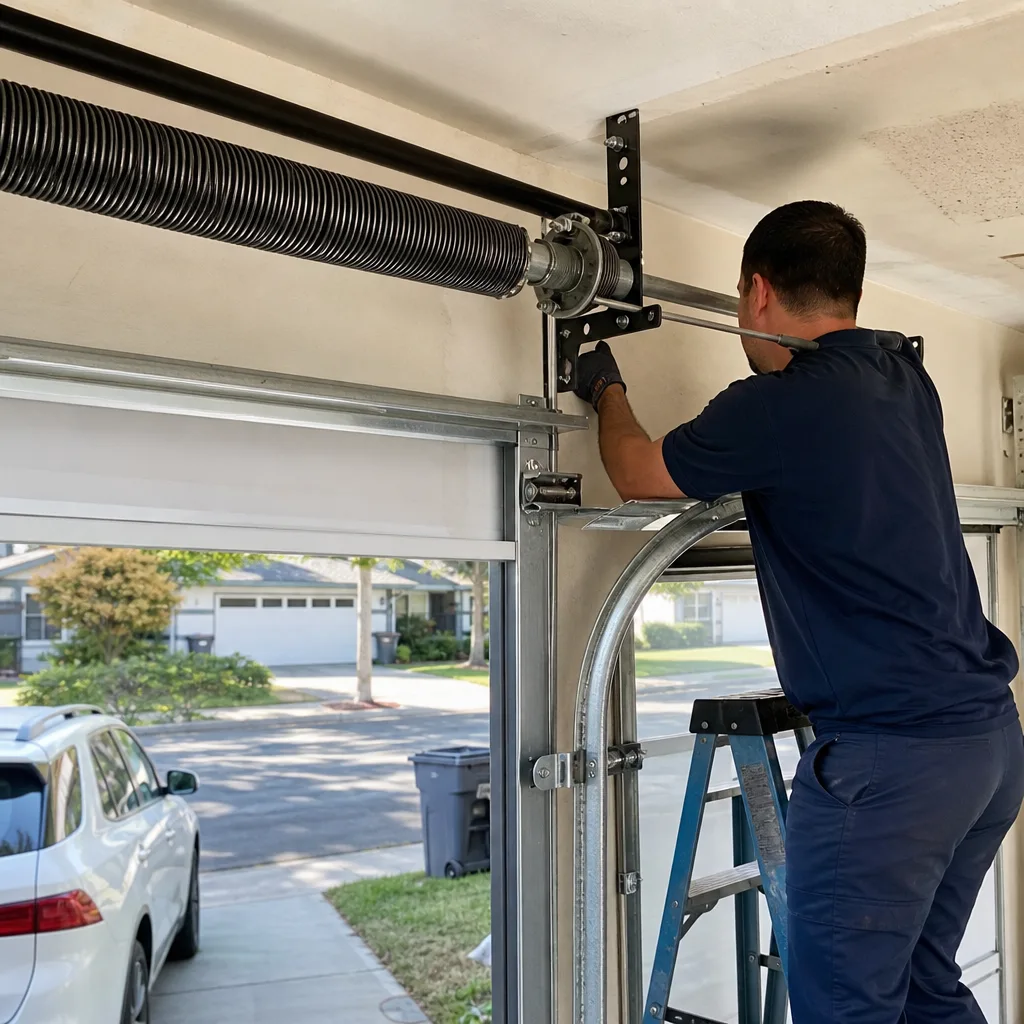
At Servo Garage Doors Pleasanton, we don’t use “starting at” pricing. The technician photographs the failed torsion spring or extension spring, measures wire diameter, inside diameter, and overall length, then provides a flat written price. Clause 4 of The Haven Standard is why the technician photographs the failed part before quoting a replacement. The customer sees what we found, not what we felt about it.
How to Compare Two Quotes for the Same Job
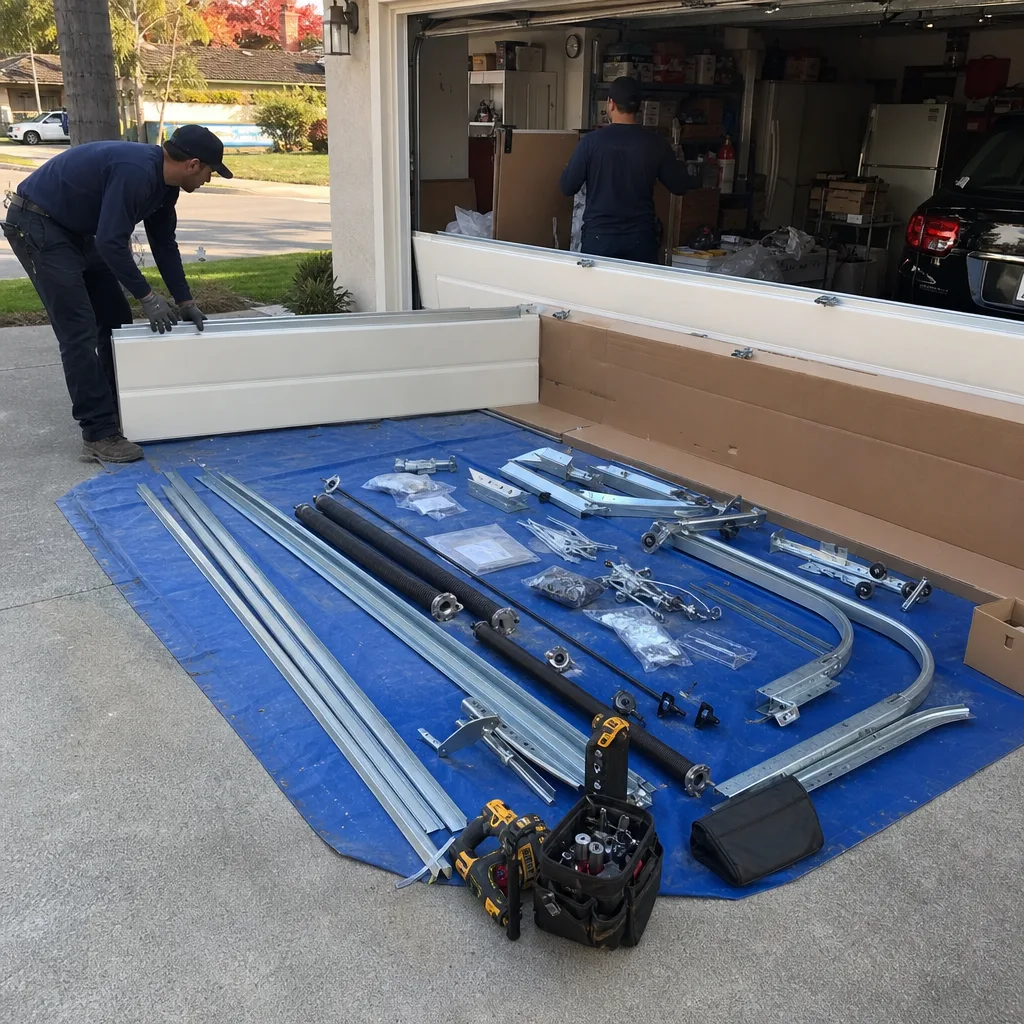
Homeowners in Pleasanton often collect two or three quotes for a garage door replacement, especially in newer developments like Avila or The Preserve at Pleasanton where HOA guidelines may require specific styles. Comparing quotes requires translating different line-item labels into the same components.
Here’s how to build an apples-to-apples comparison:
- Create a master parts list. Every quote should break out: door sections or full door model, track hardware (vertical, horizontal, flag bracket), spring system (torsion or extension, cycle rating), rollers (steel, nylon, ball-bearing count), hinges, weatherstripping, and opener (if included).
- Normalize brand names. One quote may say “premium insulated steel door” while another specifies “Clopay Gallery Collection, 2-inch Intellicore, R-18.4.” Call and request the specific model. Generic descriptions hide specification differences.
- Compare cycle ratings on springs. Standard springs are rated for 10,000 cycles. High-cycle springs rated for 25,000 or 50,000 cycles cost more upfront but last 2.5-5x longer. A lower quote with standard springs against a higher quote with high-cycle springs is not a fair comparison.
- Check wind load ratings. Pleasanton’s location in the Amador Valley means occasional high wind events. Doors should meet or exceed local wind load requirements, especially for larger openings in custom homes.
- Verify opener specifications. Chain drive, belt drive, and wall-mount (jackshaft) openers serve different needs. A quote for a “1/2 HP opener” without specifying drive type or smart features is incomplete.
- Add back missing items. If one quote includes haul-away of the old door and the other doesn’t, add $150-$250 to the second quote for fair comparison.
Our Garage Door Opener Repair & Installation in Pleasanton quotes specify drive type, horsepower, smart connectivity, and battery backup status on every proposal. The customer knows exactly what they’re comparing.
What to Put in Writing at Job Completion
The job isn’t done when the door moves. It’s done when you have documentation that prevents future disputes. Here’s the final sign-off checklist that closes the contractor’s ability to return for additional charges:
- Final invoice matching the quoted price. Any deviation requires a written change order signed by both parties. If the price increased, you should know exactly why and have approved it in writing.
- Photo documentation of completed work. Request images of installed components, especially springs, cables, and opener mounting. These prove what was actually installed, not just what was quoted.
- Written warranty document with start date. Not a verbal promise. A physical or PDF document with terms, duration, and contact information for claims.
- Manufacturer warranty registration confirmation. For doors and openers, the contractor should provide proof of registration or instructions for doing so yourself.
- Lien release, if applicable. In California, contractors who use subcontractors or suppliers must provide a release of lien rights upon final payment. This protects you from claims by unpaid material suppliers.
- Permit closure documentation. If a permit was pulled for the work, verify it was finaled with the City of Pleasanton Building Division. Unclosed permits create title issues when you sell.
At Servo Garage Doors Pleasanton, every visit closes with a documented photo record of findings and completed work delivered to the customer. This traces back to the founding rule in 2015: the customer sees the failed part before anyone quotes a replacement, and sees the installed part before anyone signs off. The photo record is included, not optional.
Pleasanton-Specific Considerations: Climate, Codes, and Neighborhoods
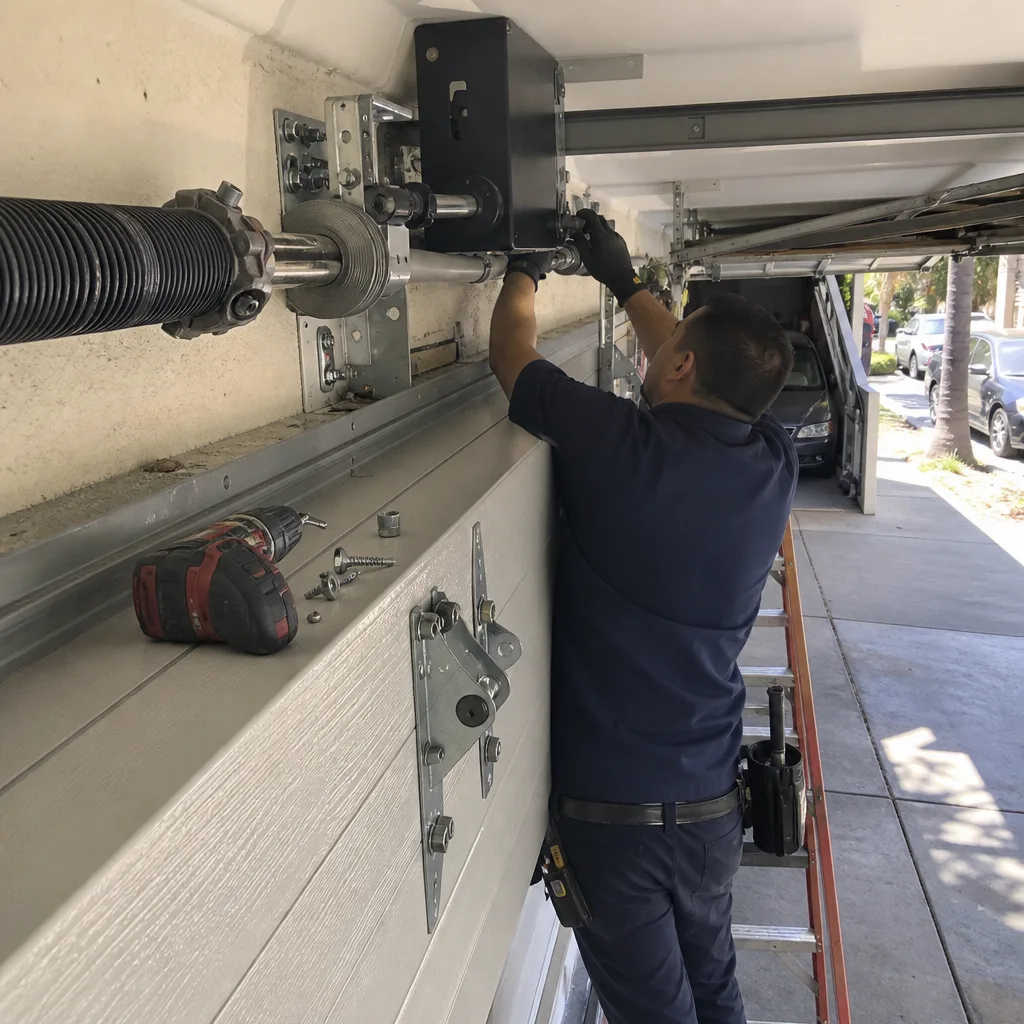
Pleasanton’s geography and building stock create specific hiring considerations that generic guides miss.
Climate and Material Selection
The Tri-Valley climate features hot, dry summers with temperatures regularly exceeding 95°F and mild, wet winters with occasional freeze-thaw cycles. For garage doors, this means:
- Steel doors without thermal breaks can reach exterior surface temperatures of 140°F+ in July and August, accelerating paint failure and warping if quality is marginal
- Wooden carriage doors in neighborhoods like Ruby Hill require more frequent resealing than the manufacturer recommends, typically every 18-24 months rather than 3-5 years
- Coastal influence from the Bay, while milder than true coastal cities, still introduces enough salt air to accelerate corrosion on uncoated hardware - a factor for homes west of Stanley Boulevard
A contractor who doesn’t ask which side of the ridge you’re on, or who recommends the same door for a Vintage Hills home and a Downtown Pleasanton Victorian, hasn’t done their homework.
Code and Permit Requirements
The City of Pleasanton Building Division requires permits for new garage door installations and opener replacements in new construction. Retrofit opener replacement in existing homes typically does not require permitting, but door replacement does if the opening is modified. A contractor who says “we never pull permits” or “permits just add cost” is asking you to assume liability for code compliance.
Neighborhood-Specific Considerations
Ruby Hill and Custom Estates: Custom wood and faux-wood composite doors are common. These require specialists in heavy-door hardware and high-cycle spring systems. Standard 10,000-cycle springs fail prematurely on 400-600 lb doors.
Vintage Hills and Birdland: 1970s-1990s homes with original doors approaching end of life. Track systems from this era may not be compatible with modern insulated doors without full hardware replacement. Quotes that assume reuse of existing track should be flagged.
Downtown Pleasanton and Del Valle: Older homes with lower headroom or side-room clearances. Standard track configurations may not fit. A contractor should measure headroom, sideroom, and backroom before quoting, not guess.
Newer Developments (Avila, The Preserve): HOA architectural guidelines often specify color, window placement, and panel style. The contractor should request HOA documentation or verify compliance before ordering.
Brand Knowledge and Parts Availability
A competent garage door contractor in Pleasanton should service major brands without requiring you to call the manufacturer first. Servo Garage Doors Pleasanton services all eight major brands: LiftMaster, Chamberlain, Genie, Clopay, Amarr, Wayne Dalton, Craftsman, and Raynor.
Brand knowledge matters for repairs because:
- Wayne Dalton TorqueMaster spring systems require proprietary tools and parts - a contractor unfamiliar with the system may recommend unnecessary full-opener replacement
- Clopay’s Intellicore and Amarr’s SafeGuard insulation systems have specific hardware requirements for warranty validity
- Craftsman openers (manufactured by Chamberlain) use Chamberlain-compatible parts, but model year matters for logic board interchangeability
Parts availability matters for same-day repair. A contractor who carries common springs, cables, rollers, and logic boards on the truck can complete most repairs in one visit. One who must order parts extends your timeline and may charge a return trip fee.
Our Garage Door Parts in Pleasanton inventory includes torsion and extension springs for standard door sizes, cable and drum sets, roller assortments, and opener logic boards for major manufacturers. Technicians arrive with parts, not just diagnostic tools.
Common Mistakes to Avoid
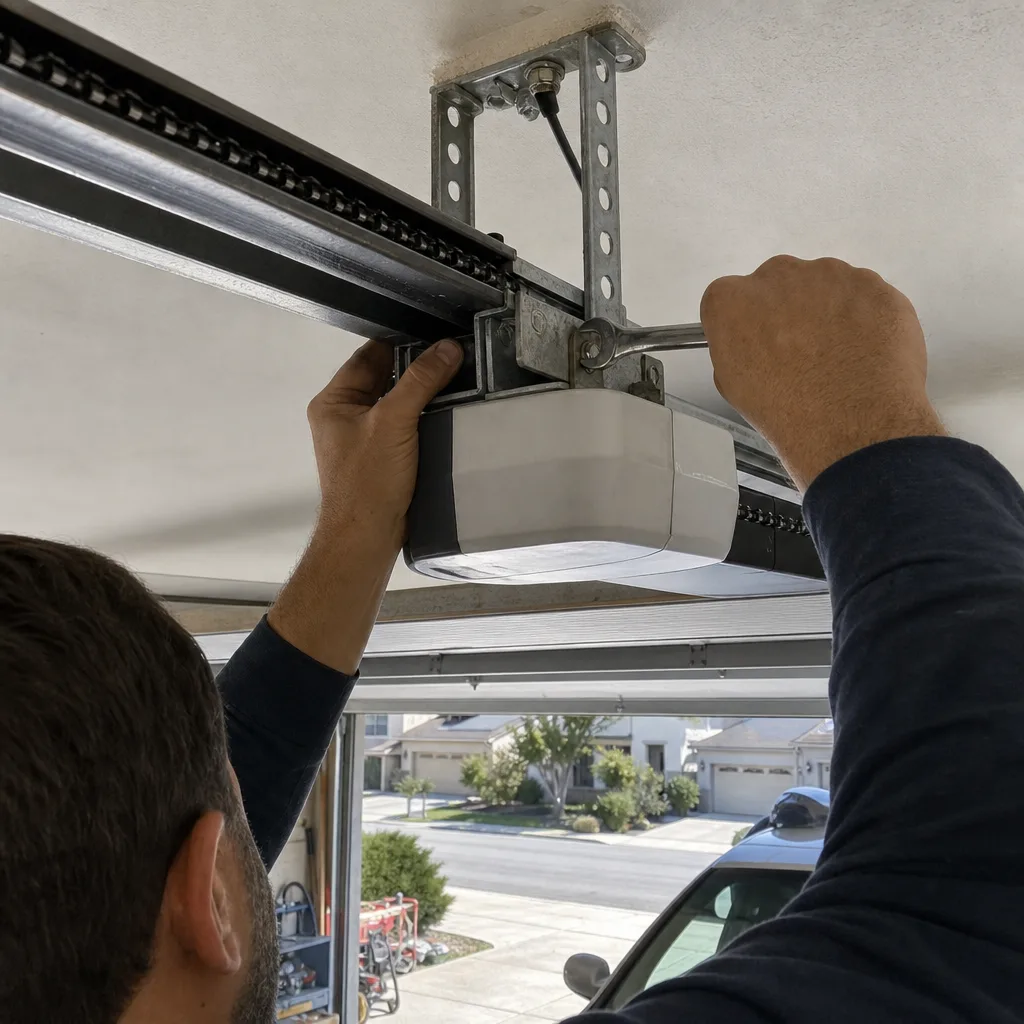
- Accepting a verbal quote because “it’s just a small repair.” In Pleasanton, the most common dispute we see is a $200 verbal spring quote that becomes $600 with “while we’re in there” additions. Written scope prevents scope creep.
- Verifying the license exists but not checking complaint history. An active license with three “abandonment of work” citations in five years is a pattern, not a coincidence.
- Comparing quotes with different spring cycle ratings. A $220 quote with 10,000-cycle springs against a $340 quote with 50,000-cycle springs looks like a $120 difference. Over 15 years, it’s a $660 difference in replacement costs.
- Ignoring wind load requirements for large doors. Custom homes in Ruby Hill with 18-foot wide openings need reinforced tracks and heavier-gauge hardware. A standard-duty quote on an oversize door fails prematurely and dangerously.
- Not requesting the final photo record. Without documentation of what was installed, warranty claims become your word against theirs. The contractor who won’t photograph completed work has something to hide.
- Hiring based on lowest price without checking what’s excluded. Haul-away, permit fees, and disposal are common exclusions that add $200-$400 to the final invoice.
- Assuming all “licensed and insured” claims are equal. Ask for the documents. A legitimate contractor provides them without hesitation. A hesitant contractor is telling you something.
When to Call a Professional
Some garage door issues are maintenance items a homeowner can handle - see our DIY vs Professional Garage Door: The Pleasanton Homeowner’s Decision Guide for where to draw the line - including lubricating hinges and rollers with silicone-based spray, clearing track debris, or testing photo-eye alignment. Others require professional intervention because the components store lethal energy or control heavy moving mass.
Call a professional immediately for:
- Broken torsion or extension springs - these store enough energy to cause serious injury or death if handled improperly
- Cable off the drum or frayed cables - the door can drop unpredictably if support fails
- Opener motor running but door not moving - indicates mechanical failure in the trolley carriage or drive system
- Panel damage affecting door alignment - misaligned tracks cause binding and premature wear
- Any door that won’t stay open or closes rapidly - spring system failure is imminent
Servo Garage Doors Pleasanton offers free estimates in Pleasanton - call (510) 398-4466. Every estimate includes a documented photo record of findings, a flat written price, and no obligation. Emergency calls are answered by a live person, 24/7, with a named technician and an on-the-way text.
Frequently Asked Questions
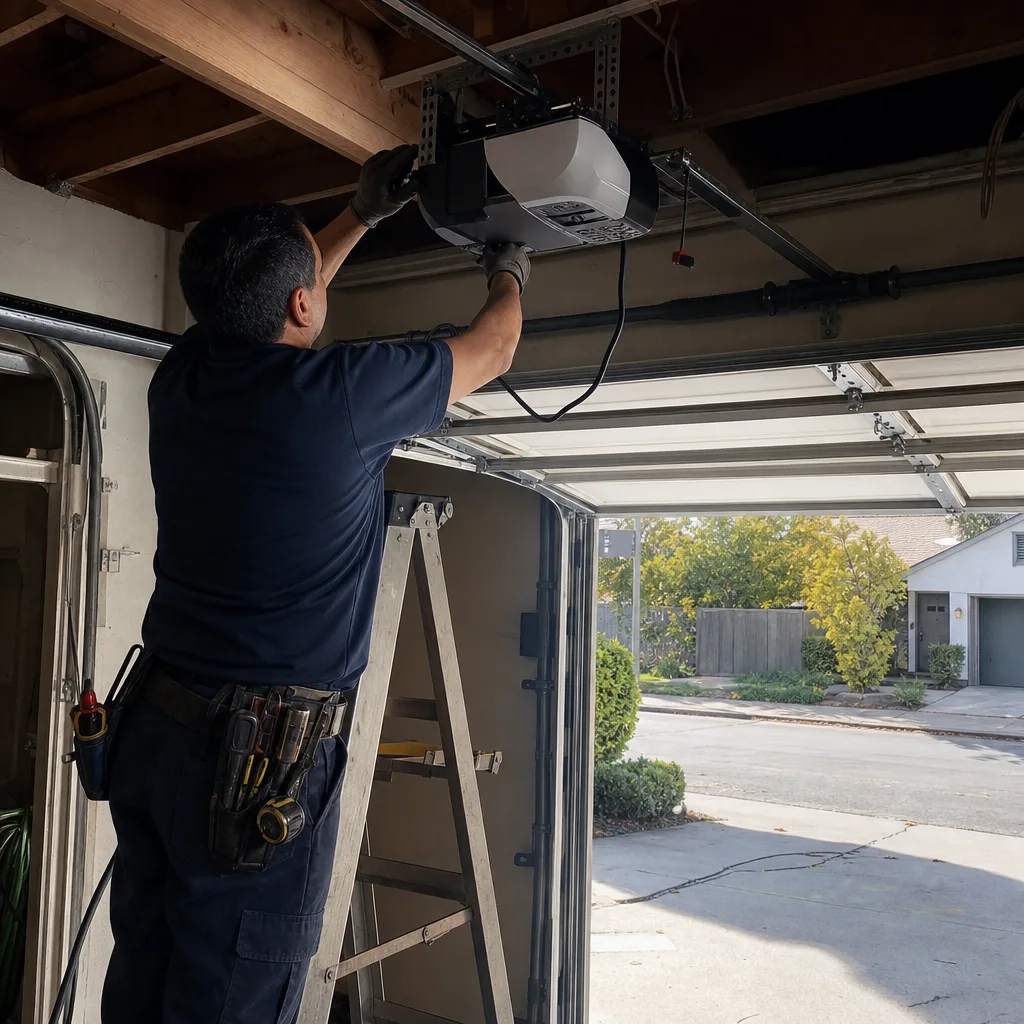
Garage door spring repair in Pleasanton typically costs $180-$340 for a single standard torsion spring replacement and $280-$520 for double-car doors or high-cycle springs. The price depends on spring size, cycle rating, and whether cables or additional hardware need replacement. Call (510) 398-4466 for an exact quote - estimates are free.
Go to cslb.ca.gov and use the Instant License Check tool. Enter the six- or seven-digit license number, confirm “Active” status, verify the business name matches your quote, and review any disciplinary actions or complaints. The check takes under a minute and is the single most important verification step.
A written garage door quote should include: itemized parts with specifications (size, material, manufacturer), labor scope and rate structure, disposal and haul-away fees, permit costs if applicable, warranty terms, and an expiration date. Vague descriptions like “spring replacement” without size and cycle rating are insufficient.
The price should not change after a written quote is accepted unless you authorize additional work in writing. At Servo Garage Doors Pleasanton, the technician photographs the failed component, provides a flat written price, and obtains your approval before any work begins. Clause 1 of The Haven Standard prohibits starting work without a written price and scope.
New garage door installations and modifications to existing openings require permits from the City of Pleasanton Building Division. Opener replacements in existing homes typically do not. A contractor who avoids permitting to save cost or time is transferring liability to you.
Repair is appropriate when the opener motor runs but mechanical components fail (trolley carriage, limit switch, logic board), or when remote/safety sensor issues are isolated. Replacement is appropriate when the opener exceeds 15 years, lacks safety features required by current code, or when repair costs exceed 60% of replacement cost. A documented diagnosis with photo evidence should support either recommendation.
The Bottom Line
Hiring a garage door contractor in Pleasanton is less about finding the lowest price and more about building a paper trail that defines the work, fixes the price, and documents the outcome. For more guides & resources, visit our blog. Verify the CSLB license and complaint history. Request four documents before signing: written itemized quote, general liability proof, workers’ comp certificate, and written warranty terms. Translate vague quote language into specific parts and specifications. Compare quotes on identical components, not headline numbers. And at completion, demand documentation that proves what was done and closes the door on future charges.
The contractors who welcome this process - who photograph before quoting, who write every price and scope, who deliver evidence at every step - are the ones who’ve already decided to do the work correctly. The ones who resist paperwork usually have something they don’t want written down.
Written by Marcus Deller, Owner at Servo Garage Doors Pleasanton, serving Pleasanton since 2015.