
Last updated September 21, 2026
Full 25-point door and opener safety check with every visit - springs, cables, rollers, tracks, and your LiftMaster or Chamberlain opener included
You get a price before we start. It does not change when the truck arrives.
 Before
 After
After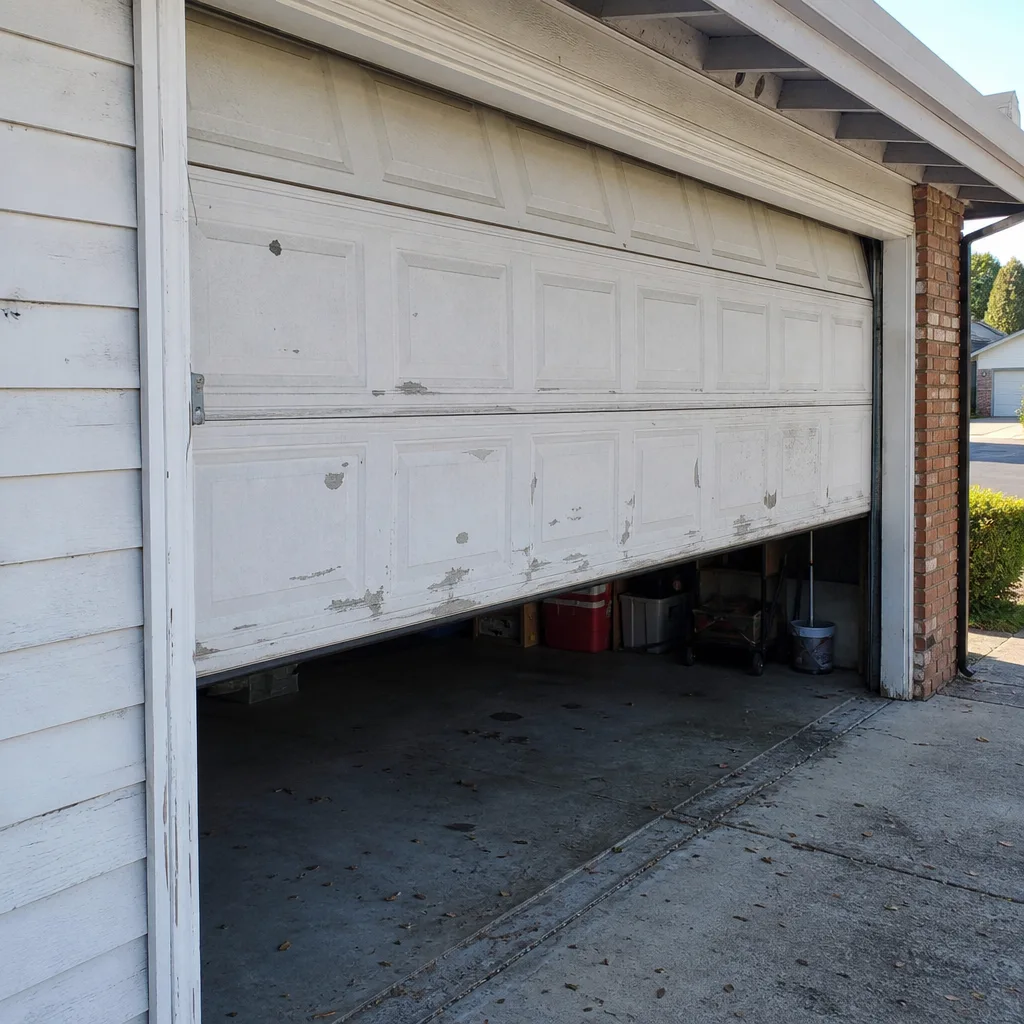 Before
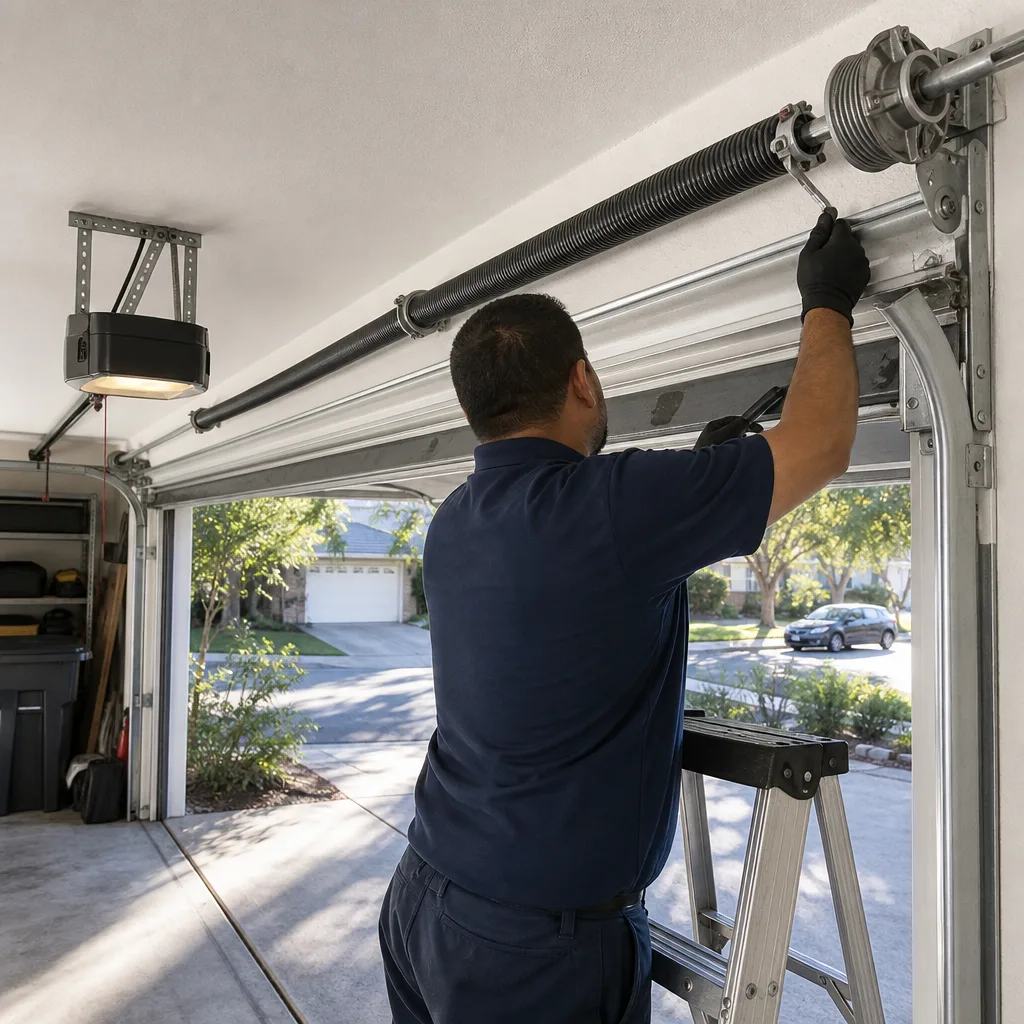 After
After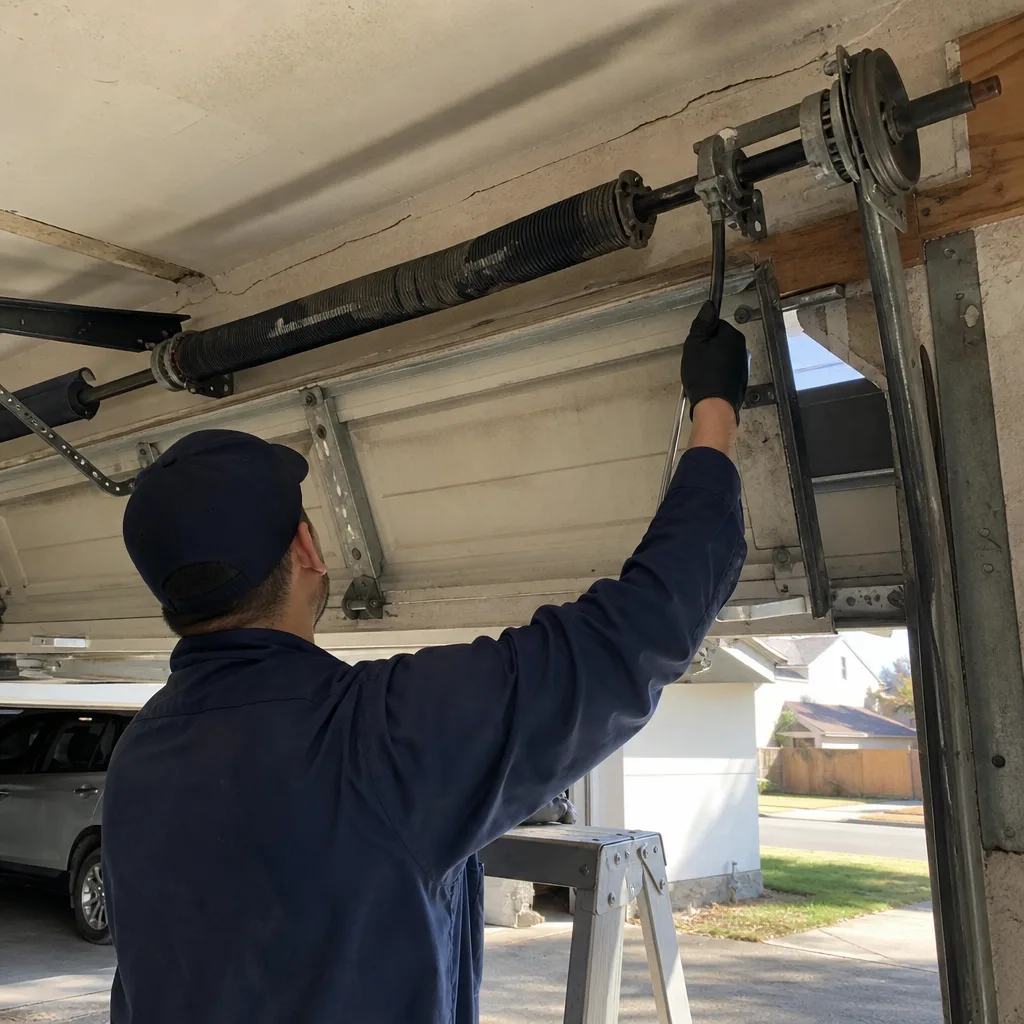 Before
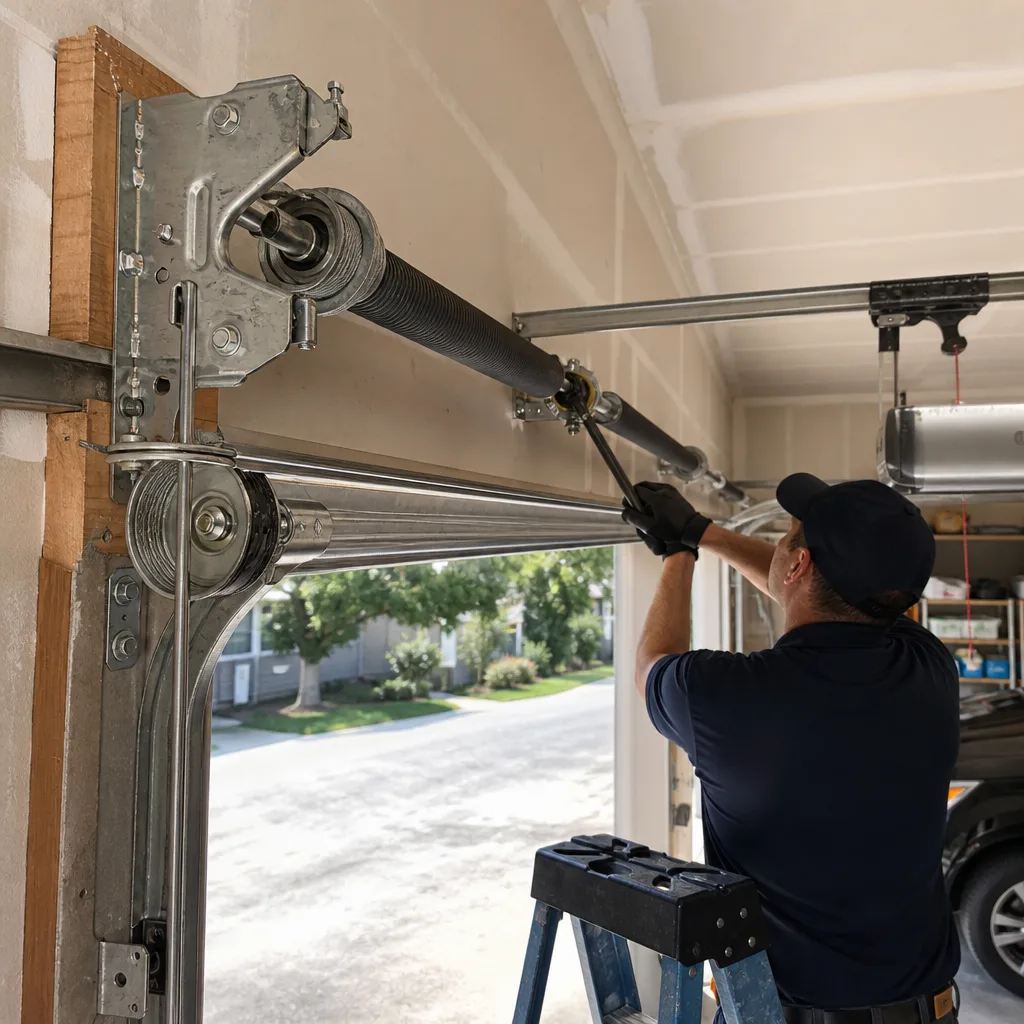 After
AfterThe Complete Guide to Garage Door in Pleasanton
Most Pleasanton homeowners make three separate garage door decisions before they ever call a contractor: door material, opener type, insulation R-value. Yet nearly every “complete guide” online starts with brand comparisons instead of the local wind load and HOA requirements that will override those choices anyway. In the Tri-Valley, where summer temperatures can swing 25 degrees from the coast and where Pleasanton’s 1980s-2000s housing stock carries a patchwork of original and replacement doors, the sequence of decisions matters more than any single product pick. This guide is organized around the actual order of operations: climate constraints, code compliance, contractor vetting, and documented pricing. By the end, you’ll know how to read a quote line by line, what steel gauge actually means for your east-facing door in Kottinger Ranch, and why a written price before work starts isn’t a courtesy - it’s the only way to avoid invoice shock.
Quick Answer
A garage door in Pleasanton must first satisfy local wind load requirements, HOA design rules if applicable, and the thermal stress of Tri-Valley heat before material or brand selection even enters the conversation. The typical replacement project in Pleasanton ranges from $1,200 for a basic non-insulated steel door to $3,800 for a fully insulated carriage-style door with a belt-drive opener, with permit and haul-away costs itemized separately; see our Garage Door Cost Breakdown: The Pleasanton Homeowner’s Reference for 2026 for detailed line-item guidance. Every quote should include labor, hardware, disposal, and a written scope before any work begins.
Table of Contents
- How Pleasanton’s Climate Affects Your Garage Door
- The Decision Sequence That Saves Money: Code First, Then Material, Then Brand
- Garage Door Components: What Each Part Actually Does
- How to Read a Garage Door Quote Line by Line
- Garage Door Openers: Types, Brands, and What Pleasanton Homes Need
- Maintenance That Prevents Emergency Calls
- Choosing a Contractor: Documentation vs. Promises
- What Garage Door Work Costs in Pleasanton
 Before
 After
AfterHow Pleasanton’s Climate Affects Your Garage Door
Pleasanton sits in a Tri-Valley microclimate that punishes garage doors differently than San Francisco, San Jose, or even Livermore ten miles east. Summer afternoons regularly hit 95-100°F from June through September. East- and south-facing doors, common in neighborhoods like Kottinger Ranch and Vintage Hills, absorb direct solar load for six to eight hours daily. That thermal cycling expands and contracts steel panels, degrades rubber weatherstripping, and cooks the logic boards in older openers mounted on garage ceilings that functionally become solar ovens.
Here’s what that means for material selection:
- Steel gauge: 24-gauge steel is the minimum we’d recommend for any Pleasanton door with direct sun exposure. 25-gauge or lighter dents more easily and transfers more thermal expansion stress to the panel joints. In our experience, the 24-gauge Clopay and Amarr doors we install in sun-heavy orientations show fewer panel warp issues at year five than lighter alternatives.
- Finish type: Baked-on polyester or polyurethane finishes hold up better than painted steel in UV exposure. We’ve replaced doors in Birdland and Pleasanton Valley where painted steel began chalking at year three. A factory-applied finish with a 15-20 year limited warranty is worth the incremental cost.
- Insulation: Polyurethane foam-in-place insulation (R-value 12-18) provides structural rigidity that helps panels resist thermal bowing, not just temperature control. For attached garages in Pleasanton, where the garage shares a wall with conditioned space, this also reduces heat transfer into the home.
- Weatherstripping: PVC vinyl strips become brittle after three to four Tri-Valley summers. We specify EPDM rubber or thermoplastic elastomer (TPE) seals on replacements, which flex through temperature swings without cracking.
Wind matters too. Pleasanton’s location in the Amador Valley creates occasional afternoon gust patterns, particularly in the spring and fall. While not hurricane territory, the 2019 California Building Code (effective in Pleasanton) requires garage doors to meet ASCE 7 wind load calculations for the specific exposure category. A door rated for a basic wind speed of 85 mph may not suffice for a two-story home on an exposed ridgeline in Ruby Hill or the Foothill corridor. The permit application will flag this, but only if the contractor pulls a permit.
We’ve documented thermal damage on hundreds of Pleasanton service calls since 2015. In Kottinger Ranch, we regularly see torsion spring fatigue accelerated by heat - the spring operates in a garage that hits 110°F ambient, increasing the effective cycle rate. In downtown Pleasanton near Main Street, older carriage-house style doors with wood overlay panels show moisture cycling damage from winter fog followed by summer desiccation. The climate isn’t abstract here. It shows up in specific component failures we photograph and document on every visit.
The Decision Sequence That Saves Money: Code First, Then Material, Then Brand
The most expensive mistake in garage door replacement is choosing a door you love and then discovering it violates your HOA’s design guidelines or the city’s wind load requirements. We’ve seen it repeatedly: a homeowner in Pleasanton Meadows selects a contemporary full-view aluminum door, only to learn their CC&Rs require a traditional raised-panel profile. The deposit is paid. The order is placed. The remediation costs 15-20% more than starting with the constraint.
The correct sequence:
- Confirm code and permit requirements. Pleasanton requires a building permit for garage door replacement when the door size changes, the opening is modified, or the home is in a designated fire hazard severity zone (parts of the Foothill area qualify). The permit fee is typically $180-$280. A contractor who says “we don’t need a permit for this” is either misinformed or avoiding the inspection that verifies wind load compliance. Ask for the permit number before work starts.
- Check HOA design rules. Pleasanton neighborhoods with active HOAs - Vintage Hills, Ruby Hill, Castlewood, and others - maintain approved color palettes, panel profiles, and window configurations. Some require architectural committee approval with a photo mockup. This takes 2-4 weeks, not 2-4 days. Request the design guidelines in writing and verify that your selected door appears on the approved list or submit for pre-approval.
- Determine insulation and energy requirements. California’s Title 24 energy code affects new construction and significant remodels. For replacement doors on existing homes, compliance is generally not triggered unless you’re also altering the garage’s thermal envelope. But if you’re converting a garage to living space or the home is undergoing a whole-house energy upgrade, the door may need to meet specific U-factor and R-value targets.
- Select material based on climate exposure and maintenance tolerance. Steel, composite, wood, and aluminum each carry tradeoffs. Steel is cost-effective and durable but thermally conductive without insulation. Composite (fiberglass or vinyl) resists moisture and thermal cycling but has fewer style options. Wood requires refinishing every 2-3 years in Pleasanton’s sun. Aluminum is lightweight and modern but dents easily and conducts heat aggressively.
- Choose brand and model last. Once material, insulation, wind load, and design constraints are fixed, the brand selection becomes straightforward. Clopay and Amarr dominate the steel market with proven Tri-Valley track records. Chamberlain and Genie cover the opener segment with different feature sets. The brand matters less than whether the specific model satisfies the constraints established in steps 1-4.
This sequence inverts the typical homeowner research pattern, which starts with Pinterest boards and brand reviews. In our experience, the customers who follow constraint-first selection spend 10-15% less overall and report higher satisfaction, because they’re not paying to solve problems they could have prevented.
Garage Door Components: What Each Part Actually Does
Understanding component vocabulary prevents blind decision-making when a technician describes what failed or what a quote includes. Here’s the core hardware mapped to function:
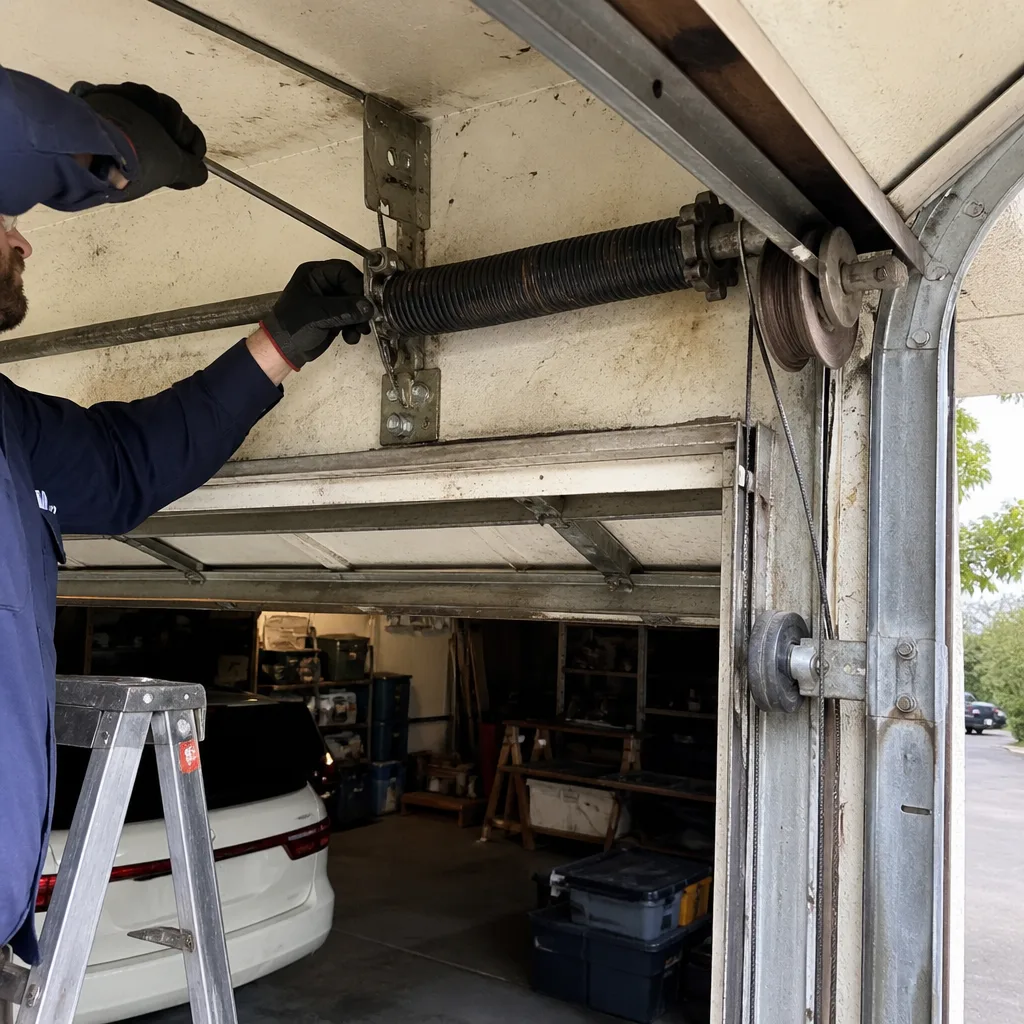
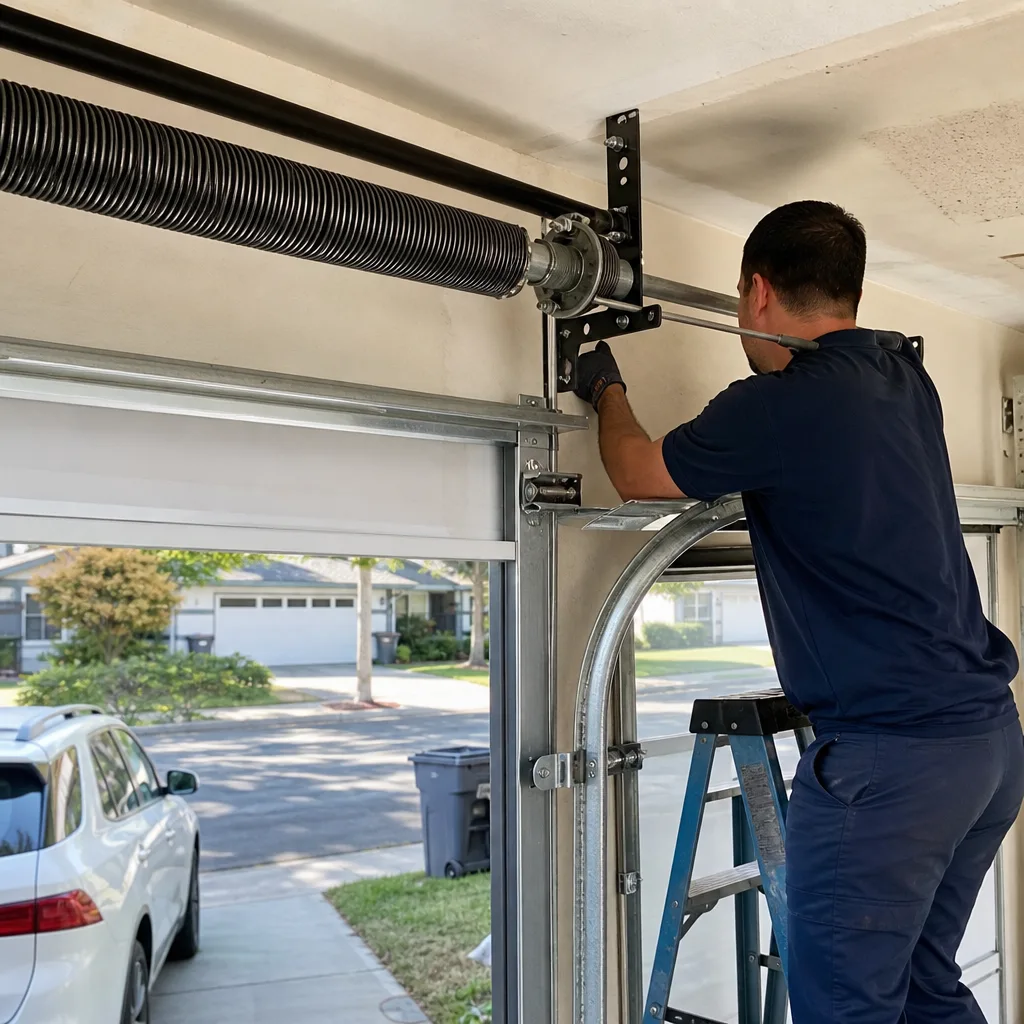
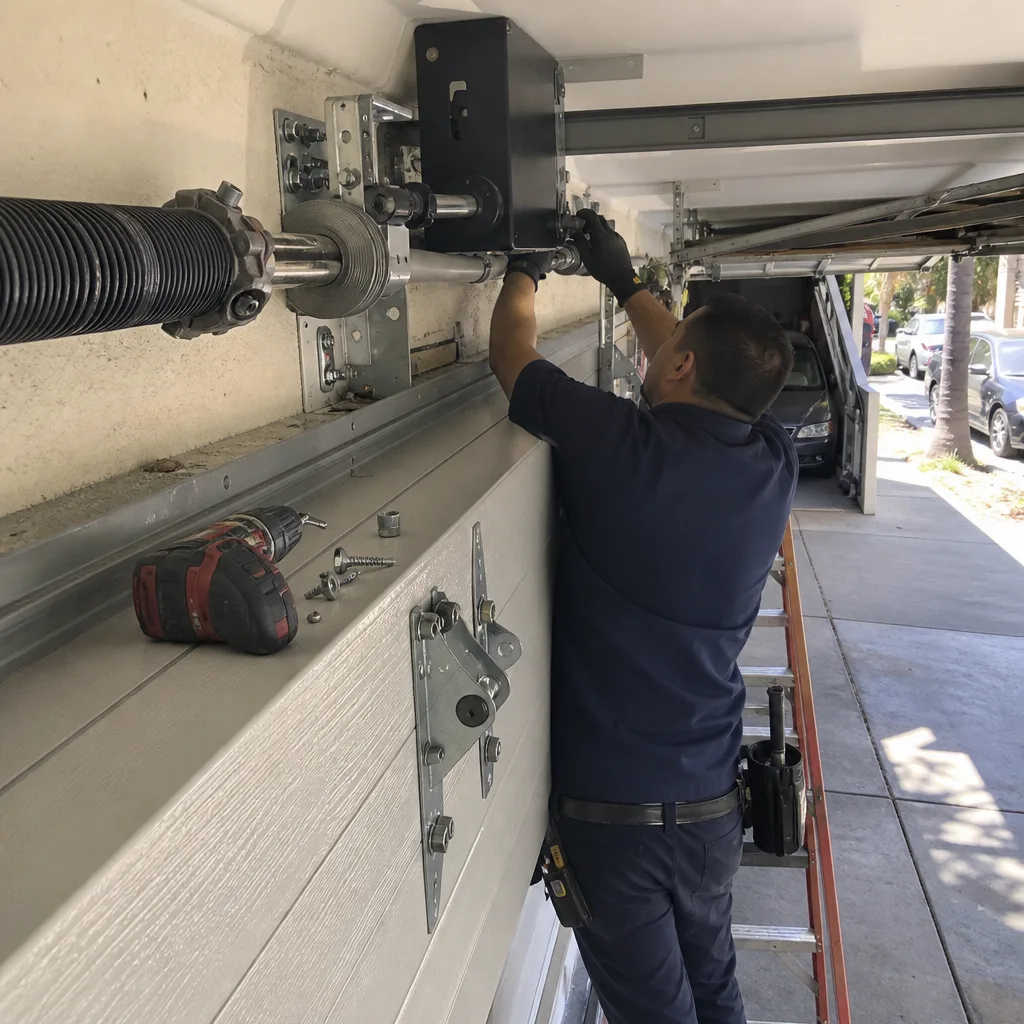
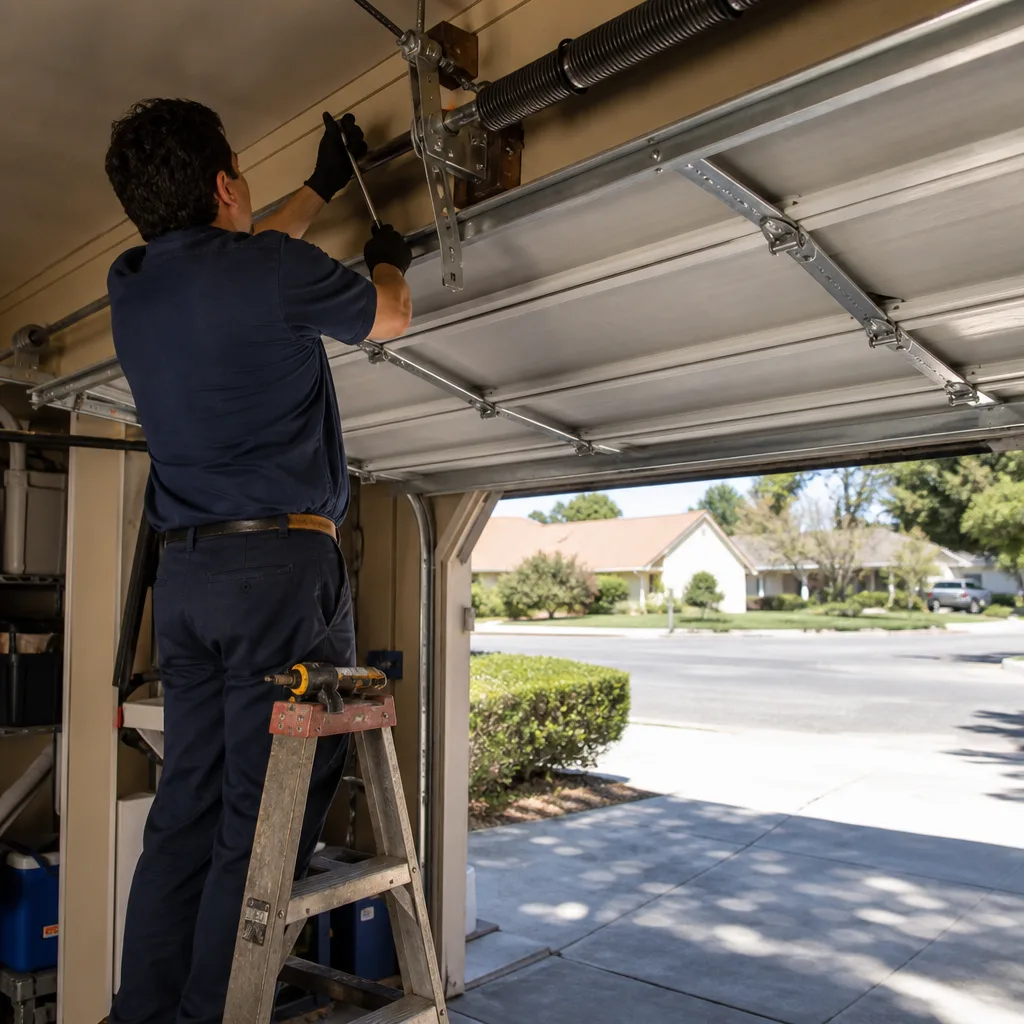
Torsion spring system: The torsion spring is a coiled steel spring mounted horizontally above the door opening. It stores mechanical energy when the door closes and releases it to assist lifting when the door opens. The spring’s wire diameter, inside diameter, and overall length determine its torque capacity - measured in inch-pounds - which must match the door weight. A mismatch causes premature failure or dangerous over-torque. In Pleasanton, we regularly see spring failures in homes with original springs rated for 10,000 cycles when the household runs 4-6 cycles daily. At that usage, the spring fails in 4-5 years, not the 7-10 often assumed.
Cable drums and lift cables: The cable drums are grooved metal wheels at each end of the torsion spring shaft. As the door opens, the cables wind onto the drums in a precise groove pattern that controls lift geometry. If a drum is cracked or the grooves are worn, the door lifts unevenly and stresses the track system. We’ve replaced drums in Pleasanton homes where a previous installer used mismatched drum sizes for a heavy wood door, causing chronic cable fraying.
Bottom brackets and rollers: The bottom bracket anchors the lift cable to the door’s lowest panel and connects to the roller that rides in the vertical track. This bracket is under constant tension - if it fails, the cable can detach and the door can drop. We inspect bottom brackets on every service call; corrosion in garages with pool equipment or fertilizer storage (common in Pleasanton’s larger-lot neighborhoods) accelerates bracket fatigue.
Hinges and center stiles: Hinges connect door panels and allow the door to bend around the track radius as it opens. The center stile is the vertical reinforcement member that prevents panel bowing. On wide doors (16 feet or more), a missing or undersized center stile causes visible sag within two years.
Track system: The vertical and horizontal tracks guide door movement. Track gauge (thickness) and bracket spacing determine stability. We use 14-gauge galvanized steel tracks minimum; lighter tracks flex on heavy doors and cause roller derailment.
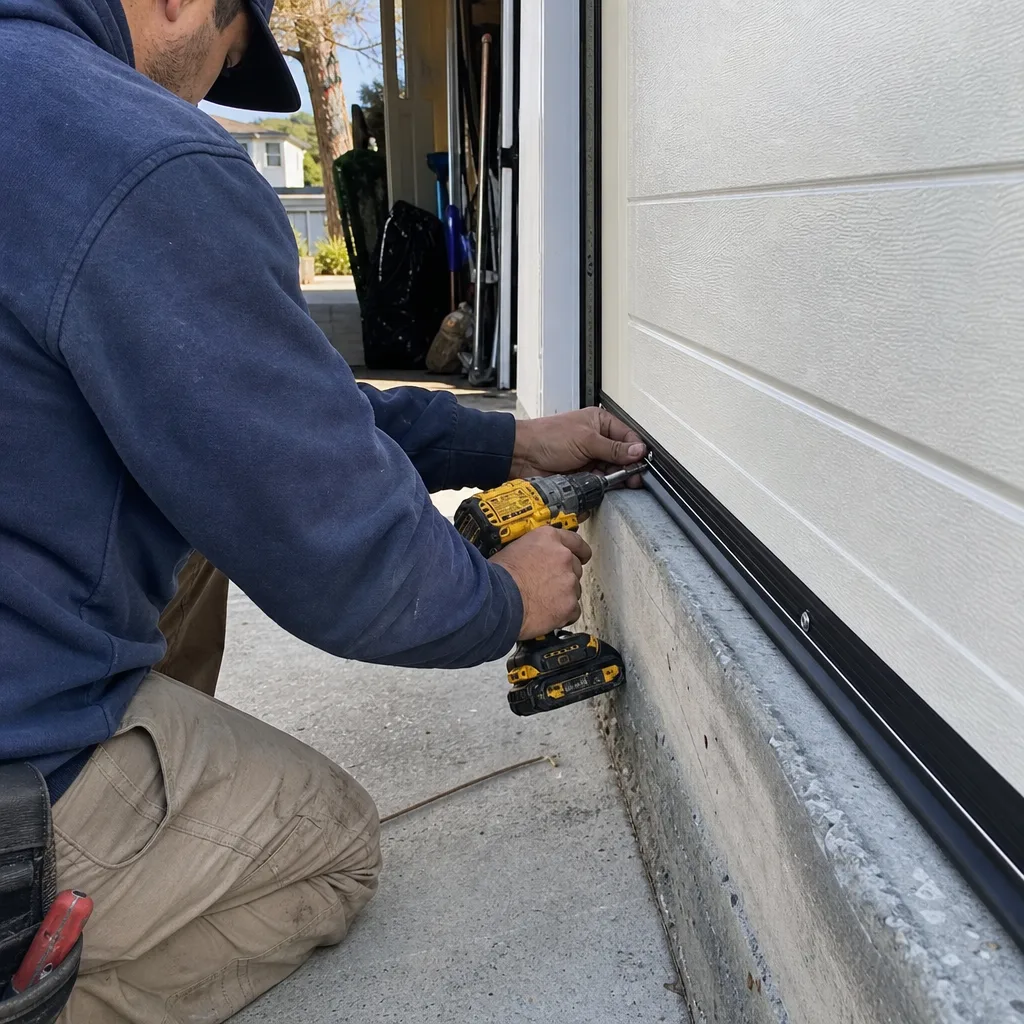
Weatherstripping and seals: The bottom seal (astragal) blocks water, debris, and rodents. The jamb seals along the sides reduce air infiltration. In Pleasanton, we specify dual-durometer bottom seals with a rigid vinyl retainer and flexible rubber contact surface - they maintain seal contact as the concrete slab shifts seasonally.
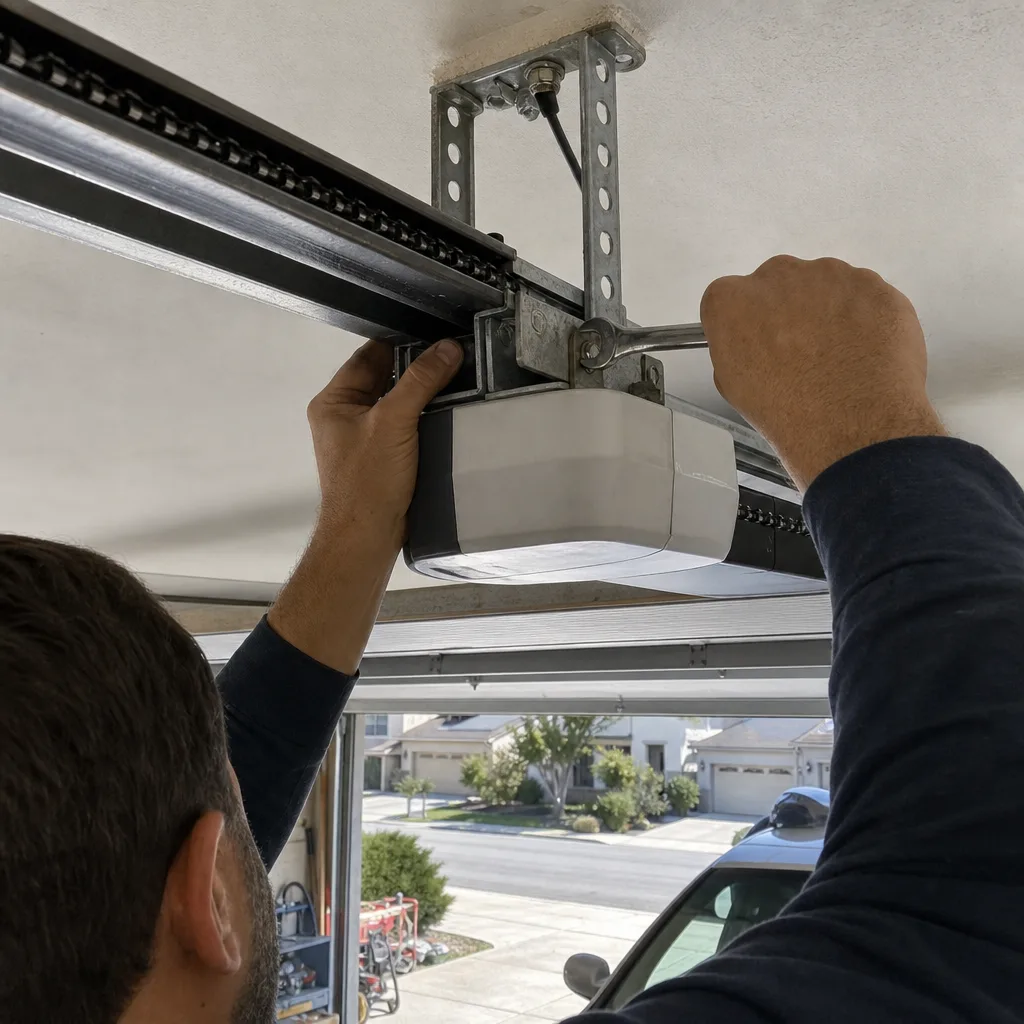
Opener components: The motor unit drives a trolley carriage along a rail. The trolley connects to the door via an arm. The limit switch tells the opener when to stop opening or closing. The logic board controls safety sensors, remote programming, and force sensitivity. On Genie and Chamberlain units, the logic board is the most common failure point after 8-10 years in hot garage environments.
When we document a repair at a Pleasanton home, the photo record shows each of these components in its actual condition - not a generic diagram. Clause 4 of The Haven Standard requires the technician to photograph the failed part before quoting replacement, so the customer sees the crack, corrosion, or wear pattern that justifies the scope.
How to Read a Garage Door Quote Line by Line
A garage door quote should be legible to a homeowner who isn’t in the trade. If it isn’t, that’s information the contractor doesn’t want you to have. Here’s how to read one, with the line items that should appear and the red flags that signal trouble.
Required line items:
- Door and sections: Manufacturer, model number, size, gauge, insulation type and R-value, finish color and texture. If this line just says “steel door, 16×7,” you don’t have a quote. You have a category.
- Track and hardware kit: Gauge, bracket count, roller type (nylon vs. steel, ball-bearing vs. plain). Nylon rollers with sealed ball bearings are quieter and last longer; they should be specified if you’re paying for them.
- Spring system: Torsion or extension, wire size, cycle rating (10,000, 15,000, 25,000, or 30,000 cycles). The cycle rating is the number of open-close operations before expected failure. A 30,000-cycle spring costs more upfront but lasts 2-3 times longer in a high-use household.
- Opener (if included): Brand, model, drive type (chain, belt, screw, or direct), horsepower, features (battery backup, Wi-Fi, wall console, remotes). California requires battery backup on new opener installations as of 2019.
- Labor: Should be itemized separately from materials, with hours or a flat rate described. “Labor: $450” with no scope description is insufficient.
- Permit and inspection: If applicable, the permit fee and who obtains it. In Pleasanton, this is typically the contractor’s responsibility.
- Haul-away and disposal: Old door removal, recycling or landfill fees. A missing haul-away line often means a surprise charge later or the homeowner is left with a door in the driveway.
- Warranty terms: Door warranty (typically 1 year to lifetime on sections, pro-rated or non-pro-rated), hardware warranty, labor warranty. The 365-Day Done Right Promise we offer at Servo Garage Doors Pleasanton is separate from manufacturer warranties and covers our workmanship specifically.
Red flags:
- Verbal-only pricing with “we’ll write it up after we start”
- Material and labor combined into a single lump sum with no breakdown
- “Allowance” lines with dollar amounts instead of specified products
- Missing permit line on a job that clearly requires one
- Warranty described as “standard manufacturer” with no years stated
- Pressure to sign immediately for a “today only” price
The written price before any work starts is Clause 1 of The Haven Standard. At Servo Garage Doors Pleasanton, the quote you sign is the price you pay. If we discover concealed damage - rotted framing, for example - we document it, stop work, and present a revised scope with photos before proceeding. The original quoted items don’t change price; new items require new authorization. This isn’t complicated. But it’s not how most contractors operate, which is why invoice disputes are among the most common complaints in California contractor board filings.
We also offer a Free Second Opinion on any written estimate from another company. Bring the paperwork. We’ll review it item by item, note what’s missing or unclear, and explain what each line should mean. No coupon or code required.
Garage Door Openers: Types, Brands, and What Pleasanton Homes Need
Opener selection follows the same constraint-first logic as door selection. California law mandates battery backup on all new opener installations. Wi-Fi connectivity is increasingly standard. Beyond that, the choice depends on noise tolerance, ceiling height, and usage pattern.
Drive types:
- Belt drive: Rubber-reinforced belt moves the trolley. Quietest option, ideal for bedrooms above or adjacent to the garage - common in Pleasanton’s two-story plans. Chamberlain’s belt-drive line and Genie’s SilentMax series are the primary options we install.
- Chain drive: Metal chain, loudest and most economical. Suitable for detached garages or where noise isn’t a concern. More durable in high-cycle applications but requires periodic lubrication.
- Screw drive: Threaded steel rod. Faster opening speed, moderate noise, less common now as belt drives have improved. Genie still manufactures screw-drive models for specific applications.
- Direct drive (jackshaft): Motor travels along the track or mounts beside the door. Extremely quiet, requires less headroom, but higher cost. Useful in Pleasanton homes with finished garages where ceiling space is limited or aesthetics matter.
Key features for Pleasanton:
- Battery backup: Required by law. Maintains 24 hours of standby power and opens/closes the door approximately 20 times during an outage. Critical during PG&E PSPS events, which have affected Pleasanton in recent fire seasons.
- Wi-Fi and app control: Allows remote operation and status monitoring. Useful for deliveries, guest access, and verifying the door closed after leaving. Chamberlain’s myQ and Genie’s Aladdin Connect are the established platforms.
- Security+ 2.0 or equivalent rolling code: Prevents code-grabbing attacks. Standard on all major brands since 2013, but worth verifying on budget models.
- Force and obstruction sensing: Required by federal safety standards. Should auto-reverse within 2 seconds of contact with a 2×4 laid flat on the floor.
We service and install all eight major brands: LiftMaster, Chamberlain, Genie, Clopay, Amarr, Wayne Dalton, Craftsman, and Raynor. For new installations in Pleasanton, we most frequently recommend Chamberlain belt-drive units with myQ integration or Genie SilentMax models, based on reliability data from our 18,000+ service records since 2015. The specific recommendation depends on door weight, headroom, and electrical access - factors we assess during a free measure and written estimate.
Garage Door Opener Repair & Installation in Pleasanton covers our full opener service scope, including logic board replacement, safety sensor alignment, and upgrade consultations.
Maintenance That Prevents Emergency Calls
Most emergency garage door calls in Pleasanton are preventable. The components that fail catastrophically - springs, cables, openers - send warning signals for weeks or months before breaking. A maintenance routine takes 15 minutes quarterly and costs nothing but attention; our Garage Door Installation Maintenance Checklist for Pleasanton Homeowners walks through each step.
Monthly visual inspection:
- Disconnect the opener (pull the red emergency release cord) and lift the door manually. It should move smoothly and stay open at waist height without drifting down. If it drops, the spring balance is off and the opener is working overtime.
- Inspect the torsion spring for gaps between coils, rust flaking, or a visible separation. A torsion spring stores lethal energy - never touch, adjust, or attempt to replace it. If you see damage, call a professional. This is non-negotiable safety protocol.
- Check cables for fraying, kinking, or broken strands. Frayed cables can snap under load and cause serious injury.
- Examine rollers for wobble, flat spots, or missing bearings. Nylon rollers should spin freely; steel rollers should show intact bearings.
- Look at hinges for cracks, especially at bolt holes. Replace cracked hinges before they fail and cause panel separation.
Quarterly lubrication:
- Torsion spring: light coat of silicone-based spray lubricant. Wipe excess. Never use grease - it attracts dust and hardens.
- Hinges and rollers: silicone or white lithium grease on metal-to-metal contact points.
- Track: wipe clean, do not lubricate. Lubricated tracks collect debris and cause roller slippage.
- Opener rail: light silicone on chain or screw drive per manufacturer spec. Belt drives generally don’t require lubrication.
Annual professional inspection:
We recommend a trained technician inspect the spring torque, track alignment, opener force settings, and safety reverse function annually. At Servo Garage Doors Pleasanton, this inspection includes a documented photo record of component condition, delivered to the customer. In Pleasanton’s climate, we find that annual inspection catches thermal fatigue in springs and weatherstripping before failure, particularly in homes with high daily cycle counts or east/south exposure.
Common preventable failures we see in Pleasanton:
- Spring fatigue from high heat garages - often in homes where the garage attic isn’t vented
- Opener logic board failure from ceiling-mounted units in uninsulated garages
- Cable fraying from misaligned drums or worn pulleys
- Weather seal deterioration causing water intrusion during winter storms
- Sensor misalignment from vibration or accidental bumping during storage use
Garage Door Parts in Pleasanton has our full parts inventory and replacement guidance for components you can safely replace yourself, such as remote controls and wall consoles.
Choosing a Contractor: Documentation vs. Promises
The garage door industry runs on two business models. One sells trust through documentation: written prices, photo records, license numbers on the page, warranty terms in writing. The other sells trust through personality: “I’ve been doing this 20 years,” “we’re the best in town,” “just call me and I’ll take care of you.” The documented model costs more to operate but produces predictable outcomes. The personality model produces variable outcomes and higher dispute rates.
Here’s how to distinguish them:
| Documentation Model | Personality Model |
|---|---|
| Written quote with line-item breakdown before work starts | Verbal estimate, “I’ll write it up when I’m done” |
| License number displayed on website and vehicle | License mentioned only if asked |
| Photo record of findings and completed work provided | No visual documentation |
| Warranty terms in writing, with specific duration and coverage | “Lifetime warranty” with no written terms |
| Permit pulled and inspection scheduled | “Permits are just a way for the city to make money” |
| Technician name and photo sent before arrival | Window of arrival, technician unknown |
At Servo Garage Doors Pleasanton, we operate under the documentation model. The Haven Standard codifies this in four clauses:
- Clause 1: Written price and written scope before any work starts
- Clause 4: Technician photographs the failed component before quoting replacement
- 365-Day Done Right Promise: if it’s not right, we make it right, with terms on the page
- Documented photo record on every visit, included, not optional
Our technicians are background-checked and uniformed. Calls are answered by a live person 24/7, including holidays. Emergency calls get a named technician and an on-the-way text, not a callback window. We’ve completed 18,000+ garage door jobs since 2015, every one with a written price first and a documented record at completion.
The license number appears on our site and on every technician’s vehicle. We’re independently owned and operated under The Haven Standard - the local business holds its own license and insurance; Haven contributes the documentation system and the standard we agree to work to.
Servo Garage Doors Pleasanton home has our full service details and scheduling.
What Garage Door Work Costs in Pleasanton
Pricing in the Tri-Valley reflects material costs, labor rates, permit fees, and the structural condition of existing openings. Below are the ranges we quote in Pleasanton, based on 2024-2025 project data. Every project receives a flat, written price specific to its scope before work begins.
| Service | Typical Range | What Affects Price |
|---|---|---|
| Standard steel door replacement (non-insulated, 16×7) | $1,200 - $1,800 | Single vs. double door, track condition, opener reuse |
| Insulated steel door replacement (polyurethane, 16×7) | $1,800 - $2,800 | R-value, window inserts, decorative hardware |
| Carriage-style or custom door replacement | $2,800 - $3,800+ | Material (steel, composite, wood), window configuration, hardware |
| Garage door opener installation (new, with battery backup) | $450 - $750 | Drive type, horsepower, smart features, ceiling height |
| Opener repair (logic board, sensor, gear assembly) | $180 - $450 | Part availability, brand, age of unit |
| Torsion spring replacement (standard cycle) | $180 - $340 | Door weight, spring cycle rating, single vs. double spring |
| Full hardware overhaul (springs, cables, rollers, hinges) | $650 - $1,100 | Door size, component grade, track replacement needed |
| Off-track repair (no structural damage) | $150 - $280 | Roller condition, track damage, cause of derailment |
| Panel replacement (single section, if available) | $350 - $650 | Door age, manufacturer availability, color match |
| Pleasanton building permit (when required) | $180 - $280 | Project scope, inspection requirements |
Factors that increase cost above these ranges:
- Structural repair to rotted or damaged framing around the opening
- Electrical work for new opener circuits or relocated outlets
- Custom paint matching for discontinued door colors
- High-cycle spring upgrades (25,000 or 30,000 cycles)
- Jackshaft or direct-drive opener installations requiring side-mount adapters
The price we quote is the price you pay. If we encounter concealed damage during removal, we stop, photograph it, and present a revised scope with a new written price before continuing. The original quoted items don’t increase. This is how Clause 1 works in practice.
Garage Door Installation in Pleasanton details our full installation process, including measure, quote, and scheduling workflow.
Common Mistakes to Avoid
- Choosing a door before checking HOA rules. In Pleasanton’s planned communities, design guidelines override personal preference. Get written approval before ordering.
- Ignoring the spring cycle rating. A 10,000-cycle spring on a door used 6 times daily fails in under 5 years. For high-use households, the upgrade to 25,000 or 30,000 cycles pays for itself.
- Accepting a verbal estimate. Without written documentation, there’s no recourse when the final invoice exceeds expectations. Verbal estimates are unenforceable in California contractor disputes.
- Skipping the permit to save money. Unpermitted work voids some home insurance policies and creates disclosure issues at sale. Pleasanton permit records are searchable by buyers and their agents.
- DIY spring replacement. Torsion springs store enough energy to cause serious injury or death. This is not a homeowner repair under any circumstances.
- Neglecting opener battery backup. California requires it on new installations, but it’s also practical during PSPS events that have affected Alameda County.
- Choosing style over steel gauge in sun-exposed orientations. A beautiful door that warps, dents, or fades in 3 years is not a good value. Prioritize 24-gauge steel and quality finish for east and south faces.
When to Call a Professional
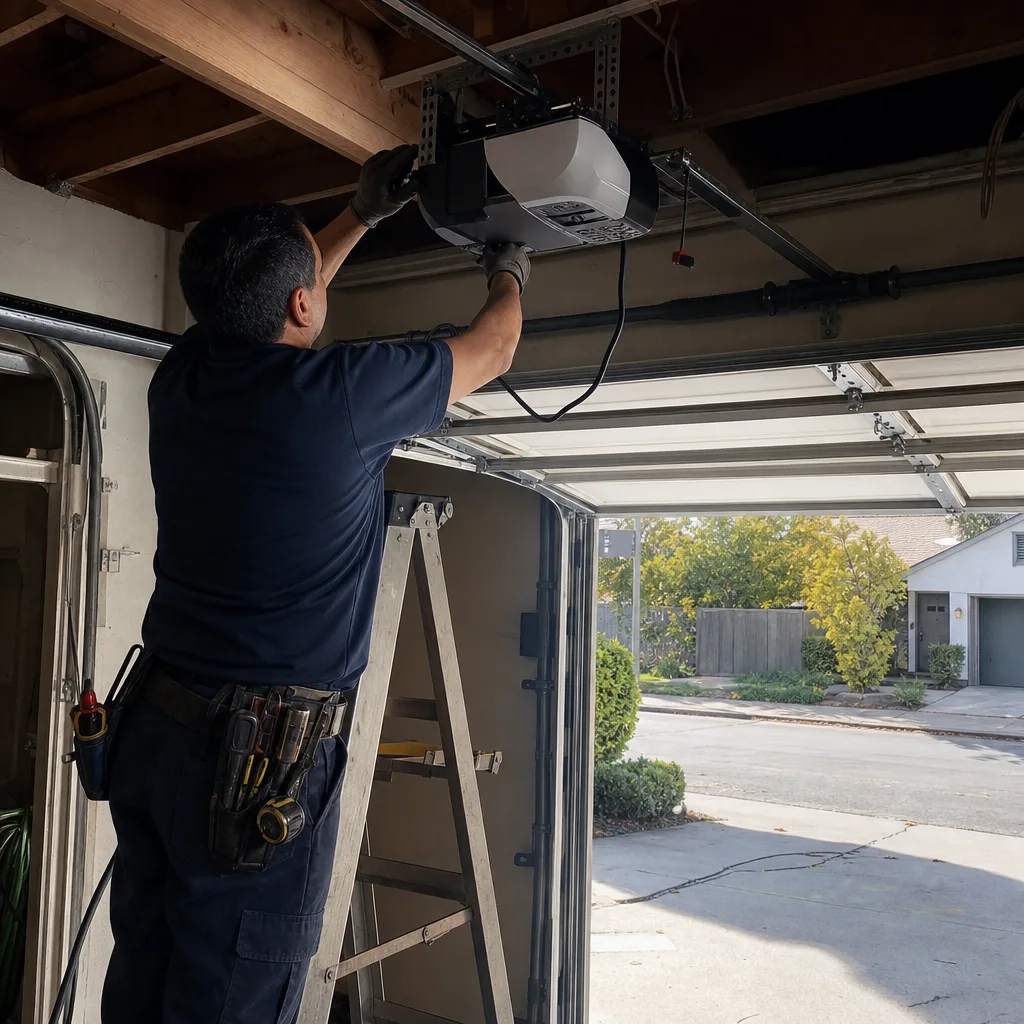
Call a trained garage door technician when you observe any of the following: the door won’t stay open at waist height when disconnected from the opener; the torsion spring shows visible damage, rust, or separation; cables are frayed or off the drum; the opener reverses intermittently or makes grinding noises; the door has come off the track; or you’re planning replacement and need a permit-compliant, written quote. These scenarios involve high-tension components, electrical systems, or structural considerations that require professional assessment and documented repair scope.
Servo Garage Doors Pleasanton offers free estimates in Pleasanton - call (510) 398-4466. Every estimate includes a written, line-item price and scope before any work is authorized, per Clause 1 of The Haven Standard. Emergency calls are answered by a live person 24/7, with a named technician and on-the-way text.
Frequently Asked Questions
A standard 16×7 steel door replacement in Pleasanton typically ranges from $1,200 to $1,800 including installation, with insulated and carriage-style options running $1,800 to $3,800+. Permits add $180-$280 when required. Call (510) 398-4466 for a free written estimate with exact pricing for your door size and configuration.
Yes, if the door size changes, the opening is modified, or the home is in a designated fire hazard severity zone. Most standard replacements on existing openings in Pleasanton do require a permit under current building code interpretation. A contractor who says otherwise is likely avoiding inspection. The permit fee is typically $180-$280 and should appear as a line item in your quote.
A standard replacement on a prepared opening takes 3-5 hours. New construction or openings requiring structural repair take 1-2 days. Installation is measured, ordered, and scheduled - not same-day work. We provide a free measure and written price, then schedule installation once materials arrive, typically 1-2 weeks for standard doors, 3-6 weeks for custom orders.
The cycle rating is the number of open-close operations before expected failure. A 10,000-cycle spring lasts roughly 7 years at 4 daily cycles; a 30,000-cycle spring lasts 20 years at the same usage. For Pleasanton households with multiple drivers, home gyms, or workshop garages with frequent access, the higher-cycle spring reduces lifetime cost and emergency call frequency.
Opener installation involves electrical work, structural mounting, and safety sensor alignment that must pass force and reverse testing. While mechanically inclined homeowners can attempt it - our DIY vs Professional Garage Door: The Pleasanton Homeowner’s Decision Guide covers the trade-offs in detail - we recommend professional installation to ensure code compliance, proper torque settings, and valid warranty coverage. The battery backup requirement also adds electrical complexity. We install openers with full documentation and safety verification.
Noise typically indicates worn rollers, loose hardware, or an opener straining against unbalanced door weight. Grinding from the opener often means a failing gear assembly or trolley carriage. Squealing from the door usually points to dry hinges or bearing-less rollers. A professional inspection identifies the source and prevents the cascade failure where a minor noise becomes a major repair. Call (510) 398-4466 for diagnosis - estimates are free.
The Bottom Line
The right garage door in Pleasanton starts with constraints, not catalogs. Confirm your wind load requirements, HOA rules, and permit needs before selecting material or brand. Understand what each component does so you can read quotes with confidence. Insist on written pricing with line-item scope before any work begins, and demand documentation of what was found and what was done. In a market where most guides sell products, this guide sells sequence - because the order of decisions determines whether you’re satisfied at year one or frustrated at year five. For more guides & resources on garage door selection and care, visit our blog. For a free written estimate on any garage door project in Pleasanton, with upfront pricing and documented photo records, call Servo Garage Doors Pleasanton.
Written by Marcus Deller, Owner at Servo Garage Doors Pleasanton, serving Pleasanton since 2015.